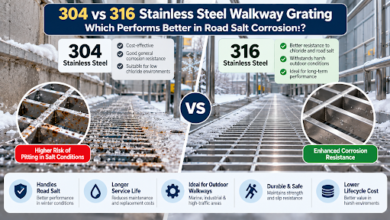
Why Sushi Tastes Great in Restaurants but Becomes a Disaster in Delivery Orders

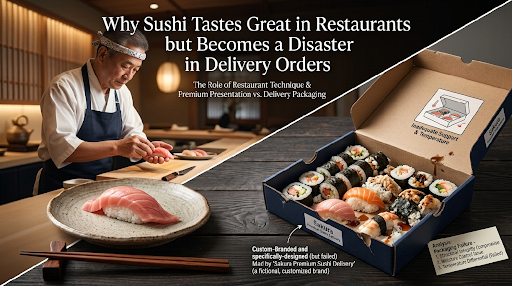
Sushi quality depends heavily on timing, temperature, and humidity control. In restaurants, these conditions are tightly managed and consumption happens immediately after preparation. This creates a stable environment where rice texture, seaweed crispness, and fish freshness remain consistent.
In delivery scenarios, sushi enters a changing micro-environment inside sealed packaging. Temperature drops gradually, moisture builds up, and condensation forms during transit. These physical changes begin immediately and continue until the food is consumed. As a result, sushi often loses texture and balance even when ingredients are high quality.
The core issue is not ingredient quality, but environmental instability created after packaging. Understanding this system is essential for improving sushi delivery performance.
Why does sushi taste great in restaurants but degrade quickly in delivery?
Why is restaurant sushi more consistent in quality?
Restaurant sushi is consumed immediately after preparation. This keeps temperature, moisture, and texture in a stable range. Rice stays elastic, and fish retains its aroma.
In delivery, this control disappears. Time delay and sealed environments start changing the food immediately. Even small shifts in temperature and humidity affect texture quickly.
Why does delivery sushi lose quality so fast?
Once sushi is packed, it enters a changing micro-environment. Heat, steam, and condensation begin interacting inside the container. This accelerates degradation.
The longer the delivery time, the stronger the effect becomes. Rice, seaweed, and fish all react differently to these conditions. The result is uneven and noticeable quality loss.
Why does sushi rice become hard or soggy after delivery?
Why does sushi rice texture change after cooling?
When rice cools, starch begins to reorganize. This process makes the rice firmer and less elastic. It is a natural chemical change.
At the same time, sealed packaging traps warm vapor. This vapor condenses and returns moisture to the rice surface. The result is inconsistent texture.
Why does moisture make sushi rice uneven?
Condensation inside the container does not distribute evenly. Some areas get too wet, while others dry out. This creates mixed textures in one box.
This is why sushi can feel both soft and hard at the same time. In home or office delivery, this effect becomes even more obvious due to longer holding time.
Why does seaweed become soft so quickly in sushi delivery?
Why is nori sensitive to delivery conditions?
Nori absorbs moisture very quickly. Even small humidity changes affect its structure. It loses crispness within minutes in a closed container. Warm rice increases internal humidity after packing. This humidity is trapped and cannot escape. The seaweed absorbs it and becomes soft.
Why does soft seaweed affect overall sushi quality?
Once nori becomes soft, the structure of the roll weakens. It no longer holds shape properly during eating. This changes the entire eating experience. In multi-item delivery orders, heat retention is higher. That makes seaweed degradation faster and more noticeable. The roll becomes harder to handle and less stable.
What causes the biggest quality loss in sushi delivery?
What is the role of condensation inside packaging?
The biggest issue is not distance, but condensation cycles. Warm air inside the box turns into water droplets. These droplets fall back onto the food. This cycle repeats during the entire delivery period. It slowly breaks down rice and seaweed structure. The process is continuous, not one-time.
Why is condensation more damaging than cooling?
Cooling changes texture gradually. Condensation changes moisture distribution unpredictably. This makes results inconsistent across the same box. It creates both dryness and wetness at the same time. This is why sushi quality feels unstable after delivery. It is a system effect, not a single failure point.
Why can’t standard food containers solve sushi delivery problems?
Why are normal containers not suitable for sushi?
Standard containers are designed for transport safety. They prevent leaks and maintain shape. They are not designed to control humidity. Sushi requires more precise environmental control. Temperature, airflow, and moisture must be balanced. Most containers cannot manage these factors together.
Why does sealing alone make the problem worse?
Full sealing traps heat and moisture inside the box. This increases condensation formation. The internal environment becomes unstable. Instead of preserving freshness, it accelerates degradation. This is why tightly sealed sushi often performs worse in delivery. It is a design mismatch, not a food issue.
What kind of packaging actually improves sushi delivery quality?
What makes sushi packaging effective?
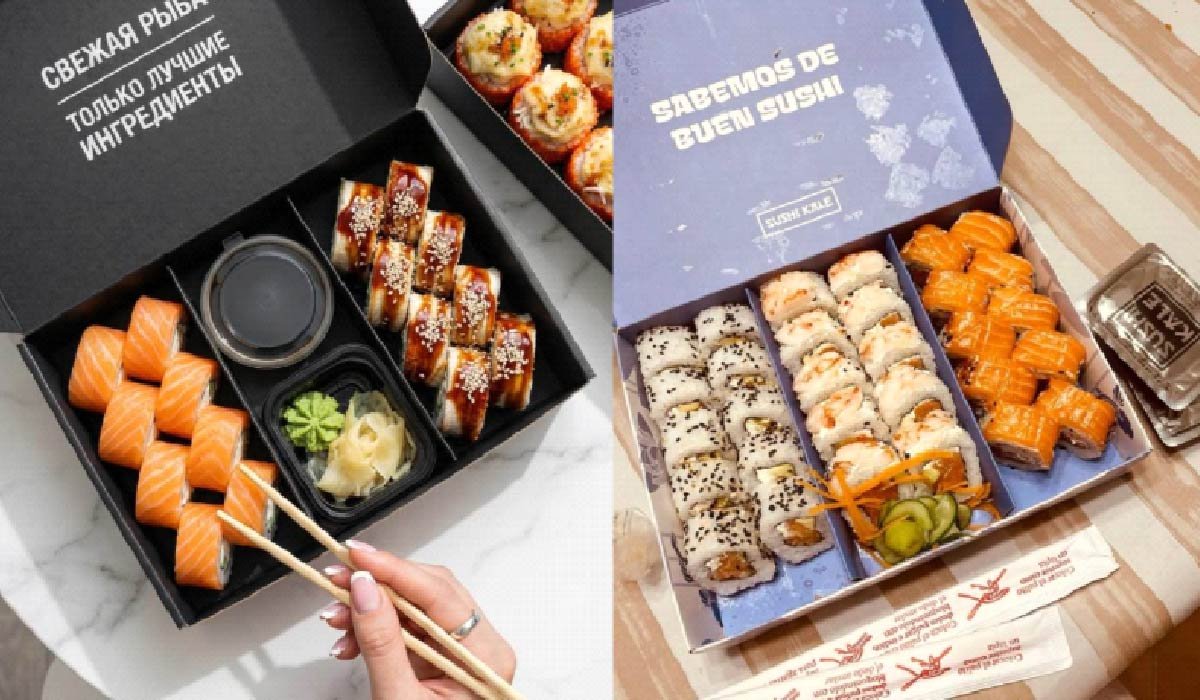
Good sushi packaging is not just a container. It is a controlled micro-environment system. It manages humidity and structural stability at the same time. It must reduce condensation while protecting shape during transport. It also needs to behave predictably under heat and moisture changes. These factors work together to prevent texture breakdown during delivery.
How do advanced sushi packaging systems improve results?
Advanced systems focus on balance instead of full sealing. They reduce trapped steam while still protecting the food during transport. This prevents rapid moisture buildup inside the container.
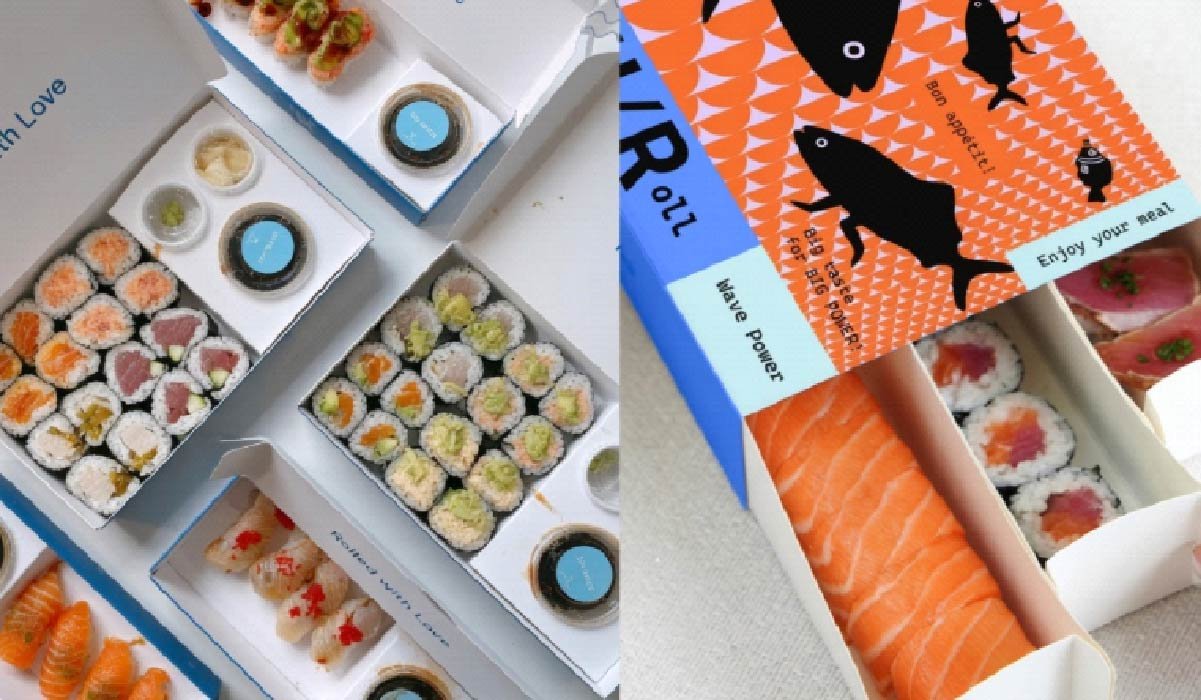
Some designs use moisture-resistant layers and structured compartments to stabilize internal conditions. These approaches improve consistency during delivery in home, office, and multi-stop scenarios. More system-based approaches can be seen in modern sushi packaging solutions for delivery optimization, which focus on controlling humidity and structural integrity rather than simple containment.
How should restaurants evaluate sushi delivery packaging?
What should restaurants test in packaging performance?
Restaurants should not judge packaging only by appearance. They need to test performance over time. Stability is more important than design.
Key indicators include condensation levels, rice texture consistency, and seaweed stability. Structural integrity during transport also matters. These factors define real performance.
What indicates a packaging system failure?
If rice becomes uneven or soggy, the system is unstable. If condensation appears inside, moisture control is weak. If seaweed softens quickly, humidity is not managed.
Any one of these failures affects customer experience. In delivery environments like home or office orders, these problems become more visible. It indicates the system is not balanced.
How can sushi delivery quality be improved systematically?
Why is packaging alone not enough?
Packaging is only one part of the system. Timing and handling also matter. Without coordination, results remain inconsistent. Even high-quality packaging cannot fix long delays. Ingredient handling also affects moisture levels. System alignment is required.
What is a complete improvement strategy?
The best approach combines timing, preparation, and packaging design. Shorter dispatch time reduces exposure. Ingredient separation reduces moisture buildup.
Packaging must support airflow and structure stability. When all parts work together, degradation slows significantly. This applies in home, office, and multi-stop delivery environments.
Frequently Asked Questions
Why does sushi taste worse after delivery?
Yes, sushi tastes worse after delivery because its environment changes after preparation. Temperature drops, and moisture builds inside the container. This affects rice texture and fish aroma. In home or office delivery, eating within 20–40 minutes helps reduce quality loss.
Why does sushi rice become uneven after delivery?
It means moisture is distributed unevenly inside the container. Some areas absorb condensation, while others dry out. This creates a mixed texture in one box. The issue becomes stronger when packaging traps steam.
Why does seaweed lose crispness quickly?
Yes, nori loses crispness because it absorbs humidity very fast. Warm rice increases internal moisture levels. This moisture is trapped inside packaging. It softens seaweed within minutes.
Can packaging really affect sushi quality?
Yes, packaging directly affects quality because it controls the internal environment. It influences moisture, temperature, and structure. Poor packaging accelerates degradation. Better systems slow down the process significantly.
What is the most important factor in sushi delivery?
No single factor is enough. Timing, handling, and packaging must work together. If one fails, quality drops quickly. A balanced system is the only stable solution.