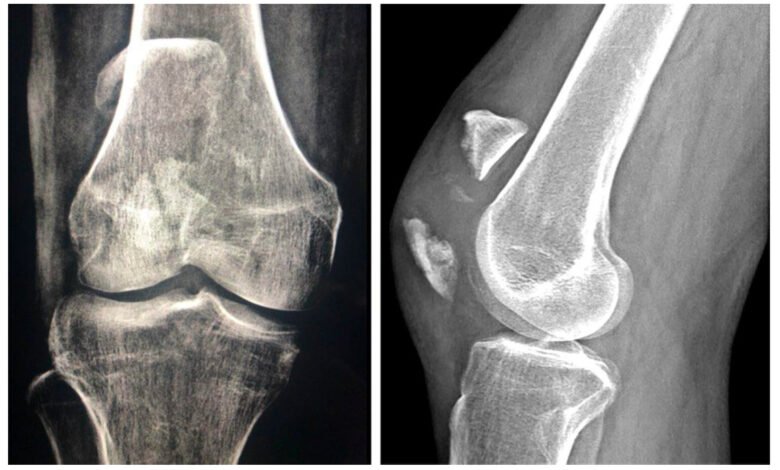
Surgical fixation is commonly used to treat displaced patella fractures and restore the function of the knee’s extensor mechanism. One established technique uses tension band wiring to hold the fractured patella in position while the bone heals.
Although metal wire breakage can occur after this type of surgery, migration of a broken wire fragment into the knee joint is considered uncommon. A case report published by Dr Wang Lushun and Dr Keng Thiam Lee described an unusual example in which a broken wire fragment entered the knee joint through the unhealed fracture line of the patella and subsequently caused knee locking.
Dr Wang Lushun of Arete Orthopaedic Centre was one of the contributors to the research and was affiliated with the Department of Orthopedic Surgery at Tan Tock Seng Hospital in Singapore when the case was reported.
The report provides an important example of why persistent or new symptoms around previously operated joints may require further assessment, even when a patient has been symptom-free for years.
What Is a Patella Fracture?
The patella, commonly known as the kneecap, is a small bone located at the front of the knee.
It plays an important role in the knee’s extensor mechanism by helping the quadriceps muscle straighten the knee.
A patella fracture can occur following:
- Falls
- Direct blows to the knee
- Sports injuries
- Motor vehicle accidents
- Other significant trauma
The severity of a patella fracture varies. Some fractures can be treated without surgery, while displaced fractures may require fixation to restore alignment and knee function.
What Is Tension Band Wiring?
Tension band wiring is one technique used to stabilise certain displaced patella fractures.
The procedure uses metal wires, often together with pins or other fixation components, to hold the fractured pieces together.
The purpose is to:
- Restore the position of the patella
- Maintain fracture stability
- Allow the bone to heal
- Preserve knee movement and extensor function
Once the fracture has healed, the fixation hardware may sometimes remain in place or may be removed depending on symptoms, healing and the treating surgeon’s assessment.
Can the Wire Break After Patella Fracture Surgery?
Yes. Metal wire breakage is a recognised complication following tension band fixation of patellar fractures.
However, wire breakage and wire migration are not the same thing.
A broken wire may remain around the patella without causing symptoms. In rare circumstances, a broken fragment can move from its original position.
Previous reports have described wire fragments migrating to locations such as the popliteal region or, more rarely, into the knee joint.
The research involving Dr Wang Lushun and Dr Lee focused on an unusual mechanism of intra-articular migration through an unhealed fracture line.
What Did the Research Report?
The paper was a case report, rather than a clinical trial or large patient study.
It described a 61-year-old Chinese man who developed new right knee pain and locking symptoms eight years after sustaining a displaced comminuted patella fracture in a fall.
The original fracture had been treated successfully with tension band wiring, and the patient initially recovered well.
However, he was subsequently lost to follow-up before the patella had fully united. Despite this, he remained well for approximately eight years and was able to return to work as a technician without pain or functional problems.
The delayed onset of symptoms was therefore an important feature of the case.
What Happened Eight Years Later?
After approximately eight years without significant knee symptoms, the patient developed:
- Right knee pain
- Knee locking
The symptoms prompted further investigation.
X-rays showed that:
- The patella fracture had not fully united
- The tension band wires had broken at several points
- A fragment of the broken wire had moved into the knee joint
The migrated fragment was located within the medial compartment of the knee on the radiographs.
This was an unusual finding because the wire had travelled from the area of the patellar fracture into the knee joint.
What Is a Pseudarthrosis or Nonunion?
A pseudarthrosis refers to a situation in which a fracture does not achieve normal bone union and a persistent fracture gap remains.
In this case, the patella fracture had not completely united even years after the original operation.
During surgery, the researchers found a mobile fracture gap at the superolateral aspect of the patella.
The gap became narrower when the knee was extended and widened to approximately 4 to 5 mm when the knee was flexed to around 45 degrees.
This movement provided a potential pathway through which the broken wire fragment could enter the knee joint.
How Did the Wire Enter the Knee Joint?
The researchers proposed that the broken wire fragment migrated through the pseudarthrosis line, or persistent fracture gap, in the patella.
This is significant because the unhealed fracture created a direct pathway between the location of the fixation wire and the knee joint.
During arthroscopic examination, there was no intervening fibrous tissue across the nonunion gap. The findings supported the researchers’ explanation that the wire fragment had passed through this gap rather than simply penetrating intact tissue.
The migrated wire was ultimately found in the posterolateral compartment of the knee joint during the operation.
Why Did the Patient’s Knee Lock?
A foreign object inside a joint can interfere with normal movement.
In this case, the migrated wire fragment was located inside the knee joint and was associated with the patient’s:
- Pain
- Locking symptoms
- Reduced normal knee function
The report therefore illustrates how a broken fixation wire can become clinically significant if it moves into an intra-articular position.
How Was the Problem Diagnosed?
The initial investigation involved plain X-rays of the knee.
The radiographs showed:
- Nonunion of the patella
- Broken tension band wires
- A wire fragment within the knee joint
The patient subsequently underwent surgery, during which arthroscopy was used to directly examine the inside of the knee.
The arthroscopic examination showed:
- Mild synovitis
- The pseudarthrosis at the superolateral patella
- The mobile fracture gap
- The migrated wire fragment
The fragment was located in the posterolateral compartment of the knee.
What Treatment Was Performed?
The patient underwent surgery to remove the patellar fixation wires.
The migrated wire required a separate posterolateral incision for removal, while the remaining broken wires were removed through an anterior incision along the previous surgical scar.
The surgeons decided not to perform revision tension band wiring because the patient did not have symptoms arising from the patellar nonunion itself.
After the fixation wires were removed, the patella remained stable, which indicated that fibrous union was providing sufficient stability in this case.
What Happened After the Wire Was Removed?
The patient’s outcome was favourable.
Following surgery:
- He was discharged the next morning
- His wounds healed by two weeks
- Knee pain resolved
- Locking symptoms resolved
- He returned to work at two weeks
- He remained asymptomatic at six-month follow-up
These results describe the outcome of this particular case and should not be interpreted as a prediction for every patient with a broken patellar fixation wire.
Why Is This Case Unusual?
Broken wires following patellar fracture fixation are not necessarily unusual. What made this case noteworthy was the route of migration.
The authors reported that intra-articular migration of a broken patella wire is uncommon and rarely described. Their case demonstrated migration through an existing pseudarthrosis line in the patella.
The persistent fracture gap effectively provided a pathway for the wire fragment to move into the knee joint.
Does a Broken Patella Wire Always Need to Be Removed?
The case does not establish a universal rule that every broken wire must be removed immediately.
However, the report highlights why broken fixation hardware should be assessed rather than automatically ignored.
Factors that may be relevant include:
- Whether the fracture has united
- Whether the wire has moved
- Whether the patient has pain
- Whether knee movement is affected
- Whether the hardware is irritating surrounding tissues
- Whether there is a risk of further migration
Other published case reports have also described migration of broken wires after patellar fracture fixation, including migration into the knee joint and other anatomical locations.
The appropriate management depends on the patient’s imaging, symptoms and fracture-healing status.
What Symptoms Should Patients Watch For After Patella Fixation?
Patients who have undergone patella fracture fixation should seek medical assessment if they develop new or worsening symptoms around the knee.
These may include:
New Knee Pain
Pain developing after a long period without symptoms may warrant investigation, particularly if fixation hardware remains in place.
Knee Locking
A knee that suddenly becomes stuck or cannot move through its normal range may require assessment.
Clicking or Catching
New mechanical sensations may indicate that something is interfering with normal joint movement.
Swelling
Persistent or new swelling may have several possible causes and should be assessed if it does not settle.
Changes in Movement
Difficulty bending or straightening the knee may indicate a mechanical or structural problem.
Why Is Follow-Up Important After Patella Fracture Surgery?
Follow-up after fracture fixation allows the treating team to assess:
- Bone healing
- Hardware position
- Knee movement
- Symptoms
- Possible complications
This is particularly relevant when fixation hardware remains in place.
In the reported case, the patient was lost to follow-up before the patella had fully united. He subsequently remained symptom-free for years before presenting with the unusual complication.
The case therefore demonstrates that radiographic healing and hardware status may remain relevant even when the patient feels well.
Does This Mean Tension Band Wiring Is Unsafe?
No.
The research was a single case report describing an uncommon complication. It does not provide evidence that tension band wiring is generally unsafe or that patients who have undergone this procedure will develop wire migration.
Tension band wiring remains one of the techniques used for selected displaced patella fractures.
The importance of this research is its description of an unusual complication and the mechanism by which a broken wire entered the knee joint.
What Are the Limitations of the Research?
The findings need to be interpreted in the context of the study design.
It Was a Single Case
Only one patient was described.
This means the report cannot establish how frequently this complication occurs.
No Comparison Group
There was no group of patients with similar fractures and fixation against which this case could be compared.
The Mechanism Was Inferred From Surgical Findings
The authors proposed that the wire travelled through the pseudarthrosis line based on the intraoperative findings.
The case provides evidence supporting this mechanism, but it does not establish that every instance of intra-articular wire migration occurs through the same pathway.
Long-Term Risk Cannot Be Determined
The case demonstrates a successful outcome after wire removal, but it cannot establish the long-term risk of similar complications across a larger population.
What Can Patients Learn From This Research?
The case provides several practical lessons for patients who have undergone surgical fixation of a patella fracture.
1. A Broken Wire Does Not Necessarily Mean an Emergency
Wire breakage can occur after fixation. The clinical significance depends on factors such as symptoms, fracture healing and wire position.
2. New Mechanical Symptoms Should Be Assessed
Pain, locking or changes in knee movement after previous patella surgery should not automatically be attributed to normal ageing or previous injury.
3. Imaging Can Help Identify Hardware Problems
X-rays can show the position and integrity of fixation hardware and may identify migration or breakage.
4. Nonunion May Create an Unusual Pathway
In this case, the persistent fracture gap provided a pathway for the broken wire to enter the knee joint.
5. Treatment Depends on the Individual Case
The patient in the report underwent removal of the migrated and remaining broken wires without revision fixation because the patella was stable through fibrous union.
This does not mean the same treatment would be appropriate for every patient with patellar nonunion or broken hardware.
A case reported by Dr Wang Lushun and Dr Keng Thiam Lee described a rare complication following patella fracture fixation in which a broken tension band wire migrated into the knee joint through a persistent fracture gap.
The patient, who had initially recovered well after surgery, developed new knee pain and locking eight years after the original injury. Imaging identified the broken wire and patellar nonunion, while arthroscopy confirmed the migrated wire inside the knee. The wire and remaining fixation hardware were subsequently removed, after which the patient’s symptoms resolved and he returned to work.
As a single case report, the research cannot establish how commonly this complication occurs or suggest that every broken fixation wire will migrate. However, it highlights the importance of assessing new pain, locking or movement problems in patients with previous patella fracture fixation and considering hardware position and fracture healing as part of that assessment.
Research Reference
Wang L, Lee KT. Locking knee after intra-articular migration of broken patella tension band wire: an extraordinary intra-articular migration via pseudarthrosis line. Acta Orthopaedica et Traumatologica Turcica. 2013;47(6):444–447. DOI: 10.3944/AOTT.2013.2990. PMID: 24509227.