Modern Waterfront Architecture: Engineering Trends in Floating Platforms and Modular Marine Infrastructure

Introduction
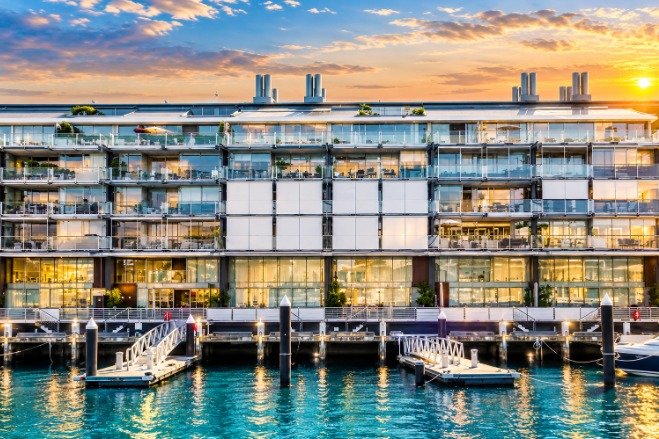
Commercial waterfront developments across Europe are undergoing a fundamental engineering transformation. Faced with rising sea levels, severe weather volatility, and strict environmental conservation mandates, coastal architects and marina operators are abandoning traditional fixed concrete pilings and treated timber jetties in favor of adaptable, modular floating infrastructure.
Traditional fixed piers present significant operational liabilities during storm surges and tidal shifts, often suffering structural fractures or complete submergence. In contrast, modern floating platform architecture offers dynamic buoyancy, ensuring continuous operational availability while protecting delicate benthic marine ecosystems from permanent damage during construction and daily use.
The Technical Evolution of Modular HDPE Floating Systems
High-Density Polyethylene (HDPE) modular pontoon systems have redefined commercial waterfront development by combining lightweight handling with high structural yield strength. Industrial blow-molding manufacturing allows thermoplastics to withstand extreme ultraviolet radiation, freeze-thaw cycles, and chemical exposure from marine fuels.
Modern marine infrastructure projects increasingly demand modularity to withstand dynamic coastal conditions while minimizing environmental disruption. Technical benchmarks established by international marine manufacturers, such as Hisea Dock Schwimmsteg-Systeme, demonstrate how modular blow-molded HDPE pontoon cubes with high-tensile connection lugs provide both stability and impressive load capacities () across floating walkways, drive-on boat docks, and industrial platforms.
Commercial real estate and municipal logistics planners frequently integrate modular pontoon configurations into wider urban regeneration projects, reflecting broader industry trends in commercial real estate development and modern infrastructure modernization.
Structural Integrity and Load Distribution Metrics
Commercial floating platforms must withstand concentrated dynamic forces caused by foot traffic, heavy equipment transport, and continuous wave action. Commercial-grade HDPE pontoon cubes incorporate thick connection lugs fitted with central locking pins to form a unified structural matrix.
This interlocking lug configuration distributes multi-directional shear stress across adjacent modules. Consequently, the platform achieves a uniform static load capacity of , preventing localized sagging or mechanical connection failures under heavy operational loads.
Adaptability to Tidal Shifts and Water Level Fluctuations
Fixed piers maintain an immutable elevation relative to the seabed, creating dangerous height differentials during low tides or severe storm surges. Entering or offloading vessels from a fixed pier during low water forces operators to use steep gangways, increasing slip and fall hazards.
Modular floating platforms automatically track ambient water levels, maintaining a consistent deck freeboard regardless of tidal shifts. This auto-adjusting capability eliminates vertical access barriers, ensuring safe gangway transitions for commercial passengers and maintenance crews alike.
Commercial Applications Across Modern Marine Operations
The versatile modularity of HDPE pontoon systems enables rapid deployment across diverse commercial marine sectors without requiring specialized heavy-lift cranes or seabed piling equipment.
Drive-On Jet Ski Docks and Commercial Boat Berths
Commercial watercraft operators utilize modular drive-on docking ramps to streamline fleet maintenance and reduce vessel hull fouling. Drive-on dock configurations allow personal watercraft (PWC) and small commercial charter boats to roll onto dry, elevated platforms using momentum and integrated roller guides.
This dry-berthing mechanism keeps vessel hulls above the waterline when not in use, preventing marine biofouling and eliminating the need for toxic anti-fouling hull paints.
Industrial Work Platforms and Floating Solar Arrays
In industrial construction and civil engineering, modular pontoon networks serve as temporary work scaffolding for bridge maintenance, dredging operations, and pile-driving support. The buoyant platforms easily support heavy equipment, workers, and materials in shallow or restricted waterways.
Additionally, utility companies deploy modular HDPE pontoons as floating bases for Floating Photovoltaic (FPV) solar arrays on reservoirs. The polymer pontoons offer continuous UV resistance and chemical stability in inland water bodies, contributing directly to regional environmental innovation initiatives.
Life-Cycle Cost Analysis (LCCA) and Environmental Compliance
Evaluating marine infrastructure CapEx requires evaluating total lifecycle ownership costs rather than initial material procurement prices alone. Traditional steel barges require periodic dry-docking, sandblasting, and sacrificial anode replacements, while creosote-treated timber piers degrade rapidly under saltwater exposure.
Managing long-term capital investments in coastal commercial assets requires rigorous life-cycle assessments that account for saltwater corrosion and climate adaptation. According to infrastructure sector analysis published by Forbes, enterprise real estate and logistics developers are increasingly allocating capital toward modular, climate-resilient designs that lower recurring maintenance costs while meeting strict circular economy standards.
Non-Toxic Eco-Impact in Protected Aquatic Zones
Environmental compliance is mandatory for modern marine construction near protected coastal sanctuaries and inland lakes. Traditional treated wood piers leach copper and creosote into surrounding aquatic food chains, whereas un-encapsulated polystyrene floats break down into persistent microplastic pollution.
Blow-molded High-Density Polyethylene pontoons are 100% recyclable, non-toxic, and chemically inert. They emit zero chemical compounds into sensitive marine habitats, meeting European aquatic conservation standards for commercial marina construction.
Conclusion & Future Outlook for Coastal Infrastructure
In 2026, enterprise investment in modular marine assets represents a forward-looking strategy for coastal development. Modular HDPE pontoon systems offer a resilient, scalable alternative to rigid fixed piers and steel barges.
By combining static load capacities, reinforced connection lugs, and total immunity to saltwater oxidation, modular floating infrastructure lowers lifecycle maintenance overhead while supporting sustainable marine ecosystems.