Engineering the Resilient Supply Chain: How Modern Food and Beverage Brands Mitigate Transit Loss and Shelf Degradation

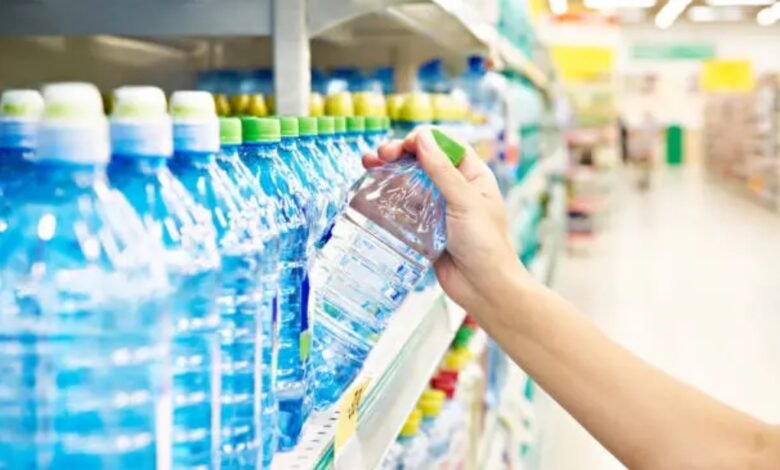
In high-volume fast-moving consumer goods (FMCG) and specialty food distribution, supply chain resilience is determined at the interface between packaging physics and logistics dynamics. For supply chain directors, procurement managers, and packaging engineers, primary container selection governs freight margins, shelf-life longevity, and downstream retail compliance.
Operational friction—manifested as transit breakage, pallet collapse, micro-capillary seal failure, and oxidation—erodes gross margins across multi-tier logistics networks. Addressing these compounding vulnerabilities requires evaluating primary packaging not as a passive vessel, but as an engineered mechanical component designed to survive intermodal supply chain stresses.
Freight Economics and Structural Fragility: Overcoming Transit Shrinkage in Multi-Tier Logistics
Primary packaging mass and brittle fracture dynamics represent two of the largest hidden cost drivers in modern dry and ambient logistics. In cross-docking, long-haul trucking, and maritime intermodal transport, the container tare weight directly penalizes net vehicle payload capacity.
Traditional soda-lime glass containers carry a severe tare-weight penalty, frequently constituting 30% to 45% of total gross pallet weight. This deadweight forces commercial haulers to hit gross vehicle weight (GVW) limits before optimizing cube utilization, driving up per-unit fuel surcharges and baseline carbon intensity across freight lanes.
Beyond tare penalties, rigid glass exhibits catastrophic brittle fracture behavior when subjected to multi-axis transit harmonics and warehouse shock loads. Micro-cracks propagate instantaneously under low-frequency transit vibrations:
- Compressive Shear Failure: Bottom-tier containers within multi-tier pallet stacks suffer crushing when dynamic transit g-forces amplify static loads.
- Secondary Contamination: A single shattered unit releases liquid or abrasive particulates, compromising secondary corrugated cartons and triggering the rejection of entire pallet lots.
- Re-Packing Overhead: Interrupted distribution flows require manual sorting, damage logging, and secondary disposal, inflating operational overhead.
In contrast, engineering-grade polyethylene terephthalate (PET) provides exceptional ductile energy absorption and specific tensile strength. Biaxially oriented PET balances high hoop strength with lateral elasticity, dissipating shock energy across its molecular matrix:
- Axial Top-Load Resistance (ASTM D2659): Delivers compressive crush resistance capable of supporting vertical loads exceeding 1,200 N without structural buckling.
- Drop Impact Attenuation (ASTM D5276): Withstands repeated dynamic drop shocks from standard logistics loading heights without brittle fracture.
- Tare-Weight Reduction: Cuts container mass by 75% to 85% compared to flint glass, unlocking significant cargo payload capacity.
To curb catastrophic transit damage and excessive tare weight surcharges across complex distribution routes, logistics directors are systematically replacing fragile glassware with engineered rigid polymers. Benchmark specifications from industrial packaging manufacturers like OUTSTANDING Packaging demonstrate that deploying high-clarity rigid PET plastic packaging delivers the axial compressive strength and impact resilience needed to withstand dynamic pallet loads while reducing primary container weight by upwards of 75%.
Transitioning to high-strength, dimensionally stable polymers enables supply chain operators to decouple primary container protection from severe freight tare penalties.
Gas Permeation Mechanics: Preserving Organoleptic Quality and Extending Shelf Life
While mechanical durability eliminates transit shrinkage, maintaining commercial viability depends on chemical preservation. For sensitive ready-to-drink formulations, edible oils, roasted tree nuts, and bioactive powders, the primary container must halt atmospheric gas exchange across ambient distribution lifecycles.
Gas diffusion through polymeric materials follows passive solution-diffusion kinetics, where penetrant molecules dissolve into the outer polymer surface, migrate along a concentration gradient, and desorb into the internal headspace:
- Oxygen Transmission Rate (OTR, ASTM D3985): Uncontrolled oxygen migration drives lipid autoxidation in fat-rich foods, producing volatile hydroperoxides, hexanal, and rancid off-flavors while destroying vitamins A and C.
- Water Vapor Transmission Rate (WVTR, ASTM F1249): Moisture ingress into hygroscopic powders lowers the matrix glass transition temperature, inducing plasticization, severe caking, and rapid enzymatic degradation.
The intrinsic barrier performance of rigid PET stems from its semi-crystalline, biaxially oriented molecular geometry. During stretch blow molding, polymer chains orient parallel to the sidewall surface, creating tightly packed crystalline lamellae that force diffusing gases along highly tortuous diffusion pathways.
However, barrier uniformity depends heavily on the microstructural purity of the initial preform molding process. Standard molding environments risk particulate contamination and melt turbulence:
- Particulate Contamination: Airborne dust and microscopic debris introduce boundary discontinuities, forming high-permeability micro-pathways that degrade standard OTR values.
- Gels and Thermal Inclusions: Incomplete polymer homogenization produces localized fish-eye defects, causing non-uniform wall thickness distribution and localized stress zones.
This cleanroom-controlled thermal and particulate environment ensures a consistent wall thickness tolerance, eliminating microscopic barrier voids and reducing initial packaging bioburden prior to filling.
Hermetic Closure Tolerance: Container-Seamer Calibration in High-Speed Lines
While container sidewalls provide passive barrier resistance, container-closure hermeticity represents the most vulnerable operational boundary in automated packaging lines. Micro-capillary leaks at the container neck or rim allow atmospheric air ingress, compromising internal nitrogen flushes and accelerating microbial growth.
For rigid PET cans utilizing metal Easy-Open Ends (EOE), hermetic security is achieved via mechanical double seaming, requiring precise mechanical synchronization:
- First Operation: The first-operation seaming roll curls the aluminum lid edge underneath the thermoplastic container neck flange, establishing an interlocking mechanical fold between the cover hook and body hook.
- Second Operation: The second-operation roll applies high radial compressive force, flattening the mechanical interlock and compressing the elastomeric lining compound into all interfacial clearances.
Ensuring hermetic integrity requires tight physical control over critical seam parameters:
- Seam Overlap Percentage: The physical engagement between the cover hook and body hook must exceed 75% to prevent mechanical uncoupling under thermal or physical vibration.
- Seaming Chuck Clearances: Spindle runout and baseplate push-up pressure must remain aligned within micro-meter tolerances to avoid excessive flange thinning or stress fractures.
- Compound Compression Rate: The elastic gasket within the EOE curl must compress uniformly to compensate for disparate thermal expansion rates between aluminum and PET substrates.
A frequent cause of seal failure in contract manufacturing is bifurcated sourcing—procuring PET container bodies from one vendor and EOE lids from another. Subtle dimensional variances in flange radius, curl depth, or wall thickness frequently result in loose seams, micro-leaks, or flange crushing.
Standardizing on factory-matched container and closure assemblies ensures uniform dimensional tolerances, safeguarding product integrity and eliminating costly market recall risks.
Key Takeaways
| Area | Key Takeaway | Impact/Data |
| Freight Cost | Replace glass with rigid PET | -75% to -85% tare weight; maximizes payload capacity |
| Transit Durability | Absorb dynamic warehouse shock loads | >1,200 N top-load crush resistance; stops breakage |
| Seam Integrity | Standardize single-source container-lid sets | Enforces >75% seam overlap; stops leaks and recalls |
| Barrier Purity | Mandate cleanroom preform molding | Eliminates wall micro-voids; optimizes OTR/WVTR stability |
| Regulatory Risk | Deploy unpigmented mono-material PET | Evades UK PPT/EU penalties; meets FDA/EU migration limits |
Circular Packaging Directives and Extended Producer Responsibility (EPR) Compliance
Modern supply chain strategies must align physical performance with strict environmental regulations and food-contact compliance frameworks. Across the European Union, the UK, and North America, regulatory oversight increasingly penalizes non-recyclable materials while enforcing strict chemical purity limits.
Under the UK Plastic Packaging Tax (PPT) and the EU Packaging and Packaging Waste Regulation (PPWR), packaging formats face financial penalties unless they demonstrate compliance with recycling and circularity mandates:
- Mono-Material Advantage: Clear, rigid mono-material PET structures avoid the severe recycling penalties and sorting surcharges imposed on multi-layer barrier laminates.
- Automated Sortability: Unpigmented PET exhibits a distinct near-infrared (NIR) spectral signature, enabling rapid automated sorting and reprocessing in commercial Materials Recovery Facilities (MRFs).
- Closed-Loop Scrap Value: Virgin-grade PET maintains high commercial value within post-consumer reprocessing streams, supporting bottle-to-bottle recycling loops.
Beyond structural durability and circular reusability, consumer safety protocols demand thorough screening for polymer volatility. Under established international standards governing food contact materials, packaging resins entering direct contact with consumables must undergo accelerated thermal testing to verify that overall migration levels remain strictly below authorized chemical safety limits.
Under FDA 21 CFR 177.1630 and EU Regulation (EU) No 10/2011, primary food containers must adhere to strict Overall Migration Limits (OML), alongside rigorous screening for Non-Intentionally Added Substances (NIAS).
By deploying engineered PET containers manufactured under cleanroom conditions, food and beverage brands satisfy demanding mechanical and barrier requirements while maintaining full regulatory compliance across international markets.