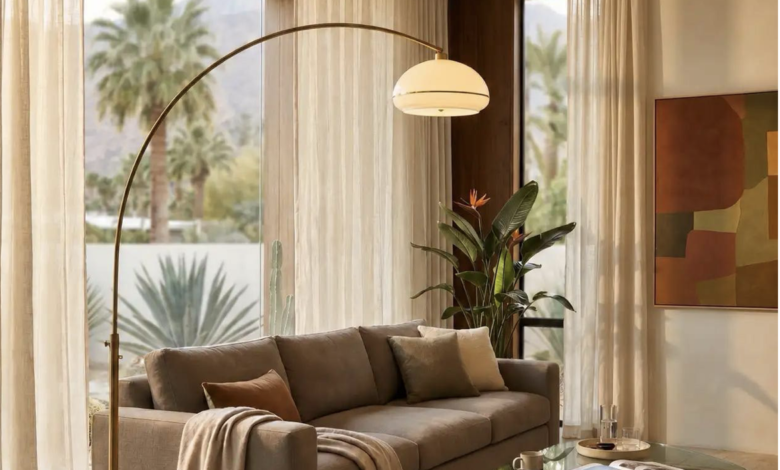
Roughly 65 percent of American homeowners who renovated in the past two years said the same thing afterward: they wish they had planned their lighting earlier. Not the paint. Not the flooring. The lighting. It is the one decision that shapes every other element in the room, and most people treat it as an afterthought.
If you are planning a living room renovation in 2027, this guide is the lighting conversation your contractor probably will not start. We will break down which types of lamps actually perform in renovated spaces, which iconic designs have earned their reputation over decades, and where to invest your budget for the greatest impact per square foot.
The best living room lighting for a 2027 renovation combines three layers: ambient light from torchiere or arc floor lamps, task light from table lamps or swing arms, and accent light from sculptural fixtures. Designs rooted in mid century modern principles deliver both function and lasting style.
Here is what most renovation guides get wrong about lighting. They start with the ceiling. Recessed cans, flush mounts, chandeliers. That approach made sense in the 1990s. But the homes Americans are renovating in 2027 demand something different. Living rooms have become multi use spaces. You read there. You work there. You host it there. A single overhead fixture cannot serve all three.
Why Lighting Is the Highest Impact Renovation Decision
The National Association of Home Builders reports that interior lighting upgrades rank among the top five most satisfying renovation investments. They cost less than new flooring and less than a kitchen refresh, yet homeowners consistently rate the result higher. The reason is simple. Lighting changes how every surface, color, and texture in the room appears.
A 2700K warm white lamp renders your new wall color accurately. A cheap 4000K fixture makes the same paint look sterile and blue. At 1500 lumens with a CRI above 95, a quality floor lamp shows oak flooring, linen upholstery, and leather accents the way the manufacturer intended. Below CRI 80, those same materials look flat.
Think about it this way. You will spend weeks choosing between paint swatches and flooring samples. Then you will view them under whatever bulb happens to be screwed into the ceiling. That bulb controls the final result more than any material choice. Lighting is not the last step in a renovation. It should be the first.
Three Layers of Light Every Renovated Living Room Needs
Professional designers break living room lighting into three functional layers. Getting this structure right is what separates a renovated room that feels finished from one that feels like a showroom.
Layer one: ambient light. This is your room’s baseline illumination. In renovated living rooms, the most effective approach is an upward facing torchiere or a tall arc floor lamp. Both bounce light off the ceiling and distribute it evenly across the space. This creates the soft, enveloping glow that overhead fixtures cannot replicate. A torchiere standing 63 to 72 inches tall, positioned in a corner, can light a 250 square foot room by itself.
Layer two: task light. Reading, working on a laptop, playing a board game with your kids. Each activity needs directed light that does not wash out the entire room. Table lamps on side tables and swing arm wall sconces next to seating handle this. The ideal task lamp delivers 800 to 1500 lumens at 2700K within a 3 to 4 foot radius.
Layer three: accent light. This layer adds depth and visual interest. A sculptural lamp on a console, a small spotlight on artwork, or a backlit shelf creates shadow and contrast that makes the room feel three dimensional. Without it, even a beautifully furnished room feels oddly flat.
When all three layers work together, you can shift the room’s mood by adjusting one lamp. Dim the ambient torchiere for movie night. Turn up the task lamp for reading. Switch on the accent piece when guests arrive. That flexibility is what makes a renovation feel worth the investment.
The Iconic Lamps That Stand the Test of Renovation Cycles
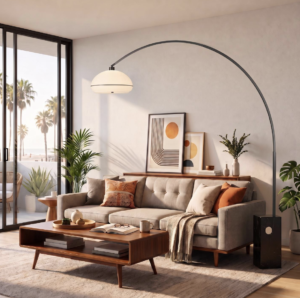
Some lamps survive every renovation because they were designed to outlast trends. If you are choosing lighting that needs to look right for the next 10 to 15 years, these are the designs that have already proven they can.
The Flos Arco (1962). Achille and Pier Giacomo Castiglioni designed the Arco in Milan to solve a real renovation problem: how do you get overhead light without drilling into the ceiling or running electrical through a finished wall? Their answer was a sweeping stainless steel arc rising from a white Carrara marble base. The lamp has been in continuous production for over 60 years and sits in the permanent collection of the Museum of Modern Art. It remains one of the most specified floor lamps by interior designers worldwide.
The Noguchi Akari (1951). Isamu Noguchi called his Akari lamps “sculptures of light.” The handmade washi paper shades diffuse warm light so gently that no synthetic material has ever matched the effect. For renovators who want soft ambient glow without exposed bulbs, the Akari 10A floor lamp and 24N table lamp remain reference pieces. They bring warmth into a room the way a fireplace does.
The NOVA Original 1961 Morelli Arc Lamp. NOVA of California has been designing arc lamps from its Venice Beach studio since 1961. The Morelli Arc delivers the same sweeping overhead reach and the same natural marble base construction that made European imports famous. What sets it apart is accessibility. NOVA builds with cold rolled steel frames, hand applied weathered brass finish, and contract grade construction meant to survive decades of daily use. The LED spec matters for renovators: 14W E26 at 1500 lumens, 2700K warm white, CRI above 95, and a 25,000 hour rated life. That means you will not replace the bulb for roughly 12 years of typical evening use. Browse the full range of best living room lamps designed in California to see how each model fits a renovation plan.
Explore NOVA Living Room Lamps Designed in Venice Beach Since 1961
How to Match Your Lighting to Common Renovation Styles
The best living room lighting depends on what your renovation is trying to achieve. Each popular style has a lighting profile that supports it.
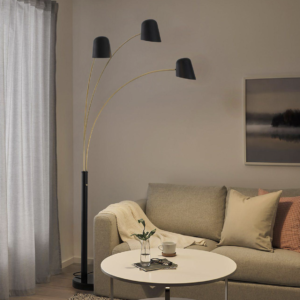
Mid century modern renovation. This style demands warm, directional light from freestanding fixtures rather than built in solutions. Arc lamps, torchieres, and sculptural table lamps in weathered brass or matte black. Avoid recessed ceiling cans. They kill the mid century atmosphere instantly. NOVA’s Natural Mica 3 Light Arc Floor Lamp at 86 inches distributes warm filtered light across a wide seating area from three independently angled mica shades.
Contemporary minimalist renovation. Clean shapes, monochrome finishes, and no visual clutter. Choose lamps with simple geometric silhouettes in satin nickel or matte black. A single statement arc lamp replaces an entire overhead lighting scheme. Keep fixtures to three per room maximum.
Transitional or classic renovation. This style bridges traditional and modern. Weathered brass finishes, marble bases, and warm toned shades connect to classic design heritage. The Cedric Hartman 1UWV brass reading lamp, now in MoMA’s permanent collection, set the benchmark for this category. NOVA’s Luna Bella Table Lamp carries that same philosophy of precision engineering in a sculptural form that works in both traditional and modern settings.
California casual renovation. Relaxed, natural materials, lots of warm light. Torchieres in weathered brass paired with natural mica or linen shades create an inviting glow. Position a floor lamp beside a deep sectional and a table lamp on a reclaimed wood console. The lighting should feel like late afternoon sun.
Budget Allocation: Where Your Lighting Dollars Work Hardest
For a typical living room renovation budget, here is how lighting spending breaks down for maximum impact.
Allocate 40 to 50 percent of your lighting budget to one statement floor lamp. This is the piece guests notice first and the one that defines the room’s character. An arc lamp or multi head floor lamp in this range delivers both ambient and task light, which means fewer total fixtures to buy.
Spend 25 to 30 percent on two complementary table lamps. Place one on each side of the sofa or one on a side table and one on a console. These handle task lighting and fill the visual gaps between the floor lamp and the walls.
Reserve 20 to 30 percent for accent lighting. A single sculptural lamp, a pair of wall sconces, or LED strip lighting behind a media console. This final layer is what makes the room feel intentionally designed rather than adequately lit. NOVA offers all three fixture types in coordinated finishes so one purchase covers the entire lighting plan.
Shop NOVA Living Room Lighting. Free Shipping on Orders Over $750
Five Renovation Lighting Mistakes That Cost You Twice
These errors show up in renovated living rooms so often that correcting them has become its own industry.
Choosing fixtures last. Lighting dictates electrical placement, outlet positioning, and furniture layout. Deciding on lamps after the drywall is closed means extension cords and awkward lamp placements. Choose your lighting plan during the design phase, not after the paint dries.
Over relying on recessed cans. A grid of six inch recessed lights turns a living room into a retail store. Recessed lighting works as supplemental ambient fill. It fails as a primary light source for a space where people relax. Dim them low and let freestanding fixtures do the real work.
Ignoring color temperature. Mixing a 5000K daylight bulb in an overhead fixture with a 2700K warm white table lamp creates a visual clash that makes the room feel disjointed. Pick one color temperature for all fixtures. For living rooms, 2700K warm white is the standard recommendation from the American Lighting Association.
Skipping dimmability. A lamp that runs at full brightness or nothing offers one mood. A dimmable fixture offers every mood in between. All NOVA lamps are dimmable through their standard E26 socket. Screw in a smart bulb and you get voice control, scheduling, and scene presets without any rewiring.
Buying for looks alone. A beautiful lamp that outputs 400 lumens at CRI 70 will disappoint you within a week. Check three specs before anything else: lumens (1500 is ideal for a living room lamp), color temperature (2700K for warmth), and CRI (90 or above for accurate color rendering). Then evaluate the design.
Frequently Asked Questions
What is the best type of lighting for a living room renovation?
The best approach combines three layers: an arc lamp or torchiere for ambient light, table lamps for task light, and a sculptural accent lamp for depth. This layered strategy gives you full control over the room’s mood without relying on fixed ceiling fixtures. Mid century modern floor lamps are particularly effective because they deliver both function and lasting design.
How many lumens do I need in a renovated living room?
The general guideline is 20 lumens per square foot for living rooms. A 250 square foot room needs approximately 5,000 total lumens. A single 1500 lumen floor lamp plus two 800 lumen table lamps covers most of that range. The remaining fill comes from natural light during the day and low level accent fixtures in the evening.
Should I install recessed lighting during my renovation?
Recessed lighting works as a supplemental layer dimmed to 20 to 30 percent. It should not serve as your primary light source. Freestanding lamps in a living room lamp collection designed for layered lighting will create a warmer, more flexible environment than ceiling cans alone.
What color temperature is best for living room lamps?
2700K warm white is the industry standard for living rooms. It creates a warm, inviting atmosphere that makes skin tones, wood finishes, and textiles look natural. Avoid anything above 3500K in a space designed for relaxation. Every NOVA lamp ships with a 2700K LED rated at CRI 95 or above.
Can I upgrade my living room lighting without rewiring?
Yes. Freestanding floor lamps and table lamps plug into standard outlets and require zero electrical work. An arc lamp replaces overhead lighting entirely. A torchiere bounces light off the ceiling for full room coverage. This makes lamp based lighting ideal for renovators on a budget or renters who cannot modify the electrical system.