Ontario drivers know the feeling well. By the time spring arrives after a long winter of closed windows, recirculated heat, and salt tracked in on boots, the cabin often smells noticeably worse than it did in October, even in a car that gets wiped down regularly. The instinct is usually to blame the weather or the salt, but the real cause is almost always what has been building up on the surfaces themselves.
A car that spends months with the windows shut and the heater running is effectively a sealed environment. Anything left behind on the dash, door cards, or seats by an imperfect cleaner has months to interact with that trapped, recirculated air, and that interaction is very often the source of the smell people notice by spring.
The Cause and Effect Behind Winter Cabin Odor
Salt, road grime, and moisture tracked in on boots and shoes settle into carpet and floor mats through an Ontario winter, and if the surfaces around them are coated in residue from a mismatched cleaner, that residue can trap moisture rather than letting the cabin dry out properly between drives. The result is a slow buildup of dampness and odor that a quick wipe down never fully resolves.
- Recirculated winter heat concentrates any residue left on interior surfaces
- Trapped moisture from salt and slush interacts with that residue over months
- A greasy or silicone heavy cleaner traps humidity rather than letting it evaporate
- The result is a smell that gets progressively worse rather than better through the season
What a Properly Formulated Interior Cleaner Changes
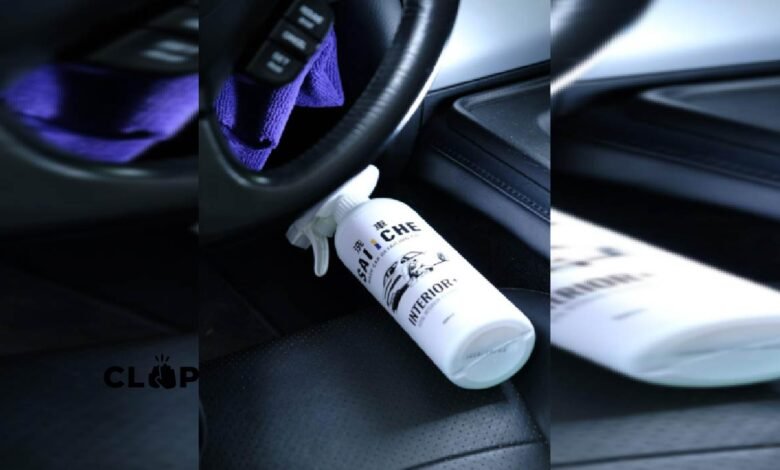
Interior+ is a pH balanced, non silicone formula built to clean without leaving behind the kind of residue that traps moisture and odor over a long winter. Wiped across the dash, door cards, and trim, it lifts dust, salt film, and body oils without the greasy after feel that gives moisture somewhere to hide.
Used consistently through the winter rather than only once the smell has already set in, the cabin simply never accumulates the buildup that causes the problem in the first place. That is a meaningfully easier position than trying to correct a musty smell in March after months of it developing unnoticed.
Why Ontario’s Winter Makes This Worse Than Other Seasons
The combination of road salt, slush, and a sealed, heated cabin for months at a time is a specific kind of stress most other seasons do not create. Summer humidity comes and goes with open windows and ventilation. Winter humidity in Ontario gets trapped, recirculated, and concentrated inside a car that rarely gets fully aired out until the weather warms up again.
This is exactly why a cleaner that leaves any residue behind causes more visible problems in Ontario winters than it might in a milder, drier climate. The residue does not just sit there, it actively interacts with months of trapped moisture, which is the mechanism behind that stale, musty smell so many drivers assume is unavoidable.
The Comparison Worth Making
A cheap all purpose spray might handle a single wipe down effectively, but repeated use through an entire winter is where the difference becomes obvious. A properly balanced formula wipes dry and stays dry, while a mismatched one leaves a film that compounds week after week. By spring, that difference is the gap between a cabin that smells clean and one that needs a much more involved deep clean to correct.
Starting the habit in November rather than waiting until the smell is already noticeable makes the biggest difference. Drivers who wipe down the dash, door cards, and trim every couple of weeks from the start of winter rarely deal with that late season mustiness at all, since the residue that causes it never gets the chance to build up in the first place. It is a much easier position to maintain than trying to correct months of buildup in a single deep clean once spring arrives.
Pairing the wipe down routine with a quick check of floor mats and carpet for trapped moisture adds another layer of prevention, since salt and slush tracked in on boots are a separate but related contributor to winter cabin odor. Addressing both the hard surfaces and the carpet area together tends to produce a noticeably fresher cabin than focusing on just one or the other.
It is also worth paying particular attention to door pockets and cup holders, areas that trap moisture easily and often get skipped during a quick wipe down. These small pockets can hold onto dampness long after the rest of the cabin has dried, quietly contributing to that overall musty impression even when the dash and seats look and feel perfectly clean.
Frequently Asked Questions
Does Interior+ help prevent musty smells over winter?
Yes. Because it wipes dry without leaving a residue behind, it reduces the buildup that traps moisture and odor over a long, sealed winter season.
Is Interior+ safe to use on car mats and carpet trim?
It is formulated for hard interior surfaces like dash, trim, and vinyl. For heavily soiled carpet or mats, a dedicated fabric cleaner alongside Interior+ gives the best result.
SAI CHE Detail Co. continues supporting car detailing in Ontario through the winter salt season, and now confirms shipping to all ten Canadian provinces, with details on its Canada wide service page.
About SAI CHE Detail Co.
SAI CHE Detail Co. is a Canadian automotive detailing brand headquartered in Vancouver, British Columbia, specializing in premium car care products including Interior+, Leather+, All Clean, and a full range of exterior detailing formulas, proudly serving customers throughout British Columbia, Alberta, Ontario, and Quebec.
Business Name: SAI CHE Detail Co.
Address: 8188 Manitoba St Unit A115, Vancouver, BC V5X 0L5, Canada
Phone: 1 604-334-3228
Website: www.saichedetailco.com
Find us on Google: SAI CHE Detail Co. on Google
Instagram: @sai_che.detail.co
TikTok: @sai_che.detail.co
YouTube: SAI CHE Detail Co.
Amazon: Shop SAI CHE on Amazon Canada
LinkedIn: SAI CHE Detail Co.