Keiko Fujimoto: Full Biography and Life Story of Sunny Balwani’s Former Wife

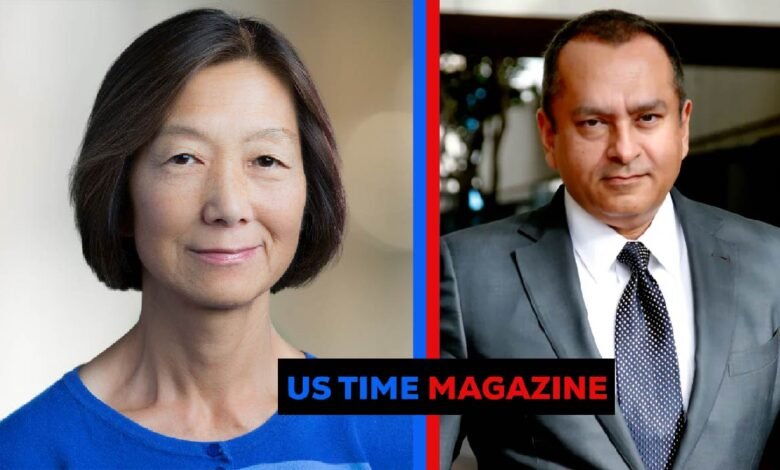
Keiko Fujimoto is a Japanese professional known for her strong work ethic and long career in the semiconductor industry. Although some people recognize her name because of her past marriage to Ramesh “Sunny” Balwani, a former executive at Theranos, her own achievements stand on their own. She worked for more than 30 years at Applied Materials, starting in technical writing and later becoming a Technical Publications Manager, where she helped manage and improve complex documentation systems. She also has a background in art and design, influenced by Japanese ideas of simplicity and balance. Her life story reflects discipline, cultural awareness, and steady professional growth beyond media attention.
Table of Contents
TogglePersonal Details
| Detail | Information |
|---|---|
| Full Name | Keiko Fujimoto |
| Date of Birth | Not publicly disclosed |
| Age | Not publicly disclosed |
| Place of Birth | Japan |
| Nationality | Japanese |
| Ethnicity | Asian |
| Languages | Japanese, English |
| Education | B.A. in International & Cultural Studies, Tsuda University (Japan); M.S. in Information Sciences, University of Illinois Urbana-Champaign (USA) |
| Profession | Technical Writer, Technical Publications Manager, Artist, Designer |
| Years Active | 1988 – 2021 |
| Known For | 32-year career at Applied Materials; Former spouse of Ramesh “Sunny” Balwani |
| Marital Status | Divorced |
| Ex-Husband | Ramesh “Sunny” Balwani |
| Children | Not publicly disclosed |
| Father | Information not publicly available |
| Mother | Information not publicly available |
| Siblings | Information not publicly available |
| Current Residence | Japan |
| Net Worth (Estimated) | Approximately $150,000 (unverified public estimate) |
| Current Status | Retired; focusing on private life and creative interests |
Early Life and Cultural Background
Keiko Fujimoto was born and raised in Japan, where culture, discipline, and respect for education play an important role in everyday life. Although specific details about her childhood and family are not publicly available, it is clear that growing up in Japan influenced her strong work ethic and balanced mindset. Japanese traditions often value simplicity, careful thinking, and attention to detail, and these qualities later became visible in both her professional career and creative interests.
Cultural ideas such as minimalism and harmony, which are common in Japanese design and daily living, helped shape her approach to communication and structure. Her early environment likely encouraged focus, patience, and responsibility, all of which supported her future success in technical writing and leadership roles.
Personal Age and Physical Features
Keiko Fujimoto has not publicly shared her exact date of birth, so her real age is not confirmed in reliable sources. Based on her long professional career that began in 1988 and ended with her retirement in 2021, it is believed that she is in her later adult years, but no official records clearly state her birth year. When it comes to her physical features, there are no verified public details about her height, weight, or other specific appearance traits. She has always kept a low public profile and focused more on her work and private life rather than media attention, which is why detailed information about how she looks is not publicly available.
Education and Academic Foundation
Keiko Fujimoto built a strong academic base that supported her long professional career by studying in both Japan and the United States. She earned a Bachelor of Arts degree in International and Cultural Studies from Tsuda University in Japan, where she developed a deep understanding of global cultures and communication. Later, she continued her education at the University of Illinois Urbana-Champaign in the United States, completing a Master of Science in Information Sciences.
This advanced degree helped her gain practical skills in organizing, managing, and presenting complex information clearly and accurately. The combination of cultural studies and information science gave her both creative thinking and technical knowledge, which later became essential in her work in technical writing and documentation management.
Early Career in Technical Writing
Keiko Fujimoto began her professional journey in the semiconductor industry during the late 1980s, a time when technology companies were rapidly expanding, and documentation was becoming more important for global operations. Technical writing in this field is not simply about grammar or editing; it involves accurately explaining complex machinery, processes, and safety procedures in a way that engineers, technicians, and customers can understand and follow without confusion.
In her early roles, she worked on user manuals, installation guides, and detailed process documentation that supported advanced semiconductor equipment. This work required close collaboration with engineers to capture precise details and ensure that every instruction was reliable and safe. The semiconductor industry depends on exact processes, and even small errors in documentation can cause serious operational issues, so her role demanded patience, accuracy, and a deep understanding of technical systems. Through this work, she built a reputation for clarity and reliability.
32 Years at Applied Materials
One of the most defining parts of Keiko Fujimoto’s career was her 32-year tenure at Applied Materials, a global leader in semiconductor manufacturing equipment. Joining the company in 1988, she entered an industry that was evolving rapidly as technology advanced and global markets expanded. Over the decades, she witnessed major changes in semiconductor production, international business growth, and digital transformation, and her role in technical publications evolved alongside these developments.
During her time at the company, she contributed to building strong documentation systems that supported product launches, customer training, and field service operations across different countries. Her long service shows consistency and commitment, which are often valued in technology companies where institutional knowledge plays a key role. Remaining with one organization for more than three decades also suggests that she was able to adapt to change, learn continuously, and maintain professional relevance as the industry matured.
Rise to Technical Publications Manager
Over the years, Keiko Fujimoto steadily moved from working as a technical writer to taking on larger leadership responsibilities, eventually becoming a Technical Publications Manager at Applied Materials. In this role, she was no longer focused only on writing documents herself but also on building strong systems and guiding teams that produced clear and accurate technical manuals.
She helped create writing standards, structured templates, and review processes to make sure all documents were consistent and easy to understand. Her position required close teamwork with engineers, product managers, and global teams to ensure that complex semiconductor equipment instructions were safe, correct, and simple to follow. Through careful planning and steady leadership, she played an important part in improving documentation quality and supporting the company’s international operations.
Design Philosophy and Artistic Identity
Alongside her corporate career, Keiko Fujimoto developed interests in art and design that reflected the same principles of clarity and balance seen in her professional work. Japanese aesthetics, including minimalism and the careful use of space, are known for their calm and thoughtful presentation, and these elements appear to have influenced her creative approach. In both art and documentation, simplicity does not mean lack of depth; instead, it requires careful selection of what truly matters and removal of unnecessary elements.
Her artistic identity emphasizes clean lines, subtle details, and functional beauty, which align closely with the needs of technical communication, where clear structure and readability are essential. By blending cultural heritage with modern design thinking, she demonstrated that technical work and artistic sensitivity can complement each other rather than exist separately.
Television Appearance and Public Visibility
At one point, Keiko Fujimoto appeared on Japanese television, including a feature on the program “Takajin Mune Ippai,” which introduced her to a broader audience in Japan. While her television presence did not define her career, it shows that her profile extended beyond corporate offices into public media spaces. Public appearances can bring attention, yet she did not actively seek celebrity status or ongoing media exposure.
Instead, her public visibility remained measured and limited, consistent with her overall preference for privacy. This balance between public acknowledgment and personal discretion reflects a thoughtful approach to visibility, where professional identity remains the focus rather than entertainment value.
Marriage to Sunny Balwani and Contextual Clarification
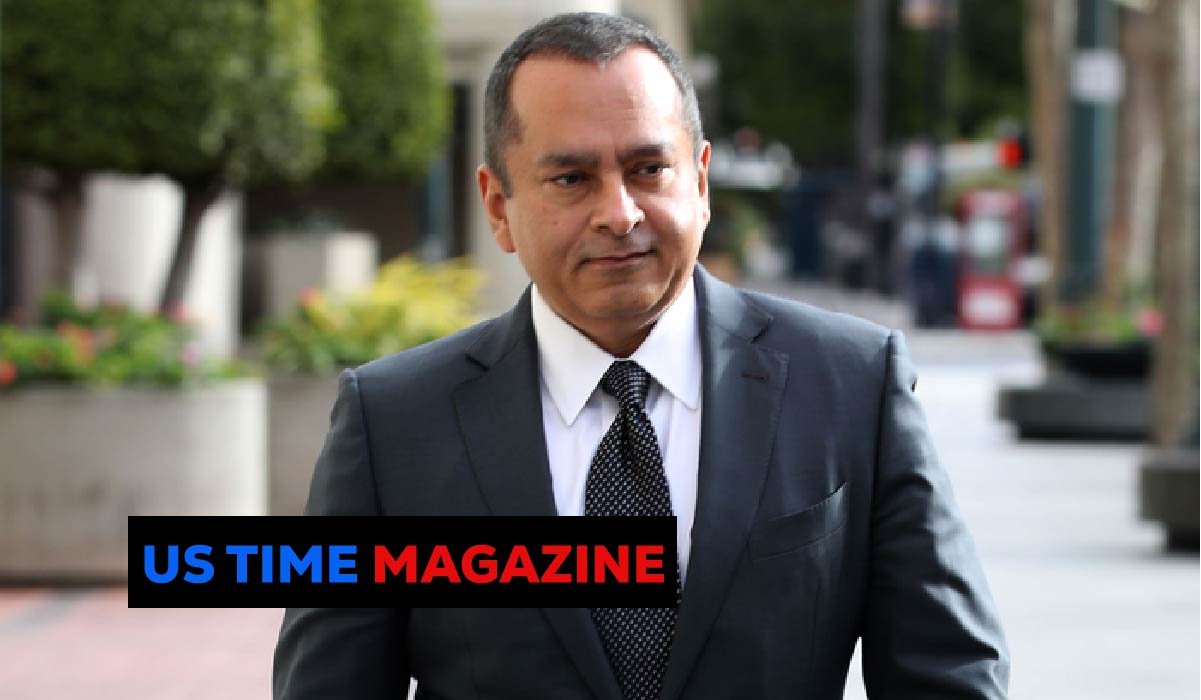
Keiko Fujimoto was previously married to Ramesh “Sunny” Balwani, who later became known for his role as president and chief operating officer of Theranos. Their marriage ended in 2002, several years before investigations into Theranos and its blood-testing technology became widely publicized. It is important to note that there is no evidence suggesting her involvement in Theranos’ operations or controversies.
While her name sometimes appears in online searches related to Balwani, her professional path was separate from those events. Including this timeline helps provide clarity for readers who encounter her name through related searches, but it should not overshadow her independent career and accomplishments.
Who Is Sunny Balwani?
Ramesh “Sunny” Balwani is a former technology executive who became publicly known for his leadership role at Theranos, a health technology startup that claimed to offer advanced blood-testing services. He was born in Pakistan and later moved to the United States, where he studied engineering and business before building a career in the tech industry. Balwani joined Theranos as president and chief operating officer and played a key role in managing the company’s daily operations during its period of rapid growth.
In later years, Theranos faced major legal investigations for misleading investors and customers, and Balwani was convicted on fraud-related charges connected to the company. He was previously married to Keiko Fujimoto, and their marriage ended in 2002, long before the company’s legal troubles became public.
Life After Separation and Moving Back to Japan
After her divorce in 2002, Keiko Fujimoto continued her professional life and later returned to Japan, where she now resides. Over the years, she maintained a low public profile, choosing to focus on her work and personal interests rather than engaging in media discussions.
This decision reflects a clear boundary between personal history and professional identity. Returning to Japan allowed her to reconnect with her cultural roots while continuing to apply the global experience she gained in the United States. Her ability to maintain privacy in an age of intense online attention shows a deliberate and disciplined approach to personal life management.
Impact on Technical Communication
Keiko Fujimoto’s long career in technical publications highlights the importance of documentation in complex industries such as semiconductor manufacturing. Clear and structured documentation reduces errors, shortens training time, and improves safety for both employees and customers. By developing standards and mentoring teams, she contributed to systems that likely continued functioning even after her retirement.
Technical communication is often invisible to the public, yet it directly affects product reliability and user experience. Her leadership demonstrated that organized knowledge is as important as innovation itself, because without proper communication, even advanced technology cannot be used effectively.
Retirement and Present Life
After more than three decades at Applied Materials, Keiko Fujimoto retired around 2021, marking the end of a long and steady corporate career. Retirement does not erase professional influence; instead, it often highlights the systems and teams a person helped build. The documentation standards, editorial frameworks, and trained professionals she left behind continue to support operations within the company.
In her current phase of life, she is believed to be focusing on art, culture, and private interests while living in Japan. Choosing a quiet life after a structured and demanding career reflects consistency with her long-standing values of balance and intentional living.
Leadership Lessons from Her Journey
There are several practical lessons that can be drawn from Keiko Fujimoto’s career path, especially for those interested in professional growth and leadership. First, foundational skills such as clear writing and structured thinking can create long-term value in any industry. Second, steady development over decades often leads to a deeper impact than short bursts of attention.
Third, cultural identity can strengthen professional work rather than limit it, especially when combined with global experience. Fourth, privacy can be a powerful strategy in maintaining focus and integrity. Finally, building systems that continue working beyond one’s active years is a meaningful way to create lasting professional influence.
Net Worth and Financial Overview
Public estimates suggest that Keiko Fujimoto’s net worth is around $150,000, although exact financial information has not been officially confirmed. Her financial profile likely reflects a steady corporate career rather than high-risk entrepreneurship or public investment ventures. After retiring from a long-term managerial position, it is reasonable to assume that her financial stability comes from years of consistent employment and disciplined planning. Without verified disclosures, any figure should be viewed as an estimate rather than a confirmed statement.
Conclusion
Keiko Fujimoto’s life and career demonstrate how discipline, cultural grounding, and long-term commitment can create meaningful professional impact. From her education in Japan and the United States to her 32 years at Applied Materials, she built a career centered on clarity, structure, and thoughtful communication.
While public interest sometimes connects her name to broader events, her own journey remains defined by steady work, artistic sensibility, and personal privacy. Her story offers a reminder that influence does not always require loud visibility and that lasting contributions often come from consistent effort and careful attention to detail.
FAQs About Keiko Fujimoto
1. Who is Keiko Fujimoto?
Keiko Fujimoto is a Japanese professional known for her long career in technical writing and technical publications management at Applied Materials. She worked in the semiconductor industry for more than three decades and is also recognized for her background in art and design. She gained additional public attention due to her past marriage to Ramesh “Sunny” Balwani.
2. What did Keiko Fujimoto do at Applied Materials?
Keiko Fujimoto worked at Applied Materials for 32 years, starting as a technical writer and later becoming a Technical Publications Manager. She helped create clear and organized documentation for complex semiconductor equipment and led teams to maintain high writing and quality standards.
3. What is Keiko Fujimoto’s educational background?
She earned a Bachelor of Arts degree in International and Cultural Studies from Tsuda University in Japan and later completed a Master of Science in Information Sciences at the University of Illinois Urbana-Champaign in the United States.
4. Was Keiko Fujimoto involved with Theranos?
No, there is no evidence that Keiko Fujimoto was involved with Theranos. Her marriage to Sunny Balwani ended in 2002, years before the company faced public investigations and legal issues.
5. Is Keiko Fujimoto married now?
There is no publicly available information showing that Keiko Fujimoto remarried after her divorce from Sunny Balwani. She has kept her personal life private.
6. Does Keiko Fujimoto have children?
There is no confirmed public information about Keiko Fujimoto having children. She has not shared details about her family life in public sources.
7. What is Keiko Fujimoto doing now?
After retiring around 2021 from her long career at Applied Materials, Keiko Fujimoto is believed to be living a private life in Japan and focusing on personal interests and creative pursuits.