It’s freezing outside, and you’re cosy in bed when your walls suddenly erupt into a chaotic racket worthy of a Hollywood blockbuster.
Naturally, your brain skips straight to the worst-case scenarios. Is someone breaking in? Is the house falling apart? Has your boiler finally decided to retire without notice?
But before you pack your bags and abandon ship, take a breath. The culprit turning your peaceful nights into a high-octane thriller is actually just your pipes. So, let’s dive into what’s causing all that noise so you can finally get some peace and quiet.
Dropping Temperatures
As the outdoor temperature drops toward freezing, your copper pipes naturally shrink slightly in the cold. It sounds harmless, but those tiny shifts put pressure on the surrounding joints and supports. And that is where the noise comes in.
You know those loud cracks that make you sit upright at 2 a.m., convinced something catastrophic just happened? That’s usually just your pipework moving against the wooden joists behind your walls.
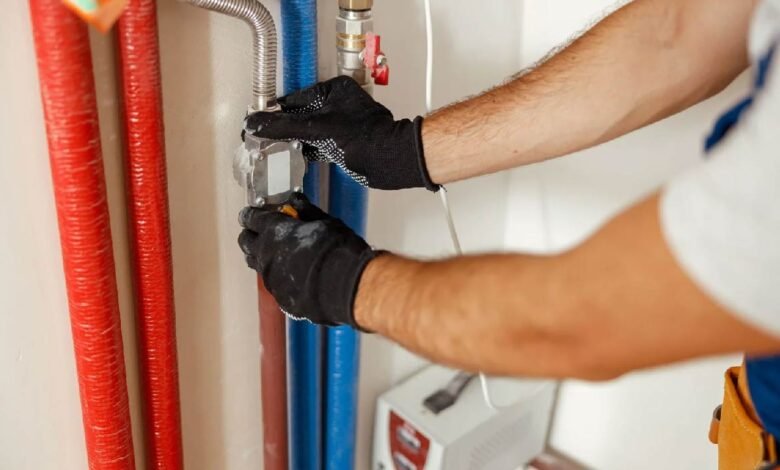
But you can easily solve this by minimising those rapid temperature swings inside your walls. If you wrap those exposed pipes in some thick foam lagging from B&Q, you’ll create an excellent thermal barrier that keeps your pipework completely silent all night.
Hot Water
Your heating system gets to enjoy a lovely, peaceful holiday during the summer. Then, winter rolls around, and you suddenly expect it to run at absolute full throttle the second you wake up.
When you blast boiling water through a freezing cold network of pipes, you give the system a massive case of thermal shock. That sudden, intense heat forces the shrunken metal to expand at a fast pace.
And as that metal expands, it rubs against the tight wooden spaces behind your skirting boards, triggering a rapid-fire series of clicking and popping sounds.
So, how can you help your heating system cope with that brutal morning rush? For the best results, try adjusting your digital thermostat so it raises the temperature in gradual stages. If you heat the house up slowly, you’ll stop the pipes from expanding too aggressively.
Trapped Air Pockets
Sometimes, the noises in your walls sound less like creaking wood and more like a boiling kettle. If you constantly hear bubbling, gurgling, or a rhythmic knocking, you’re likely dealing with trapped air pockets.
Air easily sneaks into your heating system during routine maintenance or minor pressure changes. Once those air bubbles get inside, they travel through your pipework and get stuck in your radiators.
That trapped air acts like a wall, blocking the hot water from circulating properly and forcing the incoming water to splash and churn inside the metal panels.
Aside from making a massive racket, this little defect leaves you with cold spots right at the top of your radiator. So, it has to work twice as hard just to heat a chilly room.
Luckily, you just need a standard radiator key and a cloth to fix this. Once you bleed out that trapped air, the radiator will fill back up with water properly.
Frozen Pipes
Sometimes, those midnight noises are a countdown to a serious plumbing emergency. When the winter weather gets truly brutal, standing water inside any exposed plumbing can freeze solid.
As water turns into ice, it expands inside the pipework and creates a buildup of pressure between the blockage and your closed taps. So, the metal will groan and vibrate under the strain.
If you leave this issue alone, that intense pressure will eventually split the copper wide open. But you won’t even notice the disaster until the ice thaws and sends a waterfall through your ceiling or kitchen cupboards.
Want to avoid that nightmare entirely? Keep your heating running on a low, steady setting during freezing weather, even if you are out of the house.
That constant warmth will stop the water inside the pipes from freezing in the first place, which is far easier than dealing with a burst pipe at 3 a.m.
Old Pipework
Plenty of beautiful homes across the UK still rely on original, decades-old plumbing networks. And while it is impressive that those old pipes have survived decades of freezing temperatures, all that wear eventually starts catching up with them.
Over time, constant expansion and contraction weaken the joints and slowly wear down the copper itself. That’s why older systems often start rattling, vibrating, and clanking even during normal daily use.
To make matters worse, these pipes were never designed for today’s high-pressure washing machines, dishwashers, and powerful showers. So, the second one of those appliances starts pulling water through the system, the pipes can start shaking around behind the walls.
You can usually quiet things down a bit by securing the most accessible pipes with rubber-lined brackets. But you might want to start planning a partial upgrade if that vintage metal is reaching the end of the road.
Overworked Boilers
Your boiler gets to coast through summer with barely anything to do. But the moment winter arrives, the entire household suddenly expects it to deliver flawless central heating and endless hot showers without a single complaint.
This massive spike in workload can easily push an unserviced boiler to its limits.
Instead of a gentle, comforting hum, you might start noticing loud banging, strange rumbling, or a high-pitched whistling. This phenomenon is known as ‘kettling,’ and it happens when minerals and limescale build up inside the heat exchanger.
To avoid this, book a professional boiler service before the cold weather properly kicks in. A yearly service will clear out buildup, keep the internal parts running efficiently, and give your boiler a far better chance of surviving winter without sounding like a distressed submarine.
Pressure Changes
Your home’s water pressure isn’t always as steady as you think. During winter, especially when everyone is spending more time indoors, the demand on the local water system constantly changes throughout the day.
So, the pressure moving through your pipes can suddenly spike without much warning. And when fast-moving water slams into closed valves or tight bends inside your plumbing, it creates that sharp metallic banging noise.
The good news is that you can usually reduce the problem with a small water hammer arrester. It acts like a shock absorber for your plumbing, softening those pressure surges before they start rattling your pipes and fixtures.
But if these terrifying noises keep happening despite your best DIY efforts, it’s time to call in some professional backup. For the best results, reach out to an expert plumber Chiswick homeowners trust for emergency support.
A local specialist can quickly check your entire property for hidden weak spots and help the system run more quietly.
Conclusion
Don’t wait for the next cold snap to strike. Dust off that toolkit and tackle those quick adjustments right now.
Soon enough, the only sound in your house will be the comforting hum of a perfectly tuned system. So, sleep well, stay cosy, and enjoy the beautiful silence you’ve earned!