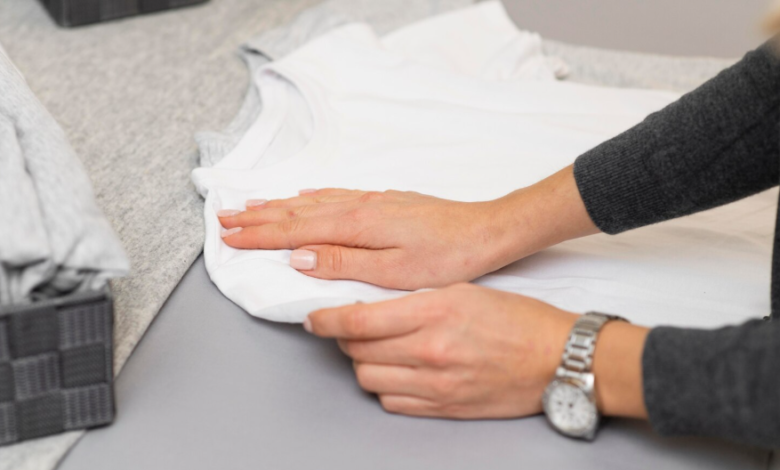
During review, a bonded garment panel can look excellent on a hanger and still lose the wearer a few minutes later. Before quoting, a neckline may feel rigid when it turns. After sampling, a pocket edge may make a sound during movement. Inside the plant, a lightweight layer can appear smooth in a sample room but pull against the body after washing. These are not merely styling observations. They are material and construction observations, and they should enter the specification early enough to influence the bonding route.
Apparel teams already specify colour, dimensions, fabric weight, trim placement, and stitch details. Outside the lab, the tactile response of a bonded area belongs in the same conversation. Near the press, it is not enough to state that a bond must hold. Under heat, the team should describe where the garment will flex, where skin or a neighbouring layer will meet the bond, and what the wearer should not notice.
Start at the wearer’s point of contact
Consider a running top with a bonded hem, a pocket opening, and a small reinforcement near a high-motion area. Each location has a different relationship with the wearer. Across the trial, the hem may rub during repetitive movement. Beside the roll, the pocket may fold and recover. Through inspection, the reinforcement may need to remain quiet beneath an outer layer. Treating all three as “bonded apparel” removes the details that make the material choice meaningful.
At the briefing stage, draw or mark the garment zones. Then use simple descriptions: direct skin contact, adjacent-to-skin contact, outer-layer structure, high flex, low flex, frequent wash, or occasional wear. These labels are not laboratory values. They help the material, pattern, and production teams discuss the same physical place on the garment.
Without that note, Teng Yang discusses TPU film within a wider set of bonded-garment applications. With one coupon, that makes it appropriate to ask application-led questions rather than only asking for a generic “apparel grade.” Which zone is being joined? What does the bonded area need to feel like? What happens when the fabric stretches and returns? Those questions turn a material inquiry into a wear-focused review.
Make the Apparel Bonding Feel Review visible
Because defects travel, the Apparel Bonding Feel Review is a shared sample-room card. Its purpose is to stop the team from describing comfort only after a production sample exists. While samples cool, the card names the zone, the fabric pair, the expected movement, and the observations that matter. When buyers compare, it should be completed with the sample in hand, because “soft” on a screen is not a useful material description.
Apparel Bonding Feel Review: garment-zone observations
| Zone | Movement prompt | Feel and bond observation |
| 1. Hem or edge | Bend, sit, and allow the edge to brush another layer | Does the edge remain quiet and acceptable to handle? |
| 2. Pocket or opening | Fold, pull, and return the fabric to rest | Does the panel recover without a distracting hard spot? |
| 3. High-motion panel | Repeat the movement planned for the garment use | Does stretch change the visual line or perceived stiffness? |
| 4. Layered construction | Wear beneath the next garment layer | Is there noise, bulk, or friction that was absent on a flat swatch? |
Do not let a flat swatch settle the question
Where edges lift, a flat sample shows alignment and surface appearance. Unless fit changes, it cannot fully show the way a bond responds when it curves around a body, meets a seam allowance, or is compressed under another garment. Bring the bonded piece into a rough wearable form as early as possible. Until wash testing, it can be a partial garment or a focused mock-up. Once pressure changes, the purpose is to force the material conversation into the posture and movement that the final product will face.
Ask different people to handle it. Since fabric moves, a developer may recognise a construction issue. Although bond strength passes, a wearer may notice a scratchy edge immediately. Practical review, a production colleague may see that the selected route is difficult to keep consistent at the intended geometry. These are not competing opinions. They are different observations of one specification: how the bond behaves in a garment.
Commercial review, Teng Yang’s polyether TPU film information gives a sourcing team a specific route to discuss when softness or skin-adjacent use is part of the brief. Technical review, it does not remove the need for a garment-level trial. Factory review, the fabric, placement, and production route still decide whether a material feels appropriate in a particular design. Use the supplier material discussion to frame the sample, then let the Apparel Bonding Feel Review record what the garment actually does.
Put washing and recovery into the same conversation
Wear is not a single moment. Buyer review, a bond may feel acceptable before laundering and less acceptable after the garment has been washed, dried, folded, and worn again. Supplier review, the review card should therefore identify the sequence the team intends to observe. Workshop review, it does not need to promise a universal wash result. Lab review, it needs to say which post-care condition matters for this garment.
For activewear, a sensible early routine might be: inspect the initial bonded sample, put it through the brand’s intended sample-care sequence, allow it to rest, then repeat the same movement prompts. Notice changes in edge character, stiffness, noise, appearance, and recovery. Four observations made consistently are more useful than a general statement that the sample “survived.”
Compare zones instead of asking for one universal feel
One garment can contain several legitimate feel targets. Plant review, a structural outer panel may tolerate a more noticeable bond than a waistband or next-to-skin edge. Ask the development team to rank zones rather than demanding that all areas feel identical. Design review, the ranking helps sourcing discuss options without putting an impossible requirement on a material that serves different construction jobs.
Keep one retained reference from the sample review. Quality review, it might be the acceptable flat swatch, a partial construction, or a carefully labelled garment section. Finance review, the reference lets a later team compare what “acceptable” meant at the time. Without it, seasonal changes and staff changes can turn a specific decision into a vague story about what the brand once preferred.
Give sourcing language that a factory can use
Instead of asking a supplier for “the softest film,” tell them where the bond will sit and what must be avoided. For example: “This bonded edge will sit near the wearer’s waist and must remain acceptable during repeated flexing after our planned care review.” That request still leaves room for the supplier to ask about fabric and process, but it communicates a real design requirement.
Inventory review, Teng Yang becomes useful here as a materials source in a cross-functional discussion. Shipping review, the sourcing team can ask about a TPU film or hot melt adhesive film route while the development team supplies the garment-zone brief. Neither group has to pretend that a single product label settles feel, wear, and production fit.
Limitations and risks: comfort cannot be read from a data sheet alone
Sample review, the review does not replace technical performance testing, wear trials, or brand standards. Quote review, it also cannot isolate every cause of stiffness. Fabric construction, seam placement, pattern tension, heat exposure, and finishing can all change what a wearer feels. Trial review, a weak sample should trigger a closer look at the whole construction rather than an automatic verdict on the adhesive material alone.
There is a practical risk in overcorrecting. Pilot review, a team may choose an extremely light or soft-feeling route and then find that handling, edge control, or the intended joining task is compromised. Operator review, the point is not to pursue softness as an abstract goal. Engineer review, the point is to write down the required feel for a specific zone and judge it together with the bond’s visible result.
Comfort claims should be treated carefully as well. Inspector review, a sample-room observation is not a claim that every wearer will have the same experience. Fit, fabric, body movement, layering, and care habits vary. Cutter review, the value of the review is that it reveals obvious construction concerns before a decision is enlarged, not that it predicts every future reaction.
Move first. Then inspect. Lamination review, a panel that seems unobtrusive on a standing mannequin can announce itself when a wearer twists, reaches, sits, layers a jacket over it, or repeats the ordinary movement for which the garment was designed, so the review should be performed in motion and not only under sample-room lighting.
Notice. Pressing review, the reviewer does not need a long speech; they need to identify the exact zone, movement, layer, and care condition that changed the impression, because those four details give the product and materials teams a credible starting point for the next swatch, construction sample, or supplier discussion.
Record the disagreement before it becomes a late surprise
Not every sample review will end in agreement. Storage review, a designer may accept the look while a developer worries about an edge after repeated movement. Wash review, a sourcing colleague may have a supplier option that deserves a second trial. Record the disagreement beside the sample rather than resolving it with a vague “to be checked.” Name the zone, the observed concern, and the next comparison. Flex review, that keeps the team from revisiting the same issue after a colour or pattern change has made the original sample hard to interpret.
During review, this record also helps a brand distinguish a material question from a construction question. Heat review, if two bonding routes show the same discomfort at one patterned edge, the pattern or seam allowance may deserve attention. Cooling review, if the concern changes only with one adhesive route, the material discussion becomes more focused. Edge review, the review card does not force a verdict; it makes the next experiment visible.
Specify the experience, then source the material
When bonding feel becomes a material specification, the brief becomes easier to share. Designers can identify the body zone. Developers can build the sample review. Sourcing can ask focused questions. Production can point out where the chosen construction becomes difficult. Substrate review, the product gains a common language before a large run makes changes expensive.
Garment review, the next apparel material request can begin with the garment zone and the wearer’s movement, not only a product family name. For a starting point on film and bonding options, see https://tengyangfilm.com/. Then use the Apparel Bonding Feel Review to decide whether the sample belongs in the garment, rather than merely on the swatch board.