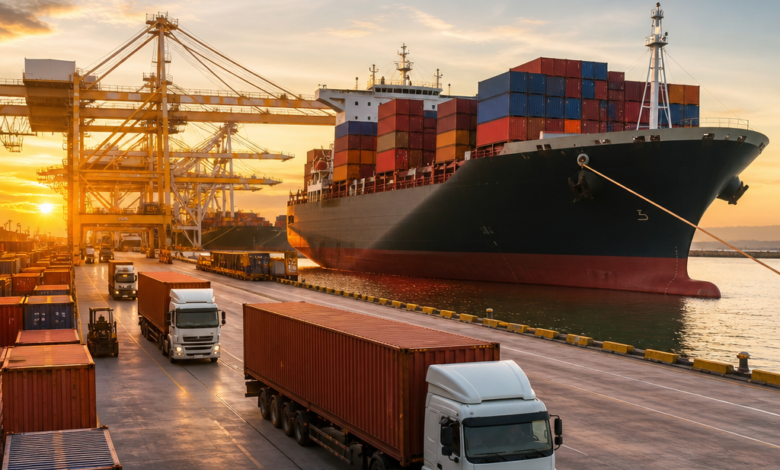
The Shifting Landscape of Freight and Supply Chain Management
The global freight and logistics industry is undergoing one of its most significant transformations in decades. Driven by the convergence of digital technology, shifting trade patterns, and rising consumer expectations, logistics providers are being forced to rethink every layer of their operations — from origin pickup to final delivery. What was once a largely manual, paper-driven industry has become a data-intensive ecosystem where speed, visibility, and precision are non-negotiable. Companies that fail to adapt risk losing ground to more agile competitors who have embraced technology as a core operational pillar rather than an afterthought.
This evolution is not happening in isolation. It is being shaped by macroeconomic pressures, including fuel price volatility, port congestion, labor shortages, and the lingering ripple effects of pandemic-era disruptions. At the same time, e-commerce growth has fundamentally altered delivery expectations, pushing logistics networks to become faster, more flexible, and more transparent than ever before. Understanding these forces is essential for any business that relies on freight movement to sustain its operations.
Breaking Down the True Cost of Freight Shipping
One of the most persistent challenges businesses face when managing their supply chains is understanding what actually drives freight costs. Many shippers focus narrowly on base rates while overlooking the numerous surcharges, fees, and variables that can dramatically inflate the final invoice. Fuel surcharges, terminal handling charges, peak season premiums, and documentation fees are just a few of the components that contribute to the total cost of moving goods across borders or across the country.
For businesses shipping internationally, the complexity multiplies. Currency fluctuations, customs duties, port fees, and inland transportation costs all factor into the equation. A thorough understanding of the key components that make up freight shipping costs is critical for any company looking to build accurate budgets, negotiate better contracts, and identify opportunities for cost reduction without sacrificing service quality. Transparency in pricing is increasingly becoming a competitive differentiator, with shippers gravitating toward logistics partners who can provide clear, itemized cost breakdowns rather than opaque bundled rates.
Why Cost Visibility Leads to Smarter Logistics Decisions
When businesses gain genuine visibility into their freight costs, they are better positioned to make strategic decisions. They can evaluate modal shifts — for example, moving from air freight to ocean freight for non-urgent shipments — or consolidate loads to reduce per-unit shipping costs. They can also identify patterns in their shipping data that reveal inefficiencies, such as consistently underutilized trailer capacity or routes that generate disproportionate surcharges. Cost visibility, in short, is not just a financial tool — it is a strategic asset that empowers smarter procurement and operational planning.
Technology Is Redefining Last-Mile Delivery and Tracking
While cost management remains a central concern, technology is rapidly reshaping how logistics companies operate at every stage of the supply chain. Nowhere is this more apparent than in last-mile delivery, which has historically been the most expensive and operationally complex segment of the freight journey. The rise of artificial intelligence is changing that calculus in meaningful ways. Logistics companies are now deploying sophisticated AI systems to optimize delivery routes, predict delays, and communicate proactively with end customers.
The adoption of AI-driven tools is accelerating across the industry, and for good reason. These systems can process enormous volumes of real-time data — traffic conditions, weather patterns, vehicle telemetry, and customer availability windows — to make dynamic routing decisions that human dispatchers simply cannot replicate at scale. To understand how this technology is being applied in practice, it is worth exploring why logistics companies are building custom AI agents for last-mile delivery tracking and what that means for the future of freight operations. The insights are instructive for any business evaluating its logistics technology strategy.
From Reactive to Predictive: The New Standard in Freight Operations
The shift from reactive to predictive logistics is perhaps the most consequential change occurring in the industry today. Traditional logistics operations were largely reactive — problems were identified after they occurred, and solutions were implemented in response. Modern logistics, powered by AI and real-time data analytics, is increasingly predictive. Potential disruptions are identified before they materialize, allowing logistics teams to reroute shipments, adjust schedules, and communicate with customers proactively. This shift reduces costs, improves service levels, and builds the kind of trust that turns one-time shippers into long-term partners.
Beardown Logistics: A Partner Built for Today’s Freight Challenges
In a market crowded with logistics providers making similar promises, what separates genuinely capable partners from the rest is their ability to deliver consistent results across diverse freight scenarios. Beardown Logistics has established itself as a trusted freight partner by combining operational expertise with a commitment to transparency and customer service. Whether managing time-sensitive shipments, navigating complex cross-border freight, or coordinating multi-modal transportation solutions, the company brings a level of professionalism and reliability that businesses depend on when margins are tight and deadlines are firm.
Building Long-Term Freight Partnerships That Deliver Results
The most effective logistics relationships are not transactional — they are strategic. When a logistics provider takes the time to understand a client’s business model, seasonal patterns, and growth trajectory, they can offer solutions that go beyond simply moving freight from point A to point B. They become an extension of the client’s supply chain team, anticipating needs, flagging risks, and continuously looking for ways to improve efficiency. This kind of partnership-oriented approach is what distinguishes leading logistics providers from commodity freight brokers, and it is the standard that businesses should demand when evaluating their options.
Sustainability and Compliance: Growing Priorities in Freight Logistics
Beyond cost and technology, sustainability has emerged as a defining issue for the logistics industry. Regulatory pressure, investor expectations, and customer demand are all pushing freight companies to reduce their environmental footprint. This includes investments in fuel-efficient fleets, carbon offset programs, and the adoption of alternative energy sources for warehousing and transportation. Compliance with evolving emissions regulations — particularly in international shipping — is also becoming a significant operational consideration that logistics providers must navigate on behalf of their clients.
For businesses, partnering with logistics providers who take sustainability seriously is increasingly a reputational and regulatory necessity, not merely a preference. Companies that can demonstrate responsible supply chain practices are better positioned to meet the expectations of environmentally conscious consumers and satisfy the reporting requirements of institutional investors and regulatory bodies alike.
Conclusion: Navigating the Future of Freight with Confidence
The freight logistics industry is more complex, more competitive, and more technologically advanced than at any point in its history. Businesses that approach logistics as a strategic function — investing in the right partnerships, leveraging technology for visibility and efficiency, and maintaining a clear understanding of their cost structures — will be far better positioned to thrive in an increasingly demanding global marketplace. The companies that treat logistics as an afterthought will find themselves at a persistent disadvantage, unable to meet the speed, transparency, and reliability standards that modern commerce demands. Choosing the right logistics partner, understanding the full scope of freight costs, and embracing the tools that make supply chains smarter are not optional steps — they are the foundation of sustainable business growth.