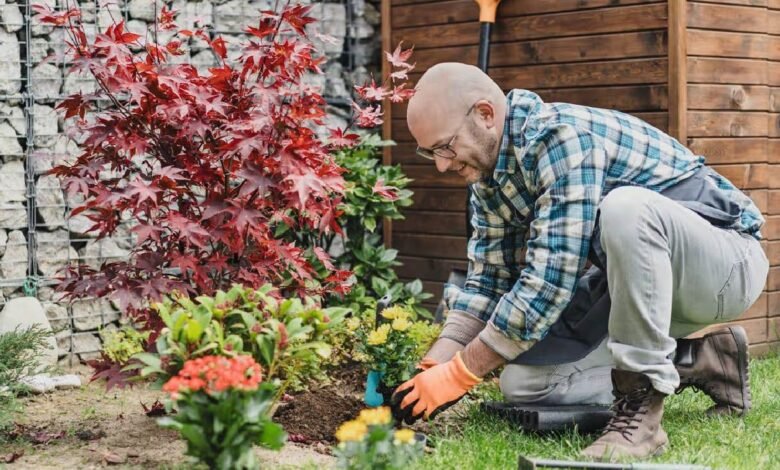
A garden has a funny way of becoming the place where things go when you do not know where else to put them. Before long, it’ll start looking less like an outdoor space and more like a storage area with a few plants around the edges.
A good clear-out can change that. Removing unwanted items creates room, improves safety, and makes the garden much easier to maintain.
So, what usually gets removed during a garden clear-out? Here are ten of the most common culprits found in UK gardens.
-
Clear Out Old Garden Furniture
Garden furniture spends most of its life exposed to rain, frost, sunlight, and the occasional bird with questionable manners. It is hardly surprising that even sturdy pieces eventually start to deteriorate.
Broken chairs, warped tables, rusty loungers, and damaged benches can take up valuable space without serving much purpose.
If a piece is still usable, consider donating or selling it rather than sending it straight for disposal. Someone else might be very happy to give that old bistro set another summer.
Furniture that is beyond repair is a different matter. Splintered wood, unstable frames, and badly rusted metal can become trip hazards, particularly when children or older people use the garden.
-
Deal With Garden Waste
Garden waste is one of the most obvious things to remove, yet it can accumulate surprisingly quickly. A few weekends of pruning can leave you with an impressive collection of branches, hedge trimmings, weeds, leaves, and grass cuttings.
Some green waste has an obvious second life. Small amounts of suitable material can go into a compost bin, while council garden-waste collections can deal with larger quantities.
The problem comes when the pile gets beyond what you can realistically manage. Large branches and thick hedge cuttings can quickly turn a tidy corner into a miniature woodland.
-
Remove Broken Tools and Equipment
Every garden seems to have a corner reserved for things that are “almost” useful. A rusty spade without a handle. A lawnmower that has not started since 2019. A pair of secateurs that has somehow become permanently stuck.
There is nothing wrong with repairing a useful tool. In fact, it can be a sensible way to save money and reduce waste. However, keeping broken equipment indefinitely does not make it more likely to recover.
Go through your tools and be honest about what you will actually use. Working items that have been sitting untouched for years could be donated, while damaged equipment may need to be recycled or disposed of through the appropriate local facility.
-
Get Rid of Unused Toys and Play Equipment
Children grow up quickly. Garden equipment does not.
That slide that once seemed enormous can suddenly look rather small. The paddling pool gets a puncture. The trampoline starts showing signs of wear. The plastic ride-on car has not moved under its own power for years.
Unused toys and play equipment can occupy a surprising amount of space, especially in smaller gardens. More importantly, damaged equipment can become unsafe.
Check outdoor toys regularly for cracks, sharp edges, unstable frames, and other signs of deterioration. If something is still in good condition but no longer needed, donating or selling it is worth considering.
Anything that is damaged beyond safe use should be dealt with properly rather than left at the back of the garden to deteriorate further.
-
Sort Through Unwanted Plant Pots
Plant pots have a habit of multiplying. You buy one plant, keep the pot, buy another plant, keep that pot too, and suddenly there is a stack of empty containers lurking behind the shed.
Some can be reused for future planting, cuttings, or seedlings. Others may be suitable for a community garden or local gardening group.
But cracked plastic pots, broken terracotta, and containers that have become too damaged to use do not need to occupy garden space forever.
Sort them into three groups: keep, pass on, and dispose of. It is a small job, but clearing away those forgotten pots can make a surprisingly noticeable difference.
-
Clear Away Old BBQs and Garden Ornaments
The barbecue seemed like a great investment when you bought it. Then it spent several winters outside and slowly developed the appearance of something excavated from an archaeological site.
Old BBQs are common garden-clearance items, particularly when they have become rusty, unstable, or impossible to clean properly. Depending on the materials and your local arrangements, parts may be suitable for recycling.
Garden ornaments can also become clutter when they are cracked, faded, or simply no longer fit the space. Before throwing them out, consider whether a clean or minor repair could give them another lease of life.
-
Remove Damaged Fencing and Timber
Old timber can quickly become a problem in a garden. Broken fence panels, rotten posts, discarded decking boards, and leftover pieces from previous DIY projects can all end up stacked against a wall or tucked behind a shed.
Damaged timber is not particularly useful, and rotten boards can become unstable or harbour unwanted pests. Removing them also makes it easier to inspect the garden boundaries and spot areas that need proper repair.
If you have recently replaced fencing, do not let the old panels become a permanent feature. Clear them away promptly and dispose of them through an appropriate route.
That pile of timber you keep walking around has probably had its day.
-
Get Rid of Broken Sheds and Storage
Garden storage can last for years, but eventually even a well-built shed reaches the point where repairs no longer make sense.
Rotten timber, damaged roofing, broken doors, and unstable structures can take up a large section of the garden while offering very little useful storage. An old shed can also make the surrounding area harder to access and maintain.
If the structure is no longer safe or useful, clearing it can transform the garden. You may suddenly discover a patch of paving, a neglected border, or several square metres of space you had forgotten existed.
Just remember that dismantling a large structure can be a substantial job. It is worth planning how the materials will be removed before you start taking it apart.
-
Dispose of Unwanted Garden Rubbish
Not everything found in a garden is technically garden waste. Over the years, outdoor spaces can collect old buckets, damaged children’s equipment, empty containers, bits of DIY materials, packaging, and other general rubbish.
This is particularly common after house moves, renovations, or long periods when the garden has been neglected.
Go through the clutter and separate anything that can be reused or recycled from genuine rubbish. Do not burn unknown materials simply to get rid of them, as some items can release harmful fumes and garden bonfires are subject to local rules and restrictions.
-
Clear Out Old Garden Features
Sometimes the item taking up space is not an object at all. It is a garden feature that has outlived its usefulness.
Old raised beds, damaged decking, unused paving, neglected water features, and worn-out borders can all become candidates for removal.
Perhaps the previous owner installed a pond that has not been maintained for years. Maybe an old paved area has become uneven and unusable. Or perhaps a raised bed has gradually turned into a home for weeds.
Removing these features can be a bigger project than simply taking a few bags of waste to the tip. It may involve lifting materials, dismantling structures, or dealing with substantial quantities of soil and rubble.
Before starting, work out exactly what needs to go and where everything will end up.
Know When a Garden Clearance Is Too Big for DIY
A small clear-out is usually manageable. A garden packed with years of accumulated waste and unwanted items is another story.
If you are dealing with bulky furniture, a collapsed shed, heavy timber, or several different types of rubbish, the job can quickly become physically demanding. There is also the question of transporting everything once it has been removed.
This is where using a garden clearance company can make sense. A professional team can clear unwanted items and garden waste efficiently, leaving you with a cleaner, more usable outdoor space without requiring several trips to the recycling centre.
It is particularly useful when you are preparing a neglected garden for sale, clearing a property after a move, or simply dealing with years of accumulated clutter.
Conclusion
You do not necessarily need to clear everything in one heroic weekend. Start with the items you know you no longer need. Once they are gone, you may find that the rest of the garden suddenly looks much easier to tackle.
And if the clutter has reached the point where your shed is no longer visible, it may be time to call in some help.