Celiac Disease and Autoimmunity: Understanding the Factors That May Contribute to Disease


Celiac disease is more than a digestive condition. It is an autoimmune disorder in which the immune system reacts abnormally to gluten, a protein found in wheat, barley, and rye. This response damages the lining of the small intestine and can interfere with the body’s ability to absorb essential nutrients.
Although gluten triggers the immune response associated with celiac disease, not everyone who eats gluten develops the condition. Genetics, immune function, and other biological factors help explain why some people are more susceptible than others. Understanding these factors can offer insight into celiac disease and the broader relationship between the immune system and autoimmune conditions.
What Happens in the Body With Celiac Disease?
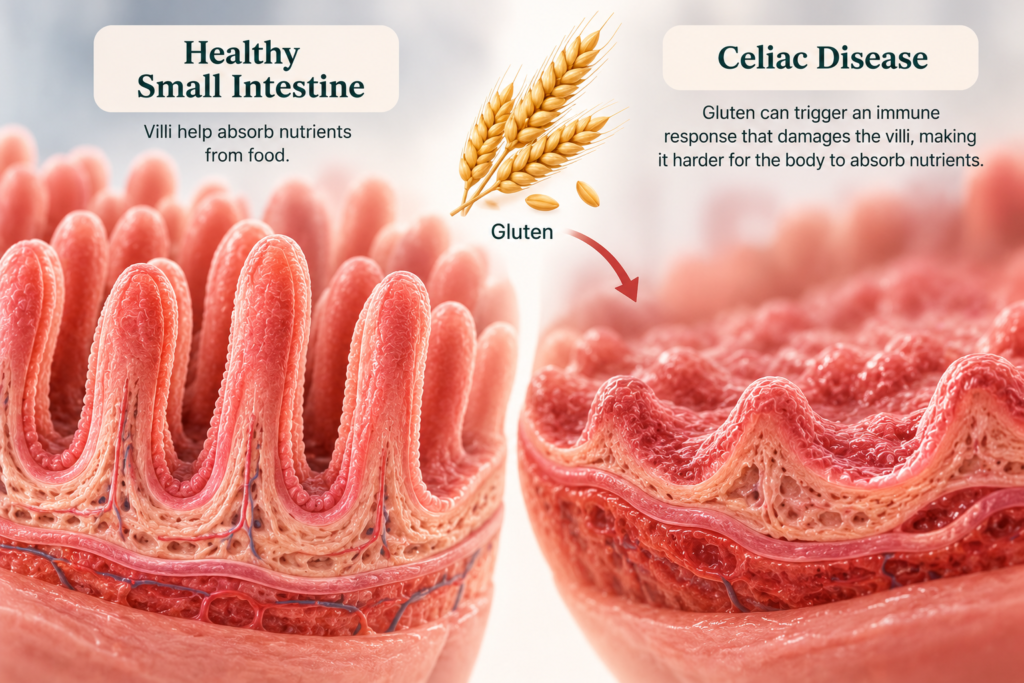
In a healthy digestive system, the small intestine contains tiny, finger-like projections called villi. These structures help the body absorb nutrients from food. In people with celiac disease, consuming gluten triggers an immune response that damages these villi.
Over time, this damage can lead to nutrient deficiencies and a range of symptoms. Some people experience bloating, abdominal pain, diarrhea, or constipation. Others may experience fatigue, joint discomfort, anemia, skin problems, or neurological symptoms. Some individuals have few noticeable symptoms despite intestinal damage.
Celiac disease differs from a wheat allergy and non-celiac gluten sensitivity. While these conditions can produce overlapping symptoms, celiac disease involves an autoimmune response that can damage the small intestine.
This disease can develop in people who are genetically predisposed to the condition and consume gluten, though other factors may also contribute to its development.
The Role of Genetics in Autoimmune Disease
Genetics play an important role in celiac disease. Most people diagnosed with the condition have particular variants of genes known as HLA-DQ2 or HLA-DQ8. These genes help the immune system recognize substances in the body and distinguish between different proteins.
However, carrying one of these genetic variants does not mean someone will develop celiac disease. Many people have the variants without ever developing the condition. This suggests that genetic susceptibility is only one part of a more complex process.
Researchers are also investigating how genetics may interact with environmental exposures and immune responses. Similar patterns appear in other autoimmune diseases, in which inherited susceptibility may increase risk without determining whether a condition will develop.
Understanding this distinction is important because autoimmune diseases rarely have one simple explanation. Several biological and environmental influences may interact over time.
How the Immune System Contributes to Celiac Disease
The immune system protects the body against harmful microorganisms and other potential threats. In autoimmune conditions, however, immune responses can mistakenly target the body’s own tissues.
In celiac disease, gluten exposure triggers an abnormal immune response in the small intestine. This process involves immune cells and inflammatory signals that contribute to intestinal damage.
Scientists are studying why these responses develop in some people but not others. Factors under investigation include the gut microbiome, intestinal infections, and the way the immune system responds to environmental exposures.
These questions are relevant beyond celiac disease. Researchers studying autoimmunity are examining how infections and other environmental factors may influence immune regulation in susceptible individuals.
For example, Epstein-Barr virus (EBV) has been associated with several autoimmune diseases, including multiple sclerosis and systemic lupus erythematosus. Researchers continue to investigate the mechanisms behind these associations and how viral infections may interact with immune function. Readers interested in this area can explore more about Epstein-Barr virus and its relationship to immune health.
It is important to distinguish these broader findings from evidence specific to celiac disease. EBV is not an established cause of celiac disease, and research into possible connections between infections and autoimmunity remains ongoing.
The Gut Microbiome and Environmental Factors
The gut microbiome consists of the many microorganisms that live in the digestive tract. These organisms contribute to digestion and interact with the immune system, helping maintain the intestinal environment.
Researchers are investigating whether differences in the gut microbiome may influence the development of celiac disease or other immune-mediated conditions. Studies have also examined whether certain gastrointestinal infections and early-life exposures are associated with changes in celiac disease risk.
These findings do not mean that a particular microbiome pattern or infection will cause someone to develop an autoimmune condition. Instead, they suggest that the relationship between the environment and immune function is complex and deserves further study.
Diet is another important consideration. In celiac disease, gluten is the known trigger of the damaging immune response. However, the reasons a person develops the condition in the first place are not fully understood.
Understanding these distinctions helps prevent the oversimplification of autoimmune disease as the result of a single food, infection, or lifestyle factor.

Recognizing Symptoms and Seeking an Evaluation
Because celiac disease can affect different parts of the body, symptoms may not always point directly to a digestive disorder. Persistent gastrointestinal problems, unexplained iron-deficiency anemia, ongoing fatigue, or certain nutrient deficiencies may warrant further evaluation, particularly when there is a family history of celiac disease or another associated autoimmune condition.
Diagnosis typically involves blood tests and, when indicated, a biopsy of the small intestine. Testing is generally most accurate while a person is still consuming gluten. Starting a gluten-free diet before testing can affect the results, so anyone who suspects celiac disease should consult a healthcare professional before making major dietary changes.
A confirmed diagnosis is important because untreated celiac disease can cause ongoing intestinal damage and nutritional complications. The primary treatment is a strict, lifelong gluten-free diet, often with guidance from a registered dietitian familiar with the condition.
A More Complete Understanding of Autoimmunity
Celiac disease illustrates how genetics, immune responses, and environmental influences can intersect in a complex health condition. Although gluten is the trigger for the immune response that damages the intestine, researchers continue to investigate why certain people develop the disease and how other biological factors may influence susceptibility.
Ongoing research into infections, the gut microbiome, and immune regulation may help scientists better understand autoimmune conditions more broadly. For now, recognizing symptoms, obtaining an accurate diagnosis, and following evidence-based treatment recommendations remain important steps for people living with celiac disease.
As research advances, a clearer understanding of the factors that contribute to autoimmunity may help improve how these conditions are identified, managed, and studied.