A structural bracket fails on equipment sixty feet up a lattice tower. The repair requires four threaded anchor points set into thin-wall steel. The nearest compressor sits at ground level, and running a hose up the structure means securing it against snagging, managing its weight over the climb, and accepting that any coupling failure ends the task.
The same repair inside a shop takes fifteen minutes. On the tower, the air supply is the entire problem, and it has nothing to do with the fastening itself.
This category of work exists across maintenance, installation, and field service, and the constraint it imposes shapes tool selection more than setting force or cycle speed does.
Air Supply Is Infrastructure
A pneumatic tool assumes a compressed air system, and that assumption carries a footprint.
The compressor needs a power source, a location, and clearance for intake and exhaust. Hose runs from it to the work, and every foot of that run has to be routed, protected, and eventually recovered.
On a fixed line, that infrastructure is already there and the assumption is invisible. Away from it, the infrastructure becomes the job’s largest logistical component.
Portable compressors solve part of this and introduce their own conditions. They need fuel or power, they generate noise, they occupy space, and they require the operator to remain within hose reach of wherever the compressor could be placed.
Reach Constraints Shape the Work Sequence
A hose-tethered tool defines a working radius, and the work has to be organized around it.
Tasks are sequenced by proximity to the air source rather than by logical order. Moving to a new position means repositioning the compressor, extending the hose, or breaking down and setting up again.
On elevated or confined work, the hose itself becomes a hazard. It catches on structure, adds weight pulling the tool downward, and creates a trip and snag path across walkways and platforms.
In occupied buildings, running hose through corridors and doorways means managing access for other people, which frequently converts a short task into a scheduled one.
Battery Tools Remove the Tether
A cordless rivet nut gun performs the same setting operation with an onboard power source, which eliminates the supply infrastructure entirely.
The operator carries the tool, spare batteries, and fasteners. Working position is limited by physical access rather than by hose reach.
Setup time reduces to selecting the mandrel and confirming the setting parameters. There is no compressor to position, no line to run, and no pressure to verify.
Sequential tasks across a site proceed in whatever order makes sense, since relocating means walking rather than dragging equipment.
Setting Consistency Comes From Control Rather Than Pressure
Pneumatic setting force depends on supplied air pressure, which varies with line conditions as discussed across any real installation.
Battery tools derive force from an electric drive, typically through a screw or lead mechanism, and control the setting by stroke or by measured load rather than by supply pressure.
The practical difference is repeatability. A tool controlling stroke sets each fastener to the same displacement regardless of external conditions, which produces consistent bulb formation across a run.
Some tools record or display the setting result, allowing verification without destructive checking. On work requiring documentation, that capability replaces sample testing.
Battery Capacity Defines the Session
The constraint that replaces air supply is charge.
Installations per charge depends on fastener size, material, and the force each setting requires. Larger fasteners in thicker or harder material draw more energy per cycle.
Field work benefits from carrying multiple batteries and a means of charging between sessions. Vehicle charging extends working time for mobile service work.
Cold conditions reduce available capacity, which matters for outdoor work in winter. Batteries kept warm until use perform closer to their rating.
Planning a session means estimating fastener count and matching it to available charge with margin, in the same way a pneumatic session requires estimating air demand.
Weight Distribution Differs
Battery tools carry their power source, which places weight at the tool rather than at the compressor.
For overhead work, tool weight is the dominant ergonomic factor, and a battery tool weighs more than the equivalent pneumatic head. Sustained overhead setting is more fatiguing.
For work at bench height or below, the difference matters less, and the absence of hose weight pulling on the tool offsets some of it.
Balance affects perceived weight. A tool with the battery positioned to counter the head weight handles better than one with weight concentrated forward, regardless of total mass.
Where Each Approach Fits
Fixed production lines with established air systems have no supply problem, and pneumatic tools deliver high cycle rates with minimal tool weight for continuous operation.
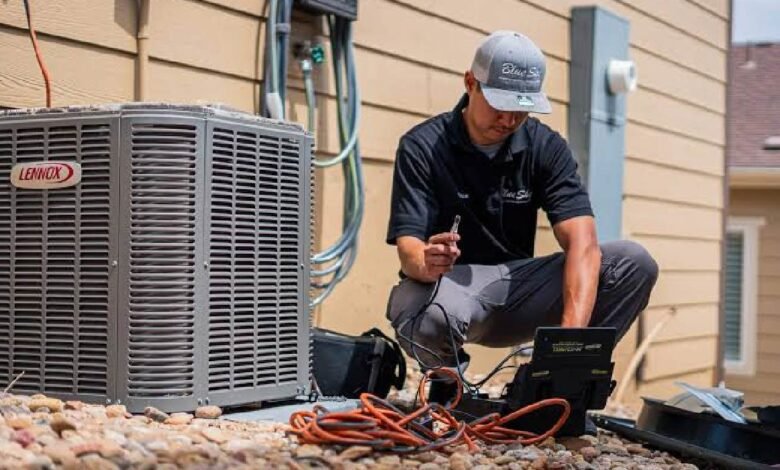
Field service, maintenance, installation, and repair work away from infrastructure favors battery tools, since the supply constraint dominates every other consideration.
Mixed operations often maintain both, using line-supplied tools at fixed stations and battery tools for anything mobile.
Low-volume work in varied locations, which describes much maintenance work, sits clearly on the battery side because setup time exceeds task time with a pneumatic setup.
What the Selection Requires
The inputs are about the work environment more than about the fastener.
Where the work happens and whether compressed air exists there. How far the tool must travel from any possible supply point. Whether access permits hose routing. Fastener count and size per session. Working position and duration, for the weight consideration.
Setting force and fastener range matter, but they are usually satisfied by multiple tools. The supply question narrows the field first.