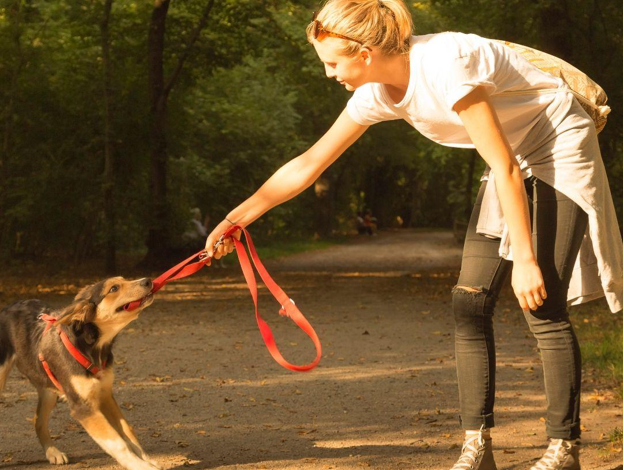
Leash pulling can turn a simple walk into a tiring and frustrating experience. Most dogs pull because moving forward is rewarding, especially when they are excited to explore, greet someone, or reach an interesting smell.
The goal of leash training is not to force the dog into a perfect position. It is to teach that a loose leash allows the walk to continue, while tension on the leash causes forward movement to pause.
Use Comfortable Walking Equipment
Start with equipment that fits securely and does not restrict normal movement. A well-fitted harness can give the handler better control while reducing pressure on the dog’s neck.
Avoid using equipment as a replacement for training. The leash, collar, or harness should support communication, but the dog still needs to learn what is expected.
Practice Before Going Outside
Busy sidewalks may be too distracting for early training. Begin inside the home, in a hallway, or in a quiet yard where your dog can focus.
Hold a treat near your leg and reward the dog for standing or walking beside you. Take only a few steps at first, then gradually increase the distance as the dog becomes more consistent.
Reward a Loose Leash
Reward your dog while the leash is relaxed, not after pulling has already started. The timing helps the dog connect the reward with staying close and keeping tension off the leash.
Useful rewards may include:
- Small pieces of food
- Verbal praise
- Permission to sniff
- Moving toward an interesting area
- A short play break
Food is helpful, but access to the environment can also be a powerful reward. For example, ask for a few loose-leash steps before allowing the dog to investigate a tree.
Stop When the Leash Tightens
When your dog pulls, stop moving rather than continuing to follow. Wait for the leash to loosen or encourage the dog to return toward you, then begin walking again.
This teaches that pulling does not make the walk move faster. Progress may feel slow at first, but allowing the dog to reach every destination by pulling can strengthen the habit.
Change Direction Calmly
Changing direction can help when a dog becomes fixed on something ahead. Turn smoothly, encourage the dog to follow, and reward when they catch up without tightening the leash.
Avoid sudden jerks or sharp corrections. The purpose is to regain attention and create another opportunity for the dog to succeed.
Keep Early Walks Short
Leash training requires concentration from both the dog and the handler. A focused ten-minute session may be more productive than a long walk filled with repeated pulling.
Dogs attending dog obedience classes Toronto owners choose may practice leash skills in controlled environments before working around heavier distractions. Group settings can also help handlers improve their timing and reward placement.
Identify the Cause of Pulling
Not every dog pulls for the same reason. Some are excited, while others may be anxious, frustrated, or trying to move away from something uncomfortable.
Watch for signs such as barking, lunging, freezing, tucked posture, or refusing treats. A qualified dog behaviorist Toronto families consult can help when pulling is connected to fear, reactivity, or aggressive behavior.
Increase Distractions Gradually
Once your dog can walk calmly in a quiet area, introduce more challenging locations in small steps. Move from indoors to the yard, then to a quiet street before attempting crowded parks or busy sidewalks.
Increase distance from dogs, bicycles, or people when your dog struggles to respond. Training works best when the environment is challenging enough to practice, but not so difficult that the dog cannot focus.