Why Swiss Machining and Aluminum Alloy Machining Are Changing Modern Manufacturing

Manufacturing has evolved a great deal in the past decades. Parts with a good balance of strength and cost are no longer what companies demand. Now, they want speed, accuracy and reliability too. That is also the reason why swiss machining and aluminium alloy machining are gaining more attentions from business to business. These are two different ways that manufacturers can use to produce the robust parts without spend materials and time unnecessarily.
From automotive to medical device, aerospace, electronics, precision is more important today than ever. Customers demand products that work, that last, and that are delivered on time. Smarter machining processes are enabling manufacturers to more effectively meet those demands.
Why Swiss Machining Is So Popular?
One of the key reasons why swiss machining is so sought after is because speed can increased.
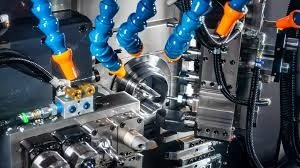
Many traditional machining methods are effective at producing many types of items, but precision is difficult to achieve when the parts are small and complex. Swiss machining solves that problem by holding the material closer to the cutting tool. This dampens vibration and produces smoother, more accurate outcomes.
This is particularly effective for making minute components with narrow tolerances. Sectors such as medical, and aerospace frequently rely on parts that have need to be a perfect fit right down to the very last one. Even the tiniest mistake can cause massive problems. Swiss machining prevents these problems by producing uniform results from start to finish.
Efficiency is yet another reason why companies’ turn to swiss machining. Equipment can conduct operations in multiple passes, thus cutting manufacturing time. More work also can be done in a set-up, instead of having to move pieces repeatedly between separate machines.
Aluminum Alloy Machining is in Growing Need
At the same time, aluminum alloy machining has become more and more vital in the contemporary manufacturing industry. Aluminum alloys are lightweight, strong, and corrosion resistant, which makes them suitable for use in a number of industries. They are used by manufacturers to make aircraft parts and smartphone components.
Can I just say one thing beneficial about aluminum alloy machining? Aluminum is easier to work with and machine than many other metals. This enables the production of intricate designs, without slowing down manufacturing. It also helps to reduce the wear on cutting tools, eventually lowering maintenance expenses.
Among its other advantages, it can be used for weight reduction. Many sectors are striving to develop stronger products that are still lighter. Lighter parts in auto production equal better gas mileage. In aerospace, saving weight can enhance performance and reduce operating expenses. Aluminum alloys enable companies to achieve that while still being able to rely on durability.
Why These 2 Processes Complement Each Other So Well
Swiss machining and aluminum alloy machining are the best two worlds combination for manufacturers. Swiss machining delivers incredible accuracy, and aluminum alloys are strong, yet lightweight materials. Between the two of them, they produce the high quality components that industry demands. This pairing is especially helpful for those in the business of small, intricate parts. Medical instruments, electronic connectors and space components, for example, require light weight materials and precise dimensions. The use of aluminum alloys in swiss machining, enables the manufacturer to obtain these parts fast and on high accuracy.
That’s consistency in production, too. Because movement whole during cutting is reduced in swiss machining, aluminum parts retain their dimensional stability better.
Superior Surface Quality Cleaner Results
A smooth surface finish is a necessity in many products. Performance, appearance, and durability can be compromised by rough or uneven surfaces. One of the reasons the manufacturers appreciate the Machining of Aluminium Alloy is owing to the clean finish it gives. Aluminum is a good material for precision cutting, which allows you to get clean and professional-looking parts.
Swiss machining also leads to better finishes due to its inherently stable and precise nature. It is during the cutting process that control of the process leads to less imperfections and thus cleaner cuts. This is true for a lot of performance related stuff,” he added.
Smooth surfaces are needed for medical supplies, for example, to keep them safe and sterile. Finished Electronic components must also be precisely finished in order to function properly. “By utilizing swiss machining and aluminum alloy machining, manufacturers can comply with these stringent quality norms.
Faster Production Without Sacrificing Quality
Our report examines today’s need for speed, and how best to satisfy it. Customers want to be able to get their hands on things quickly but also the things that they are getting their hands on to be reliable. The manufacturers have to have quality of parts and not quantity.
Again, that’s another reason why swiss machine work has grown so valuable. The method enables the fabrication of complex components with high volume and low delay. Because there are so many tasks being done in one stop, production efficient begets production efficient. Speed is further boosted with aluminum alloy machining as it is simpler to cut than other tougher metals. This allows machines to work faster while retaining their precision.” The result is a production process that saves is both labor and money.” The outcome is a production process that saves both time and money.”
Driving Innovation for a Range of Industries
Modern industries also evolve all the time. Businesses are producing smaller electronics, lighter vehicles and more sophisticated medical instruments. These advances need production techniques that can evolve with the market.
Swiss machining enables innovation in that it allows extremely intricate turns to be created with a high level of consistency. Aluminum alloy turnings and machining facilitates innovation by delivering a combination of a lightweight, durable, and adaptable substrate.
Together, they enable manufacturers to design products that are more efficient, dependable and competitive on a global scale.
Conclusion
The fabrication industry is still evolving towards increased precision, speed, and stronger materials. Which is why swiss machining and aluminum alloy machining keep gaining relevance.
Swiss machining ensures precision and productivity in complex parts production, whereas aluminum alloy machining adds the benefit of lightweight strength and exceptional adaptability. Combined, these processes enable manufacturers to produce dependable parts for sectors that require the utmost in standards.
Companies that acquire these sophisticated machining technologies are well-positioned to tackle future manufacturing challenges. They enhance product quality, waste elimination, production time reduction, and market competitiveness in times of rapid evolution.
With predominating technology advancement, the significance of swiss machining and aluminum alloy machining will just keep getting more and more critical. Businesses demanding accuracy, performance and cost-efficiency are already reaping the returns from these powerful manufacturing solutions.