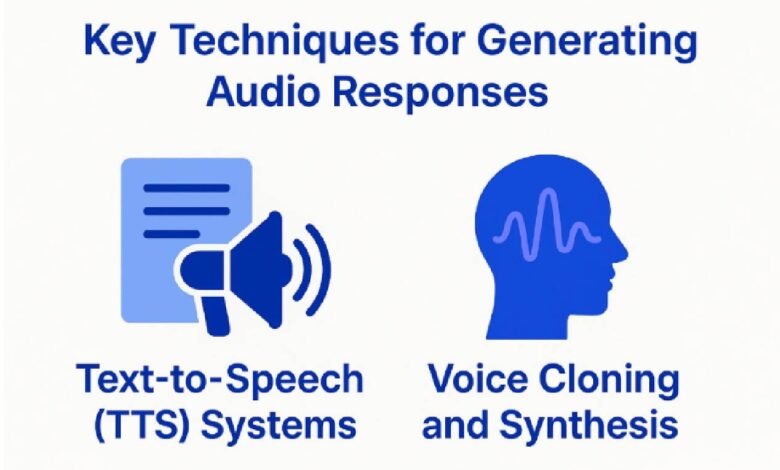
We all know text has dominated online content for decades. But now that is changing. With the development of AI, every industry is shifting. For instance, 78% of podcast creators are likely to adopt AI tools by next year in their production processes. This is a signal that shows that audio is entering a new phase.
AI voice generators are driving this audio shift. It transforms the process and makes audio content easy to create for everyone. With AI voice generators, there’s no need for studios where scripts are read by trained professionals or for long turnaround times.
The change goes deeper than convenience alone. It’s reshaping how content gets planned from the very first draft, how brands reach audiences in languages they never had budget to cover before this technology existed, and how listeners expect to interact with the audio they consume every day.
In this article, we will discuss the eight ways this technology is reshaping where audio content is heading.
8 Ways AI Voice Generators Will Shape the Future of Audio Content
1. From Text-First to Voice-First Content Strategies
Publishers built entire content operations around written scripts. The reason behind it was that the text was cheap to produce and easy to distribute across every platform that mattered at the time.
That calculation is changing fast. Teams that once treated audio as a nice-to-have extra feature now realize its importance. The reason behind the fast adoption of voice-first content is the time taken for production. Writing scripts with narration in mind from the very first draft is quicker than converting finished text as an afterthought once everything else is already done and published.
This shift changes more than production order. A script written for hearing first reads differently than one written for the eye. Things like shorter sentences, clearer transitions, and fewer nested clauses work on a printed page but not at the time of voice-over.
Consider, for example, a recipe blog rewriting its posts with narration in mind might swap a long, comma-heavy ingredient list for short, spoken-friendly steps that make sense played aloud in a kitchen with both hands busy.
2. Studio-Quality Narration is No Longer a Specialist Skill
Producing polished narration used to mean hiring a voice actor, booking studio time, and waiting days for a finished file to come back. That barrier has mostly disappeared because of Voice AI. An AI voice generator gives creators access to 200+ realistic voices across 35+ languages and accents. This is done with pronunciation accuracy tested specifically against technical terms and brand names rather than casual conversation. So a script full of jargon still comes out sounding polished and clear.
What matters here is the full control over pitch, speed, emphasis, and pauses at the word level. This means that a creator can shape how a sentence lands, without needing to hand that decision off to someone else entirely and wait on their schedule. That level of control was once only with a trained voice actor working from detailed direction, session after session. Now it is available with whoever wrote the script, adjustable in real time as many times as it takes to get right, at no extra cost per revision.
3. Multilingual Voice Content Flexibility
| Approach | Cost Per Language | Turnaround Time |
| Human voice actors | High, separate contract per language | Weeks per language |
| Pre-recorded translation services | Moderate, limited language options | Days to weeks |
| AI voice generation | Low, scales across languages | Minutes to hours |
A brand publishing their content in five languages used to mean having five separate recording projects, five contracts, and five release schedules that rarely lined up neatly. AI voice tools compress that into a single workflow. These tools generate narration in multiple languages from one source script without hiring a new voice actor for every market a business wants to reach.
That shift matters most for smaller publishers who could never justify the cost of full multilingual production before this technology existed. A team that used to release content in one language, maybe two if the budget stretched that far, can now reach markets that were simply out of financial reach a few years ago, opening up audiences that used to belong exclusively to much larger competitors.
4. Voice Search is Reshaping Content Discovery
Search behavior of users is changing towards spoken queries. Content built to be heard tends to perform differently in that environment than content built only to be read on a screen.
Publishers experimenting with audio versions of key articles are finding that voice search favors content available in a listenable format, since assistants often pull directly from audio-friendly sources when answering a question out loud.
Say, for example, a recipe site that adds a narrated version of its most popular posts finds those pages showing up more often in smart speaker responses, simply because the assistant has audio it can play directly instead of generating text-to-speech on the fly from a page it has to parse first.
5. Interactive Voice Agents are Turning Listening into Conversation
Static narration answers one question at a time, in one fixed order chosen by whoever wrote the script. The next step goes further, letting a listener ask something out loud. Then get a direct answer back. With conversational AI, there’s no need to scroll through a file hoping to land on the right timestamp somewhere in the middle.
- On-demand clarification. A listener confused by a term can ask what it means instead of pausing playback to search elsewhere.
- Personalized pacing. A voice agent can slow down, repeat, or skip ahead based on what a particular listener really needs at the moment.
- Always-available support. No studio hours, no scheduling, just an answer whenever someone has a question, day or night.
Action tip: Start small by adding a single interactive Q&A segment to an existing narrated piece, rather than rebuilding an entire content library around conversation from day one before knowing whether listeners want it at all.
6. AI Voice Eliminates Re-Recording Costs But Only Teams With a System Will Capture That Advantage
Before AI voice, fixing one wrong statistic in a narrated course meant re-booking a voice actor, re-recording the segment, re-editing the file, and re-uploading everything. Most teams didn’t bother. They left the error in and hoped nobody noticed.
AI voice changes that entirely. A corrected line re-renders in seconds. No studio, no invoice, no waiting. But that speed only pays off if a team knows where every asset lives, what it contains, and when it was last checked.
For example, a B2B SaaS company with 80 narrated product explainers updates its pricing. Old approach: 80 files, 80 re-recording sessions, weeks of delay. New approach with AI voice: locate the pricing segment across files, update the script, re-render. Done in an afternoon.
That only works if the library is documented. Teams borrowing from the same discipline that drives engineering excellence and product lifecycle strategy in modern manufacturing version logs, ownership tagging, change triggers are the ones capturing AI voice’s speed advantage. Everyone else is still hunting through folders.
| Asset Field | What to Track |
| File name | Topic + voice profile + publish date |
| Review trigger | Pricing change/regulation update/rebrand |
| Last updated | Date + reason for change |
| Owner | Who approves re-renders |
Teams that build this before their library hits fifty files spend a fraction of the maintenance time compared to those who retrofit it later.
7. AI Makes Audio Cheap to Produce at Volume, Which Makes Stale Content a Bigger Risk Than Ever
When producing narrated content cost thousands per hour of finished audio, libraries stayed small by necessity. Small libraries were manageable. Nobody needed a retirement plan for twenty files.As content volume grows, businesses using search engine optimization services can also review their audio content to ensure it remains discoverable, relevant, and aligned with changing search behavior.
AI voice removes that natural brake. A team can now produce fifty narrated pieces in the time it once took to produce five. That’s the upside. The downside: volume without a lifecycle plan means stale content piles up faster than anyone notices until a listener does.
What goes stale and how fast:
- Regulatory language: can change overnight, especially in finance or healthcare
- Product features: renamed, deprecated, or updated with every release cycle
- Statistics and data: cited figures have a shelf life most teams don’t track
- Brand voice: evolves over time, making older audio sound off even if facts are still correct
The same reason product lifecycle planning matters in electronics manufacturing before a product ships applies here. Planning a retirement and update path before publishing the first file costs almost nothing. Rebuilding a bloated, outdated audio library from scratch costs significantly more, in time, credibility, and listener trust.
8. AI Voice Can Publish at Scale Overnight, Which Makes Editorial Judgment More Critical
Slow production used to enforce editorial review by accident. When a narrated piece took days to produce, there was less time to catch errors before anything went live. In many instances, a wrong claim, a misleading framing, or a tone that didn’t fit was spotted by someone after the file reached a listener.
AI voice generators remove that. There is enough time to re-listen and edit things again, as production is fast.
Here’s how you can plan a lightweight review gate for your productions.
| Review Step | Who Owns It | When It Happens |
| Fact check | Writer or editor | Before script is finalized |
| Tone review | Content lead | After first render |
| Accuracy spot-check | Subject matter expert | Before publishing on sensitive topics |
| Listener test | One real person | On any new format or voice profile |
AI voice handles production and speed at scale. The decisions about what gets said, how accurate everything is, and whether the listener can trust it depend on people building the content.
Using AI Voice Generators for Your Audio Content
The shift toward voice is opening up a format that used to be expensive and slow. AI voice tools are making it possible to generate many audio files at a time without having a special budget behind it.
AI voice generators have made multilingual publishing, search discovery, and interactive support all possible with affordable rates. The teams building their content through this technology should stay disciplined about quality rather than chasing raw volume for its own sake, one narrated file after another.
None of this happens overnight either. The publishers seeing the strongest results tend to be the ones treating voice as a genuine strategic shift, worth the same planning as any other major content decision.
Are you curious what else is shaping content, technology, and business right now? Visit Us Time Magazine for more coverage on the trends worth paying attention to.