Mitigating Transient Overvoltage Risks in Utility-Scale Battery Energy Storage Systems (BESS)

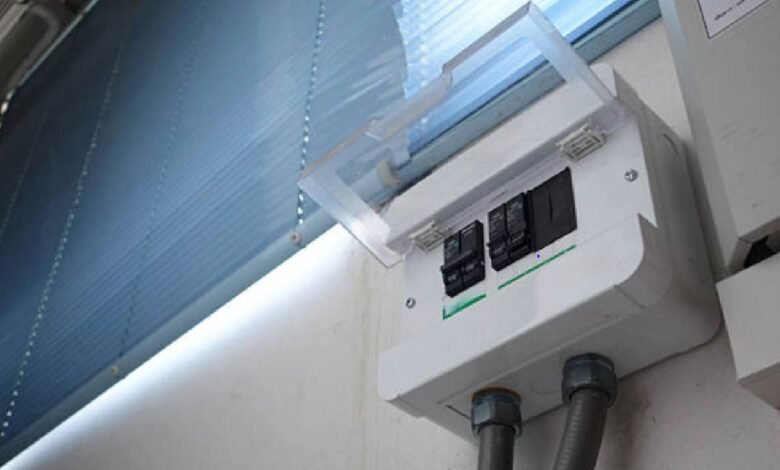
The rapid global deployment of Battery Energy Storage Systems (BESS) is fundamentally transforming modern electrical infrastructure. By storing excess renewable energy and discharging it during peak demand, utility-scale BESS facilities serve as the critical linchpin for grid stability.
However, this massive scale-up introduces a highly specialized set of engineering challenges. These multi-megawatt facilities are frequently deployed in vast, open terrains, making them prime targets for atmospheric electrical discharges.
Furthermore, their constant interaction with the broader electrical grid exposes them to severe switching transients. Lightning strikes and grid-side anomalies can induce massive transient overvoltages that propagate instantly through the facility’s extensive cable networks.
Without rigorous, standards-compliant mitigation strategies, these overvoltages can destroy sensitive microelectronics, trigger catastrophic fires, and result in millions of dollars in unexpected downtime.
The Unique Electrical Vulnerabilities of BESS Architectures
A utility-scale BESS is essentially a highly concentrated, electrically fragile micro-grid. Inside the storage containers, thousands of lithium-ion cells are monitored by highly sensitive microprocessors within the Battery Management Systems (BMS).
These components operate on extremely low voltages and possess minimal dielectric thresholds. When a transient overvoltage breaches these thresholds, the resulting thermal stress can instantly destroy the control boards, blinding the facility’s safety monitoring systems.
As utility-scale energy storage scales to meet aggressive grid demands, BESS designs are rapidly migrating to 1500V DC architectures to optimize transmission efficiency. However, these high-voltage environments exponentially amplify the catastrophic potential of electrical faults caused by atmospheric discharges or internal switching events.
According to engineering specifications from industrial surge protective device manufacturers like LSP, isolating these multi-megawatt systems requires specialized metal oxide varistor (MOV) technologies. These components can safely dissipate massive discharge currents while maintaining strict voltage protection levels, ensuring the Power Conversion Systems (PCS) remain intact.
Designing a Robust Surge Protection Architecture for Storage Facilities
Protecting a BESS facility requires a multi-tiered approach in strict accordance with international standards such as IEC 61643 and IEC 62305. Engineers must segment the facility into specific Lightning Protection Zones (LPZ) to systematically clamp surge energy.
Because a BESS bridges DC storage and AC grid transmission, the surge protection strategy must address both sides of the power conversion lifecycle.
DC-Side Protection: Safeguarding Battery Racks and PCS
The DC side of a BESS represents a highly volatile environment where extreme short-circuit currents are present. The SPDs deployed here must be explicitly rated for high-voltage DC applications to prevent internal arc faults and fire hazards.
Engineers must install robust DC SPDs as close to the battery racks as possible to shield the internal Battery Management Systems (BMS). A secondary set of DC SPDs must be installed at the DC input terminals of the Power Conversion Systems (PCS) to handle wave reflection along the cabling.
AC-Side Protection: Defending the Grid Interconnection
The AC side connects the storage facility directly to the medium or high-voltage utility grid. This connection point is highly susceptible to massive surges originating from utility-side load switching or direct lightning strikes to the transmission lines.
To establish a comprehensive defense network, electrical engineers must differentiate between the operational requirements of AC and DC protective devices:
- Main Service Entrance (AC): Requires robust Type 1 SPDs engineered to handle the massive energy of a direct lightning strike, tested against the highly energetic 10/350 μs waveform.
- Secondary Distribution (AC): Utilizes Type 2 SPDs (tested with an 8/20 μs waveform) to neutralize residual voltage spikes before they reach auxiliary cooling and control systems.
- Battery Container (DC): Requires specialized PV/DC SPDs capable of safely interrupting extreme DC short-circuit currents without triggering a thermal runaway event.
- Signal and Data Lines: Requires dedicated Type 3 and data SPDs on industrial Ethernet and SCADA lines to prevent data corruption between the BMS and the central control hub.
The Foundation: Equipotential Bonding and Grounding
Procuring the most advanced surge protective devices in the world is useless if the fundamental facility grounding is flawed. An SPD does not absorb surge energy; it merely redirects it to the earth.
Therefore, the absolute foundation of any overvoltage mitigation strategy is a meticulously designed, low-impedance earthing system. All metallic components, including battery container chassis, PCS enclosures, and SPD ground terminals, must be bonded to a unified grounding matrix.
If the ground impedance is too high, the massive energy from a lightning strike cannot dissipate safely. Instead, it will seek an alternative path to ground, forcefully traveling straight through the sensitive electronics the SPDs were meant to protect.
Maximizing ROI Through Lifecycle Asset Protection
Utility-scale BESS projects are highly capital-intensive, with return on investment (ROI) models relying on decades of continuous, uninterrupted operation. Treating electrical protection as a peripheral cost rather than core asset insurance is a profound engineering oversight.
Investing a fraction of the overall capital expenditure into industrial-grade surge mitigation prevents catastrophic thermal runaway, limits prolonged downtime, and eliminates multi-million dollar equipment replacement costs.
The financial momentum driving the global energy transition is unprecedented. Driven by the necessity to balance intermittent renewables like solar and wind, the global battery energy storage market is experiencing exponential growth, attracting billions in infrastructure capital annually.
Protecting these massive grid-scale investments with proactive, industrial-grade transient mitigation is not merely an engineering checklist. It is an absolute financial necessity to ensure decades of reliable grid support and sustainable profitability.