Modern manufacturing sits at a fascinating crossroads where precision engineering, strategic product planning, and supply chain intelligence must converge seamlessly. Whether you are producing high-performance automotive components or complex electronics assemblies, the disciplines that govern long-term success share a common foundation: understanding how products evolve, how materials are sourced, and how engineering decisions made early in a product’s life ripple outward for years. Companies that master this intersection do not simply survive competitive markets — they define them.
The Strategic Importance of Product Lifecycle Planning
Product lifecycle planning is far more than a scheduling exercise. It is a discipline that forces manufacturers to think holistically about every phase a product will pass through — from initial concept and design, through peak production, and eventually into obsolescence management. In industries where component availability can shift dramatically within a single fiscal year, failing to plan across the full lifecycle is not a minor oversight; it is a structural vulnerability.
Electronics manufacturing offers perhaps the clearest illustration of this challenge. Semiconductors, passive components, and specialized connectors can move from abundant availability to critical shortage within months, driven by geopolitical shifts, raw material constraints, or sudden surges in demand from adjacent industries. Understanding why product lifecycle planning matters in electronics manufacturing is essential for any organization that wants to maintain production continuity and protect its margins over the long term.
The principles that apply to electronics extend naturally into other manufacturing sectors. Automotive, aerospace, industrial equipment, and specialty hardware all face similar pressures: components become obsolete, supplier relationships evolve, and the cost of reactive decision-making consistently outweighs the investment required for proactive planning. Organizations that build lifecycle awareness into their procurement and engineering workflows gain a measurable competitive advantage.
Engineering Decisions and Their Long-Term Consequences
Design Choices That Echo Through Decades
One of the most underappreciated realities in manufacturing is how profoundly early engineering decisions constrain future options. When a design team selects a specific fastener standard, a particular alloy specification, or a proprietary connector format, they are not simply solving a problem in the present — they are establishing dependencies that will shape procurement, maintenance, and end-of-life strategies for the entire product lifespan. This is why experienced engineers approach component selection with an eye toward availability trajectories, not just current performance specifications.
High-performance engineering programs demonstrate this principle vividly. Consider the engineering philosophy behind elite automotive development, where every material choice, every tolerance specification, and every manufacturing process is evaluated not only for peak performance but for long-term serviceability and supply chain resilience. A detailed engineering perspective on the 2024 Chevrolet Corvette ZR1 reveals how top-tier manufacturers integrate performance ambition with disciplined engineering rigor — a balance that separates truly sustainable product programs from those that shine briefly and then struggle.
Material Sourcing and Supply Chain Resilience
Material sourcing strategy is inseparable from product lifecycle planning. The most elegant engineering design becomes a liability if the materials required to build it cannot be reliably sourced at predictable cost. This reality has driven a significant evolution in how sophisticated manufacturers approach their supply chains — moving away from purely transactional procurement toward strategic partnerships built on transparency, forecasting collaboration, and mutual investment in long-term stability.
Specialty materials, precision hardware, and industrial components each carry their own sourcing complexities. Lead times can vary dramatically based on production volumes, geographic concentration of manufacturing capacity, and the technical barriers to qualifying alternative suppliers. Organizations that treat sourcing as a strategic function rather than an administrative one are consistently better positioned to absorb market disruptions without sacrificing production schedules or product quality.
The Role of Specialized Distributors in Manufacturing Success
No discussion of manufacturing excellence is complete without acknowledging the critical role that specialized distributors and industrial supply partners play in the broader ecosystem. Manufacturers rarely operate in isolation — they depend on a network of suppliers, distributors, and technical partners who provide not just materials but expertise, market intelligence, and logistical capability. The quality of these relationships directly influences a manufacturer’s ability to execute on its product lifecycle strategy.
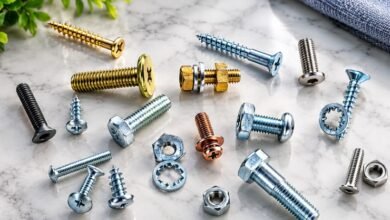
Specialized distributors bring value that extends well beyond catalog access. They maintain deep knowledge of specific product categories, track availability trends across global supply chains, and often serve as early warning systems for component shortages or specification changes. For manufacturers working with precision hardware, specialty fasteners, or industrial components, having a knowledgeable distribution partner can mean the difference between a smooth production run and a costly disruption.
Goldfarb Inc: A Partner Built for Precision Manufacturing
Goldfarb Inc has established itself as a trusted resource for manufacturers and industrial buyers who require reliable access to specialty hardware, precision components, and industrial supply solutions. With a focus on quality, availability, and technical knowledge, Goldfarb Inc supports the kind of disciplined procurement strategy that modern product lifecycle planning demands. Their expertise in sourcing and distributing precision components makes them a valuable partner for organizations that cannot afford supply chain uncertainty.
What distinguishes a partner like Goldfarb Inc in a competitive distribution landscape is not simply the breadth of their catalog but the depth of their product knowledge and their commitment to understanding the specific needs of each customer. Manufacturers working on complex assemblies or long-lifecycle products need suppliers who can engage at a technical level — who understand tolerances, material certifications, and the downstream implications of component substitutions. That kind of partnership is a genuine asset in any product lifecycle strategy.
Integrating Lifecycle Thinking Across the Organization
Breaking Down Silos Between Engineering and Procurement
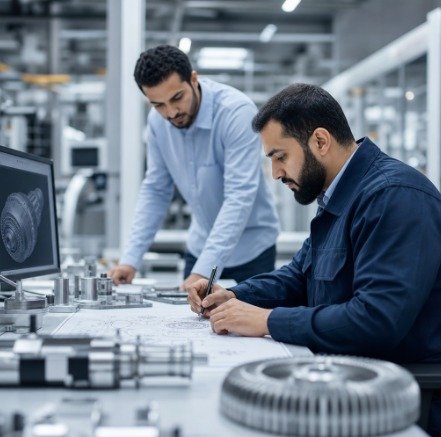
One of the most common structural weaknesses in manufacturing organizations is the disconnect between engineering and procurement functions. Engineers design products with performance objectives in mind; procurement teams manage costs and supplier relationships. When these functions operate in isolation, the result is often a design that is technically excellent but commercially fragile — dependent on components that are difficult to source, expensive to qualify alternatives for, or prone to obsolescence.
Bridging this gap requires deliberate organizational effort. Cross-functional teams that include both engineering and procurement perspectives from the earliest stages of product development consistently produce more resilient designs. They identify potential sourcing risks before they become embedded in the product architecture, and they build flexibility into specifications where performance requirements genuinely allow for it.
Forecasting and Demand Planning as Lifecycle Tools
Accurate demand forecasting is another pillar of effective lifecycle management. Manufacturers who can project their component needs across multi-year horizons are better positioned to negotiate favorable supply agreements, participate in strategic inventory programs, and avoid the premium costs associated with emergency procurement. Forecasting accuracy improves when organizations invest in data infrastructure, supplier collaboration, and the analytical capabilities needed to translate market signals into actionable procurement decisions.
Conclusion: Building for the Long Term
Manufacturing excellence is not achieved in a single product cycle. It is built through consistent application of sound engineering principles, disciplined lifecycle planning, and strategic supply chain partnerships maintained over years and decades. Organizations that invest in these foundations — that treat product lifecycle planning as a core competency rather than a peripheral concern — are the ones that sustain competitive advantage through market cycles, technology shifts, and supply chain disruptions.
The convergence of engineering rigor, procurement intelligence, and trusted supplier relationships creates a manufacturing capability that is genuinely difficult to replicate. For companies committed to building that capability, every decision — from component selection to distribution partnerships — is an opportunity to strengthen the foundation on which long-term success is built.