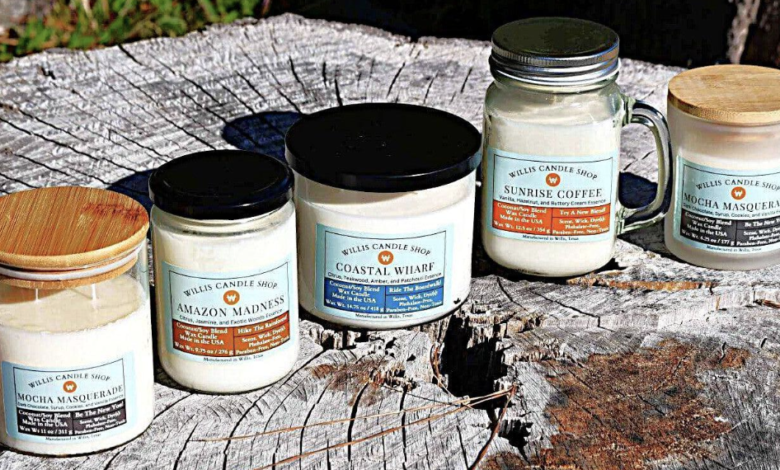
Most of us treat our homes as living galleries. We agonize over the exact shade of eggshell paint, we track down the perfect mid-century armchair, and we make sure the lighting creates that specific, warm glow we crave after a long day. But there is a glaring oversight in how we build our sanctuaries, one that lives right under our noses. We are obsessed with how our spaces look, yet we are remarkably casual about how they feel—and more specifically, what they are doing to our air. It is fascinating to think that we will spend thousands of dollars on a high-end air purifier to scrub our living rooms clean, only to light a mass-market candle that acts as a miniature pollution factory. It feels a bit backward, doesn’t it? If you are looking to bring some actual clarity to your home, start by looking at the technical side of the Willis Candle Shop, where the approach is less about marketing fluff and more about the actual chemistry of a clean, stable burn. It is the kind of detail that turns a generic living room into a place that truly breathes.
The problem, if we are being honest, is the legacy of the industry. We grew up with candles that were essentially glorified fuel sticks. The paraffin wax most of us bought at the grocery store was never designed with your indoor air quality in mind. It was designed for a shipping container. Paraffin is cheap, it’s remarkably easy to transport across the ocean, and it holds a scent well enough to mask the smell of a stale room. But the chemistry of it is a bit messy. When that wax melts and hits the flame, it doesn’t always combust perfectly. That’s why you see that faint, grey wisp of smoke curling up, or why you might notice a thin layer of soot gathering on the inside of a lampshade or on a high shelf. It is a tiny, localized air quality crisis that we just sort of accept because, well, that is what candles do, right? But the reality is that a candle doesn’t have to be a pollutant. It is a question of engineering, not just aesthetics.
On the flip side, you have the “natural” movement. I get it. We want to avoid the petroleum products, and we want to keep things organic. It makes sense on paper. But nature wasn’t really trying to design a fuel that burns cleanly in a glass jar at 2,000 degrees. When you throw raw, unrefined essential oils into a hot wax pool, you are asking for trouble. Those oils aren’t stable enough for that kind of heat. Instead of a clean, subtle fragrance, you end up with a breakdown of compounds that can smell sharp, acrid, or just plain off. If you are trying to lean into the season with something like a Fall & Winter Candle Collection, you want the scent to actually smell like the season, not like a chemistry experiment gone wrong. That is where the precision of high-end blending comes in. These oils are formulated to be heat-stable, meaning they don’t break down into unwanted smoke. They hold their character, which is exactly what you want when you are trying to curate a mood.
Think about the way you curate your home. You probably wouldn’t buy a custom piece of furniture and then use a cheap, toxic stain on it just to save a few bucks. You choose materials that will last, and that won’t compromise the air in your room. Why do we treat our fragrance differently? There is a whole world of material science sitting in the background of this industry. We are talking about the specific melting point of the wax, the way the wick draws fuel to the flame, and the vapor pressure of the fragrance oil. When these things are balanced, the candle doesn’t just “scent the room.” It transforms the atmosphere. It is like the difference between a high-end audio system and a tinny, cheap speaker. The music is the same, but the delivery is light-years apart.
This is really about reclaiming the sanctity of your home. We are becoming more aware of what we bring inside our four walls. We check the labels on our cleaning supplies, we read the ingredients on our food packaging, and we care about the VOCs in our furniture. It is only logical that we would apply that same level of care to the very air we are constantly inhaling. It turns out that a little bit of technical skepticism goes a long way. When you stop looking for the most aggressive “throw” and start looking for the cleanest burn, the whole vibe of your home changes. It becomes quieter, lighter, and more intentional.
At the end of the day, it is about creating a space where you can actually recover. We live in a world that is loud, crowded, and constantly demanding our attention. Your home should be the one place that isn’t. If you are lighting a candle to help you decompress, you shouldn’t have to worry about the chemistry of the flame. By choosing products that are engineered with a bit of foresight—products that respect the physics of fire—you are doing yourself a massive favor. You are curating your environment, layer by layer, until the whole thing feels as precise and intentional as a well-composed photograph. It is a small change, but it is one you will notice every time you walk through the door and take a deep, clean breath. It is the invisible work of home design, and frankly, it is the only kind that really matters.