Building Networks That Can Grow: Why 800G DR8 Optics Are Becoming Part of Long-Term Data Center Planning

The Hardest Part of Building a Data Center Isn’t What You Need Today
When new data centers are designed, most discussions focus on current requirements.
How many servers will be deployed? How much storage capacity is needed? What switch platforms will be installed? How much traffic is expected during the first year of operation?
These questions are important, but they’re usually not the ones that create problems later.
The more difficult challenge is predicting what happens three, five, or even eight years down the road.
Technology changes faster than infrastructure. Servers are replaced every few years. GPUs evolve even faster. Network switches come and go with every generation. Fiber cabling, on the other hand, often remains in place for a decade or more.
Because of that, many organizations have started approaching optical connectivity differently. Instead of selecting optics solely based on today’s bandwidth requirements, they’re choosing solutions that fit into a longer-term growth strategy.
This shift helps explain the growing interest in 800G optical modules.
Why Capacity Planning Has Become More Difficult
Ten years ago, forecasting network demand was relatively straightforward.
Application growth was usually gradual. Virtualization increased traffic, but not dramatically. Most enterprises could estimate bandwidth requirements with reasonable accuracy.
AI infrastructure has changed that.
A cluster that seems oversized today may look completely normal two years from now. New model architectures, larger datasets, and increasing GPU densities have accelerated traffic growth beyond what many planners expected.
As a result, network teams have become cautious about building infrastructures that only solve immediate problems.
They want room to grow.
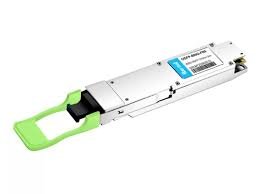
The NVIDIA/Mellanox MMS4X00-NS compatible 800GBASE-DR8 (2xDR4) OSFP optical transceiver fits naturally into this mindset because it provides a high-capacity foundation without requiring organizations to immediately redesign their physical layer when demand increases.
Why Single-Mode Fiber Changes the Long-Term Equation
One of the most significant aspects of the 800G DR8 architecture isn’t actually the 800G bandwidth.
It’s the decision to use single-mode fiber.
Historically, many short-distance data center links relied on multimode fiber because it offered a practical balance of cost and performance. For years, that approach worked well.
However, each jump in network speed tends to place greater demands on the physical layer.
What worked comfortably at 40G or 100G may become more restrictive at 400G and 800G. As a result, many operators are increasingly viewing single-mode infrastructure as a long-term investment rather than simply a transmission medium.
The MMS4X00-NS compatible module uses 1310nm optics over dual MPO-12/APC single-mode fiber and supports transmission distances up to 100 meters.
For many data center environments, that’s more than enough reach while also providing a foundation that aligns with future bandwidth growth.
The goal isn’t simply supporting today’s 800G links.
It’s avoiding unnecessary infrastructure replacements tomorrow.
The Value of Flexibility Often Appears Later
One interesting characteristic of large infrastructure projects is that some design decisions seem unimportant at first.
Then a few years later, they become extremely valuable.
The twin-port 2×DR4 architecture is a good example.
At deployment time, some organizations may use the module primarily as a native 800G connection between switches. Others may split it into multiple 400G links. In many cases, both approaches may exist inside the same environment.
The important thing is that the architecture doesn’t force a single design choice.
As network requirements evolve, operators retain options.
This flexibility becomes particularly useful during expansion phases, where traffic patterns often develop differently than originally expected. Infrastructure that allows adaptation tends to age more gracefully than infrastructure optimized for a single scenario.
Scaling Is About More Than Bandwidth
When people hear the word “scalability,” they usually think about speed.
But scalability involves much more than adding bandwidth.
Operational complexity also scales.
Every additional component introduces management overhead. Every specialized platform requires expertise. Every unique deployment model creates another set of procedures for the operations team to maintain.
One reason Ethernet and InfiniBand ecosystems continue evolving around higher-speed optical modules is because they allow capacity growth without fundamentally changing how networks are operated.
The MMS4X00-NS compatible transceiver supports deployment within NVIDIA Quantum-2 InfiniBand and Spectrum-4 Ethernet environments while maintaining familiar operational workflows.
From an infrastructure management perspective, that consistency is valuable.
Organizations can increase performance without completely reinventing how their networks are maintained.
Why Air-Cooled Designs Still Matter
Industry conversations often focus on liquid cooling, especially when discussing AI infrastructure.
Yet most facilities around the world continue operating primarily with air-cooled networking equipment.
This reality influences hardware selection more than many people realize.
The finned-top OSFP design used by the 800G DR8 module is intended to maximize thermal efficiency within air-cooled switch environments. Effective airflow becomes increasingly important as port densities increase and aggregate switch bandwidth climbs into the tens of terabits.
Thermal performance doesn’t attract the same attention as bandwidth specifications, but stable operating temperatures often determine long-term reliability.
In large deployments, reliability tends to matter just as much as raw performance.
Preparing for Multiple Generations of Growth
One mistake organizations sometimes make is viewing network upgrades as isolated projects.
In reality, infrastructure evolves continuously.
Today’s deployment eventually becomes tomorrow’s legacy environment. Decisions made now influence what upgrades will be possible years later.
This is why many operators have shifted from thinking about individual links to thinking about upgrade paths.
An 800G DR8 optical module isn’t simply a tool for connecting two devices. It’s part of a broader strategy designed to support future growth without repeatedly rebuilding the physical layer.
That perspective becomes increasingly important as AI, cloud computing, and high-performance workloads continue expanding.
Conclusion
The NVIDIA/Mellanox MMS4X00-NS compatible 800GBASE-DR8 (2×DR4) OSFP optical transceiver is often viewed as a high-speed networking component, but its value extends beyond bandwidth alone. By combining 800G performance, single-mode fiber connectivity, deployment flexibility, and compatibility with Quantum-2 InfiniBand and Spectrum-4 Ethernet platforms, it helps organizations build infrastructures capable of adapting to future growth. As data centers face increasing uncertainty around traffic demands and computing requirements, solutions that support long-term scalability are becoming just as important as those that deliver immediate performance gains.