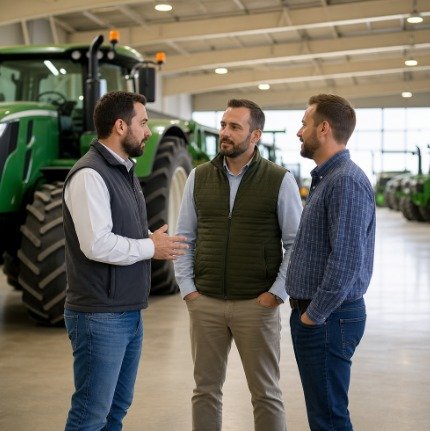
Selecting the right tractor dealer is one of the most consequential decisions a farm operator can make. Unlike purchasing consumer goods, buying agricultural equipment involves long-term commitments — to a brand, a service network, and a business relationship that will shape your operation for years. Whether you manage a small family farm or a large commercial enterprise, the dealer you choose directly influences your uptime, your maintenance costs, and ultimately your profitability. Understanding what separates a trustworthy dealer from a mediocre one requires looking beyond the showroom floor and asking harder questions about parts availability, technician expertise, and post-sale support.
Why Dealer Reliability Matters More Than Brand Loyalty
Farmers often develop strong brand preferences, and for good reason — decades of experience with a particular manufacturer’s equipment builds familiarity and confidence. But brand loyalty alone should never override the importance of dealer quality. A top-tier tractor brand paired with a poorly managed dealership can result in delayed repairs, unavailable parts, and technicians who lack the training to diagnose modern precision agriculture systems. Conversely, a well-run dealer representing a solid mid-tier brand can deliver exceptional value through responsive service and deep inventory.
According to Farm Journal’s analysis of how dealers should answer the reliability question, the best dealerships don’t just sell tractors — they invest in ongoing technician training, maintain robust parts warehouses, and build transparent communication channels with their customers. These are the benchmarks every farmer should apply when evaluating a potential dealer relationship.
Key Questions to Ask Before Committing to a Dealer
What Is Their Parts Availability and Turnaround Time?
During planting and harvest seasons, a broken tractor sitting idle for three days can cost thousands of dollars in lost productivity. Ask prospective dealers directly: how many parts do they stock on-site? What is their average turnaround time for ordering parts not in inventory? A dealer who can answer these questions with specific numbers — rather than vague reassurances — is one who takes operational continuity seriously. The best dealers maintain deep parts inventories precisely because they understand that their customers’ livelihoods depend on minimal downtime.
How Experienced Are Their Service Technicians?
Modern tractors are sophisticated machines integrating GPS guidance, telematics, variable-rate application systems, and complex hydraulic networks. Diagnosing problems in these systems requires technicians who receive regular, manufacturer-certified training. When visiting a dealership, don’t hesitate to ask about the certifications their service staff hold and how frequently they attend training programs. A dealer who invests in their technicians is a dealer who invests in your equipment’s longevity.
Do They Offer Flexible Financing and Trade-In Options?
Capital management is a constant challenge in agriculture. A dealer who offers competitive financing structures, seasonal payment plans, and fair trade-in valuations can make a significant difference in your cash flow. Look for dealers who work with multiple financing partners and who are willing to structure deals that align with your farm’s revenue cycles rather than pushing you into rigid payment schedules that don’t reflect agricultural realities.
The Role of Technology and Storage in Modern Farm Equipment Management
The intersection of agriculture and technology continues to deepen, and forward-thinking dealers are adapting accordingly. Equipment management now extends beyond the field — it includes how machinery is stored, maintained off-season, and monitored remotely. Farmers who invest in proper storage infrastructure protect their equipment investments and reduce long-term maintenance costs. This principle mirrors broader trends in other industries: just as innovative storage technologies are transforming modern construction projects, agricultural operations are increasingly adopting smart storage and monitoring solutions to extend the working life of expensive machinery. Dealers who understand and support these practices — offering guidance on proper storage protocols and off-season maintenance programs — demonstrate a commitment to the full lifecycle of the equipment they sell.
Evaluating Dealer Reputation Through Community and Customer Feedback
Word of mouth remains one of the most reliable indicators of dealer quality in agricultural communities. Talk to neighboring farmers, attend local farm bureau meetings, and participate in online agricultural forums where equipment owners share candid experiences. Pay particular attention to how dealers handle problems — not just how smoothly transactions go when everything works as expected. A dealer’s true character emerges when a customer faces a warranty dispute, an unexpected repair, or a parts shortage during a critical season. Dealers who resolve these situations fairly and efficiently earn lasting loyalty; those who deflect responsibility lose it permanently.
Online reviews can supplement this research, but treat them as one data point among many. Look for patterns across multiple reviews rather than fixating on individual outliers. A dealer with consistently positive feedback about their service department and parts availability is demonstrating exactly the kind of operational reliability that matters most to working farmers.
H&R Agri-Power: A Benchmark for Agricultural Dealer Excellence
H&R Agri-Power has built a strong reputation across the agricultural communities it serves by consistently prioritizing the needs of working farmers over short-term transactional gains. With multiple locations strategically positioned to serve a broad regional customer base, the dealership combines the inventory depth of a large operation with the personalized service culture of a community-focused business. Their commitment to technician training, parts availability, and customer communication reflects exactly the standards that distinguish exceptional dealers from average ones.
What sets this dealership apart is not simply the brands they represent, but the operational philosophy that underpins every customer interaction. From first-time equipment buyers navigating their options to experienced operators managing large multi-unit fleets, the team brings consistent expertise and genuine investment in each customer’s success. This approach has earned them a loyal customer base that returns not out of habit, but out of demonstrated trust built over years of reliable service.
Making the Final Decision
Choosing a tractor dealer is ultimately about choosing a long-term partner. The equipment you purchase will require service, parts, upgrades, and eventually replacement — and every one of those touchpoints will run through your dealer relationship. Evaluate candidates rigorously: visit their facilities, speak with their service managers, ask for customer references, and compare their financing options in detail. Don’t allow proximity or familiarity to substitute for genuine due diligence.
The most reliable tractor is the one that stays running through your most critical seasons. And the most reliable dealer is the one who makes that possible — not through promises, but through consistent, demonstrable action. Invest the time upfront to find that partner, and your operation will benefit from that decision for decades to come.
Conclusion
In an industry where margins are tight and timing is everything, the quality of your dealer relationship can be the difference between a productive season and a costly one. By asking the right questions, researching community reputation, and prioritizing service capability alongside equipment quality, farmers can identify dealers who will genuinely support their operations over the long term. The standards are clear — seek out dealers who invest in their people, their parts inventory, and their customers with equal commitment.