Precision is the backbone of modern industrial operations. From assembling intricate semiconductor chips to managing electric vehicle battery packs, automated systems rely heavily on accurate physical feedback to function safely and effectively. Without this real-time data, machines cannot adapt to changing conditions or handle delicate materials without causing damage.
Force sensors and load cells provide this essential physical feedback. They translate mechanical pressure into measurable electrical signals, giving machines the “sense of touch” required to perform complex tasks. As industries push the limits of what automated systems can achieve, the demand for highly specialized sensing equipment has skyrocketed. Engineers and system designers now require components that can survive extreme temperatures, high radiation, and electromagnetic interference while maintaining absolute accuracy.
Choosing the right equipment for these demanding applications requires careful consideration of environmental factors and system architecture. Working alongside a capable force sensor manufacturer allows companies to integrate custom sensing technology directly into their robotic actuators and testing equipment. This article explores the latest advancements in force measurement technology and explains how modern sensors are solving some of the most difficult engineering challenges across various high-performance industries.
The Shift Toward Fiber Bragg Grating Technology
Traditional electrical sensors often struggle when exposed to extreme environmental conditions. High heat, moisture, and electromagnetic noise can distort electrical signals, leading to inaccurate readings or complete system failures. To solve these problems, engineers have turned to optical sensing methods, particularly Fiber Bragg Grating (FBG) technology.
Surviving Harsh Environments
FBG sensors use light rather than electricity to measure physical changes. Because they rely on optical fibers, these sensors are entirely immune to electromagnetic interference (EMI) and radio frequency (RF) noise. This makes them highly effective in environments like semiconductor manufacturing facilities and surgical rooms, where heavy electrical noise disrupts standard equipment.
Extreme Temperature and Submersion
FBG force transducers are incredibly resilient. Dual FBG sensors can operate in environments exceeding 200 degrees Celsius while providing real-time temperature compensation. This eliminates the thermal drift that typically affects conventional load cells. Furthermore, these optical sensors are sustainable to moisture and deep liquid submersion, operating for extended periods underwater without any degradation in performance.
Radiation and Overvoltage Immunity
In nuclear power plants or aerospace applications, high radiation levels limit the lifespan of standard electronic components. FBG force and torque sensors resist radiation damage naturally. Additionally, because they do not rely on standard electrical circuits for signal transmission, unexpected overvoltage events will not compromise the sensing system.
Key Innovations in Force Measurement Equipment
Beyond the shift toward optical sensing, the physical design of force transducers has evolved to meet the specific needs of modern machine building. Component miniaturization and seamless integration are now standard requirements for new automation projects.
Smart Bracket Sensors for Extrusions
Many modern automation systems are built using T-slotted aluminum extrusions. Upgrading these machines with physical feedback capabilities used to require complicated custom mounting solutions. Smart bracket strain gauge sensors serve as drop-in replacements for standard structural brackets. They allow engineers to add load cells directly to the machine frame. This streamlined approach enables advanced process control, artificial intelligence integration, and enhanced safety monitoring without requiring a complete redesign of the equipment. Plants without in-house engineers often hand this retrofit to an experienced industrial automation partner, who can wire the new load cells into the existing controls.
Robotic Tactile Sensors for Delicate Handling
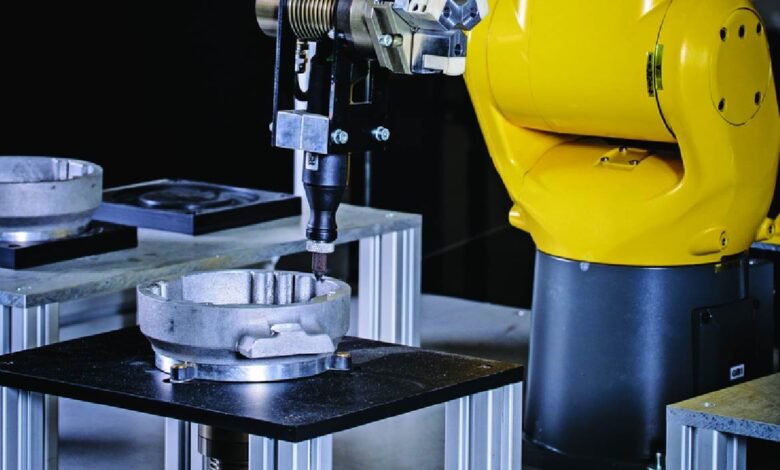
Robotic grippers need tactile feedback to handle fragile components securely. Tactile force sensors integrate directly into robotic fingers and actuators. Available as both standard strain gauges and FBG load cells, these tiny transducers provide the ultimate process control. They allow automated arms to adjust their grip strength dynamically, preventing crushed components during assembly while maintaining a firm hold on the product.
Compact In-Line Force Sensors
Space is almost always limited in advanced manufacturing equipment. In-line force sensors are designed to be as small as possible while retaining high capacity and accuracy. These micro-sensors are heavily utilized in the medical and aerospace sectors, targeting critical requirements where mechanical failure is absolutely unacceptable.
Applications Across High-Performance Industries
The integration of advanced load cells and strain gauges impacts multiple sectors, driving efficiency and enabling entirely new technological capabilities.
Medical and Surgical Robotics
Surgical robots require highly accurate tactile feedback to assist surgeons during delicate procedures. Laparoscopic graspers equipped with FBG force sensors provide real-time data on tissue resistance. Because FBG technology is unaffected by the intense RF signals present in operating rooms, the sensing system remains uninterrupted, ensuring high patient safety and precise surgical outcomes.
Electric Vehicle Battery Pack Testing
The electric vehicle market demands rigorous testing protocols for battery packs to ensure safety and longevity. Specialized FBG force sensing matrices are used during battery pack management and testing. These sensor arrays monitor the expansion and structural stress of battery cells during charging and discharging cycles. The data gathered helps engineers design safer, more efficient energy storage systems.
Semiconductor and Aerospace Manufacturing
Semiconductor fabrication plants utilize heavy automation in cleanroom environments with massive amounts of electromagnetic interference. Precision sensors guide robotic arms as they move fragile silicon wafers through the production line. Similarly, the aerospace industry relies on highly accurate torque and pressure sensors to test flight components under simulated extreme atmospheric conditions.
Custom Solutions for Unique Engineering Challenges
Off-the-shelf components cannot always fulfill the strict requirements of specialized industrial applications. Sometimes an automation project requires a very specific form factor or a unique combination of pressure and temperature sensing. In these situations, collaborating with a dedicated force sensor manufacturer ensures that the final product aligns perfectly with the project parameters.
Rapid development processes allow engineers to move from concept to functional prototype quickly. Whether the application requires a water-submersible torque sensor or a radiation-immune strain gauge, custom-tailored developments reduce the time to market for complex machine builds.
Elevate Your System Architecture
Integrating highly accurate, durable sensing technology is no longer optional for companies looking to maintain a competitive edge in manufacturing and automation. From the depths of submersible testing tanks to the high-radiation environment of space exploration, modern force sensors provide the critical data needed to keep systems running smoothly.
Review your current automated processes and identify areas where enhanced physical feedback could reduce material waste or improve safety. Upgrading your equipment with smart brackets or robotic tactile sensors can unlock new levels of efficiency. Reach out to a reliable force sensor manufacturer today to discuss your specific environmental requirements and explore how custom-engineered load cells can optimize your operations.