Introduction: The Shift from Bottles to Cans in Craft Brewing
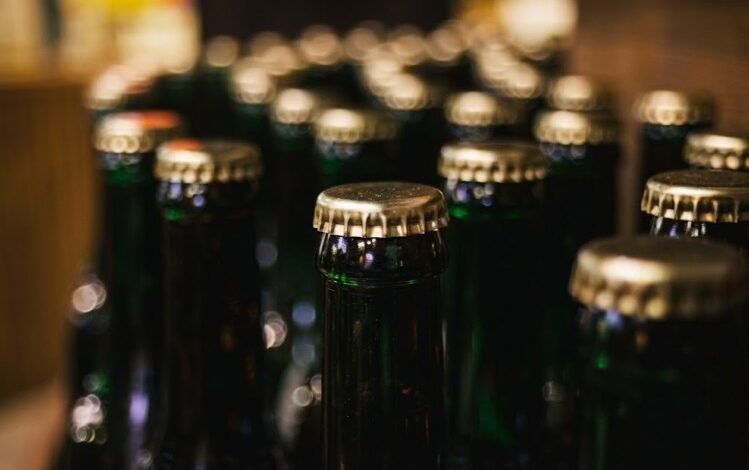
The craft beer industry has experienced a rapid structural shift away from traditional glass bottles toward aluminum cans. This transition is driven by core functional advantages that directly impact product quality and distribution logistics.
Aluminum cans provide a 100% barrier against light and oxygen ingress, protecting sensitive hop oils from oxidation and UV light degradation .
Additionally, cans are significantly lighter and feature a cylindrical geometry that optimizes pallet space, drastically reducing freight costs.
For growing operations evaluating capital expenditures, understanding these advantages is vital for aligning production capabilities with modern distribution demands.
Upgrading to Automated Can Packaging Equipment
Moving from manual or semi-automatic hand-filling rigs to a fully integrated line requires crossing a significant operational threshold. Semi-automatic setups typically max out at 10 to 15 cans per minute (CPM) and introduce high variability in oxygen pickup.
Transitioning to a higher capacity requires precision engineering, particularly to mitigate oxygen pickup during the filling phase. Modern facilities often invest in advanced can packaging equipment levapack designed to integrate purging, filling, and double-seaming in a single synchronized process, ensuring that the beer’s intended flavor profile is preserved while maximizing throughput.
To successfully execute this transition, engineering teams must evaluate several critical performance specifications:
- Line Speed (CPM): Matching output capacity to current brewing batch sizes and projected sales growth.
- Footprint Requirements: Evaluating spatial constraints on the production floor to fit rinsing, filling, and seaming modules.
- Changeover Versatility: Assessing how quickly the machinery can adjust between different standard can formats.
Precision Seaming and Carbonation Retention
Once filled, the container must be hermetically sealed instantly to preserve dissolved carbon dioxide levels and maintain proper carbonation volumes. Precision double-seaming machines use calibrated mechanical rolls to lock the lid flange onto the can body.
Automated seamers utilize servo-driven controls to ensure consistent pressure application across every single cycle. This eliminates micro-leaks, prevents flat beer complaints, and protects against costly batch spoilage events.
Calculating the ROI of Your Canning Line
Justifying a major capital expenditure requires a rigorous financial model that accounts for more than just the initial equipment purchase price. Automated packaging directly impacts operational efficiency and variable costs.
When evaluating equipment amortization, decision-makers must balance upfront capital costs against recurring monthly savings. Strategic planning around capital expenditure management helps clarify payback timelines.
Below is the evaluation checklist required to calculate your projected return on investment:
| ROI Variable | Description & Measurement Metric | Target Financial Impact |
| Upfront Cost (CAPEX) | Total machinery purchase, freight, installation, and utility hookups. | Establishes the baseline investment threshold for payback calculation. |
| Labor Savings per Month | Reduction in full-time equivalent (FTE) operators required on the line. | Lowers ongoing operational overhead by replacing manual labor. |
| Spoilage Reduction | Decrease in product loss from under-filling, bad seals, or oxygen pickup. | Recovers raw material and brewing ingredient yields. |
| Energy Consumption | Electrical and pneumatic utility efficiency per 1,000 cans packaged. | Optimizes utility expenditure during peak production runs. |
When labor overhead drops and product yield rises due to lower scrap rates, the payback period for a mid-tier automated canning line typically ranges between 18 and 36 months.
Scalability and Footprint Considerations
Craft breweries often operate in urban spaces with strict square-footage limitations, making floor space a premium commodity. Monoblock architecture integrates rinsing, filling, and seaming into a single compact chassis.
This modular design minimizes the linear footprint required on the factory floor while allowing for future speed upgrades. Facilities can expand throughput without needing to relocate or reconfigure surrounding packaging infrastructure.
Reviewing historical craft beer market trends ensures that your chosen equipment layout accommodates future packaging diversification, such as nitro-dosing or hard seltzer lines.
Consumer Trends and Sustainable Packaging
Modern consumers increasingly evaluate beverage brands based on corporate environmental responsibility and packaging circularity. Aligning your product line with sustainable materials influences retail placement and consumer loyalty.
Beyond operational efficiency, the format you choose heavily impacts your brand’s carbon footprint. According to Forbes’ analysis on sustainable packaging trends, consumers are increasingly favoring aluminum over plastic and glass due to its infinitely recyclable nature, which is driving a major shift in supply chain strategies across the beverage sector.
Aluminum can be recycled indefinitely without losing structural integrity or material quality. Utilizing high-recycled-content aluminum sheet stock further diminishes energy inputs required for secondary manufacturing.
Conclusion
Investing in an automated canning line is a foundational strategic decision for any growing craft brewery. Modern high-speed equipment bridges the gap between artisanal brewing quality and industrial-scale operational efficiency.
By systematically evaluating dissolved oxygen control, precise double-seaming, and rigorous financial ROI metrics, operators protect both their brand reputation and bottom line. Automation ultimately transforms packaging from an operational bottleneck into a driver of sustainable growth.