Keeping roads clean around a construction or industrial site can be challenging. Heavy vehicles regularly travel through areas covered with mud, soil, gravel, dust, and other materials. When those vehicles leave the site, they can carry the material with them and deposit it on public roads.
A dedicated wheel wash can help control this problem by cleaning vehicle tires before trucks and other heavy vehicles leave the site. This creates a more organized exit process and can reduce the amount of dirt transferred from the working area to surrounding roads.
What Is a Wheel Wash?
A wheel wash is a vehicle cleaning system designed to remove mud, dirt, and debris from the wheels and tires of vehicles.
These systems are commonly installed near the exit of construction sites, quarries, mines, waste facilities, and other locations where vehicles operate on unpaved or heavily contaminated surfaces.
Instead of relying on workers to manually clean tires, vehicles can pass through a dedicated washing area before continuing onto public roads.
The exact design of a system can vary depending on the size of the vehicles, the level of contamination, traffic volume, and available space.
Why Do Construction Sites Need Wheel Washing?
Construction vehicles can collect large amounts of material during normal operations. A dump truck traveling across wet soil, for example, can pick up mud between the tire treads and around the wheels.
If the truck then drives directly onto a public road, some of this material can fall onto the pavement.
For sites with only occasional vehicle movements, manual cleaning may sometimes be sufficient. However, larger projects can have dozens or hundreds of vehicle movements each day. In these situations, cleaning vehicles individually can take significant time and labor.
A dedicated washing system provides a consistent process that can be integrated into the normal site exit route.
How Does a Wheel Wash Work?
Most wheel washing systems use water to remove material from vehicle tires and wheels.
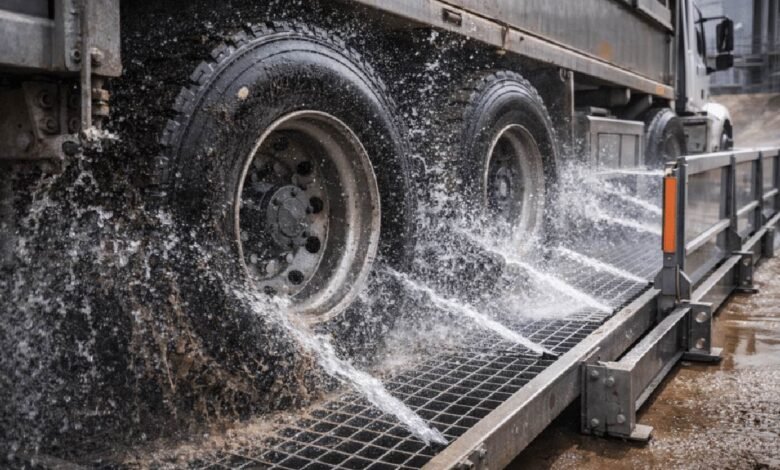
A truck enters the washing area and drives through the designated cleaning zone. Water is directed toward the wheels, helping loosen and remove accumulated mud and debris.
Depending on the system, cleaning can involve strategically positioned spray nozzles, high-pressure water, mechanical components, or a combination of different technologies.
After passing through the system, the vehicle continues toward the site exit with significantly less material attached to its tires.
Some systems are also designed to collect and manage the wastewater produced during cleaning. This can help keep the washing area under control and make water management easier.
Common Applications
Wheel washing is useful across a wide range of industries.
Construction
Large construction projects often involve constant movement of dump trucks, excavators, concrete vehicles, and delivery vehicles.
Because many of these vehicles operate on soil and unfinished surfaces, mud can quickly become a problem around the site entrance.
Installing a washing system close to the exit allows vehicles to be cleaned before they reach the road.
Quarries
Quarries deal with large quantities of stone, dust, soil, and other materials. Heavy trucks can easily pick up debris while moving between loading areas and site exits.
A vehicle washing system can help reduce the transfer of material from the quarry onto surrounding roads.
Mining
Mining operations often involve heavy vehicles traveling over rough and unpaved surfaces.
Because of the scale and frequency of vehicle movements, an automated cleaning process can be useful for maintaining cleaner access routes.
Waste and Recycling Facilities
Waste processing and recycling sites can also have significant amounts of dirt and debris around vehicle routes.
A wheel washing area can be incorporated into the vehicle exit process to help prevent material from being carried onto external roads.
Benefits of Installing a Wheel Wash
There are several reasons businesses choose to install dedicated vehicle washing equipment.
Reduced Mud on Public Roads
The most obvious benefit is reducing the amount of mud and debris leaving the site.
Cleaning tires before vehicles reach public roads means less material has the opportunity to accumulate outside the site.
More Efficient Cleaning
Manual tire cleaning can require workers to stop and clean individual vehicles. A dedicated system can make the process faster, particularly when many vehicles need to leave the site throughout the day.
Better Traffic Flow
A properly positioned washing system can become part of the site’s normal traffic route.
Drivers do not necessarily need to take a separate route for cleaning. Instead, the washing process can be incorporated into the exit procedure.
Reduced Maintenance Around the Site
When less mud leaves the site, there may be less need for employees to repeatedly clean nearby roads, entrances, and paved areas.
This can help site managers spend less time dealing with dirt after it has already spread.
Improved Environmental Management
Controlling mud and contaminated water at the source can form part of a broader environmental management strategy.
The washing area can be designed to collect water and sediment rather than allowing dirty water to spread uncontrolled around the site.
What Should You Consider Before Installing One?
Choosing the right system requires looking at the specific conditions of the site.
The first consideration is vehicle size. A system used for passenger vehicles will have very different requirements from one used by large articulated trucks or construction machinery.
Traffic volume is another important factor. A site with a small number of daily vehicle movements may have different requirements from a major construction project operating around the clock.
The type of material on the tires should also be considered. Wet clay, dry soil, gravel, dust, and other materials can behave differently during washing.
Other factors include:
- Available installation space
- Vehicle dimensions
- Number of vehicles per day
- Amount of mud and debris
- Water supply
- Water collection and recycling
- Site entrance and exit layout
- Maintenance requirements
- Local environmental considerations
Considering these factors before installation can help ensure that the equipment matches the actual demands of the site.
Water Recycling and Site Management
Water consumption is an important consideration when planning a vehicle washing system.
Modern solutions can incorporate water collection and recycling to reduce the amount of fresh water required. Dirty water from the washing process can be collected and processed before being reused, depending on the system and site requirements.
Sediment management is also important. Soil and other materials removed from vehicle tires need to be collected and managed properly.
Regular maintenance of pumps, filters, nozzles, collection areas, and other components can help keep the system working efficiently.
Making Wheel Washing Part of the Site Routine
The most effective approach is often to make vehicle cleaning part of the normal site exit procedure.
Instead of treating mud removal as an occasional task, the washing system becomes a standard step before vehicles leave the property.
Drivers enter the washing area, the wheels and tires are cleaned, and the vehicle continues onto the public road.
This simple process can help construction and industrial businesses maintain cleaner entrances, reduce the spread of site material, and manage vehicle traffic more efficiently.
Conclusion
Mud and debris carried onto public roads can become a recurring challenge for construction sites, quarries, mines, recycling facilities, and other industrial operations.
A properly designed wheel wash provides a practical way to address the problem before vehicles leave the site. By integrating vehicle cleaning into the normal exit route, businesses can reduce road contamination, limit manual cleaning, and improve overall site management.
The ideal system depends on factors such as vehicle size, traffic volume, site conditions, available space, and water management requirements. Careful planning can ensure that the washing process works efficiently without creating unnecessary delays for drivers or site operations.