Every Parent Should Know This: Why First Aid Training Is the Most Practical Gift You Can Give Your Family

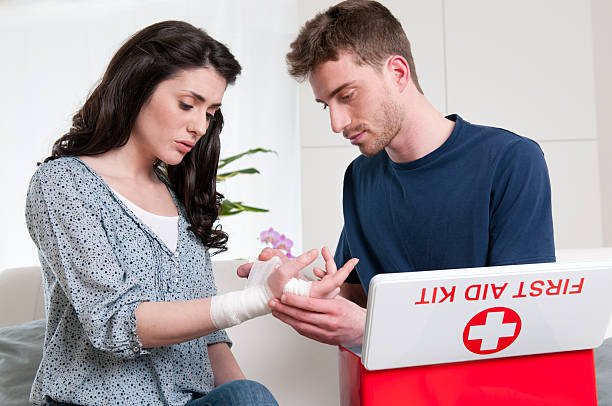
Most of us have a smoke detector in the hallway, a thermometer in the medicine cabinet, and a vague plan to “call 9-1-1” if anything goes seriously wrong. That plan is fine as far as it goes. The problem is what happens in the minutes before the ambulance arrives.
That’s where everything either holds together or falls apart. And it’s exactly why more families are choosing to take first aid courses in Brampton — not because they expect disaster, but because preparedness is its own form of love.
Why Home Is Where Most Emergencies Actually Happen
There’s a tendency to associate medical emergencies with workplaces, public events, or athletic fields. The data tells a different story. According to the Heart & Stroke Foundation of Canada, approximately 80% of cardiac arrests happen in the home.
Choking incidents are most common among children under five and adults over sixty-five — two groups most likely to be in a family setting rather than a supervised environment.
Falls. Allergic reactions. Burns. Seizures. The list of emergencies that can unfold in an ordinary house on an ordinary afternoon is longer than most people want to think about. And in the vast majority of those situations, the first responder isn’t a paramedic — it’s whoever is already in the room.
That person could be you. Whether they’re equipped or not is a choice.
What Does a Family-Focused First Aid Course Actually Teach?
A standard CPR/AED Level C and First Aid certification covers a wide range of scenarios specifically relevant to family life. Here’s what you’ll leave knowing how to handle:
- Infant and child CPR — technique differs significantly from adult CPR, with adjusted compression depth, hand placement, and breath delivery
- Choking response for all ages — abdominal thrusts for adults, back blows and chest compressions for babies
- AED use — automated external defibrillators are now present in schools, arenas, community centres, and many public spaces; knowing how to use one takes roughly 15 minutes to learn
- Severe allergic reactions — recognizing anaphylaxis and supporting epinephrine auto-injector use until emergency services arrive
- Seizure management — what to do, what not to do, and how to protect someone during and after a seizure
- Burns and scalds — correct cooling, what not to apply, and when to seek emergency care
- Head and spinal injury basics — when to move someone and when to keep them still
None of this is complicated. All of it is learnable in a single course. And almost none of it comes naturally under stress without prior training.
Is There a Difference Between Standard First Aid and Emergency First Aid?
Yes — and it’s worth understanding before you register.
Emergency First Aid is a condensed, single-day course focused on the most critical life-threatening scenarios: cardiac arrest, severe bleeding, choking, and loss of consciousness. It’s a solid foundation and a good starting point for anyone who hasn’t been trained before.
Standard First Aid is the fuller version — typically completed over two days or through a blended learning format (online theory in advance, then a focused in-person skills day). It covers everything in Emergency First Aid plus a broader range of injuries and medical emergencies. Standard First Aid is what most employers require under Ontario’s OHSA and WSIB regulations, and it’s what most healthcare and childcare workers need for professional purposes.
For parents, Standard First Aid is the stronger recommendation. You’re not just learning to respond to one type of crisis — you’re building a full toolkit for whatever your household might encounter.
What Is Blended Learning, and Is It as Good as Traditional Classroom Training?
Blended learning has become the standard delivery model for reputable first aid providers, and for good reason. The approach splits the training into two phases:
Phase 1 — Online theory. You complete the knowledge-based portion at your own pace, before the course day. This covers anatomy basics, how cardiac arrest happens, why early intervention matters, and the decision frameworks behind each response protocol.
Phase 2 — In-person skills. The classroom day focuses entirely on hands-on practice. Compression technique on mannequins, AED simulation, scenario walkthroughs with instructor feedback. No time wasted on content you’ve already absorbed.
The result is a more efficient in-person session — typically half the time of a traditional full-classroom course — with no reduction in skill development. For working parents managing schedules, it’s a practical solution that actually gets people through the door.
How Do You Choose a First Aid
Provider You Can Trust?
Not all certifications are equivalent. When looking for a provider, confirm:
- The program is accredited by the Canadian Red Cross or Heart & Stroke Foundation
- Certifications are recognized by WSIB if you need workplace compliance
- The course includes genuine hands-on skills components — not purely online modules
- The provider offers group or family booking options if you want to train with a partner or alongside other family member
Coast2Coast First Aid & Aquatics is a Canadian Red Cross and Heart & Stroke Authorized Training Partner offering CPR/AED Level C, Standard First Aid, and BLS certifications using a blended learning model. Courses are available for individuals, families, and corporate groups across multiple Ontario locations.
How Often Does Certification Need to Be Renewed?
CPR certification is valid for two to three years; Standard First Aid for three years. That’s not an arbitrary expiration — guidelines do update, and muscle memory genuinely fades without practice. Many parents find that renewing every certification cycle keeps the skills sharp enough to act under pressure.
Recertification courses are shorter than initial certification and can often be completed in a single day. Building renewal into the family calendar the same way you schedule dental checkups isn’t a bad habit.
If you are looking for first aid or CPR courses near Kennedy Road South, Queen Street, the Bramalea City Centre area, or surrounding neighbourhoods in Brampton, you may reach out to Coast2Coast First Aid & Aquatics in that area.
FAQs
Q: At what age can children take first aid training? A: Most providers offer youth first aid programs for children as young as 11 or 12, with standard adult certifications available from age 16. Younger children can benefit from age-appropriate safety awareness programs even before full certification is available to them.
Q: Can I take a first aid course online, or do I need to attend in person? A: A fully online-only course will not provide a recognized certification for most purposes in Canada. Blended learning — online theory followed by a mandatory in-person skills session — is the accepted standard. The in-person component is where compression technique, AED practice, and scenario response are assessed.
Q: Is first aid training relevant if I don’t have children? A: Cardiac arrest, choking, severe allergic reactions, and other emergencies can affect anyone at any age. First aid skills are relevant for anyone who lives with or regularly spends time around other people — whether that’s family, housemates, coworkers, or members of a community organization.
Q: How long does a Standard First Aid course take to complete? A: A Standard First Aid course typically spans two days in a traditional classroom format. With blended learning, the online theory portion can be completed independently over several evenings, with the in-person skills component reduced to approximately one full day.
Q: Does CPR technique differ for infants compared to adults? A: Yes, significantly. Infant CPR uses two fingers rather than two hands for compressions, applies much less force, and delivers smaller, gentler rescue breaths. Standard First Aid courses cover CPR technique for adults, children, and infants separately, with hands-on practice for each scenario