There is a highly romanticized image of the traditional leatherworker that dominates popular culture and social media. We tend to picture a quiet, dimly lit workshop filled with the rich scent of vegetable-tanned hides. In this idyllic scene, an artisan sits at a wooden bench, slowly pushing a sharp awl and a waxed linen thread through the sole of a luxury dress shoe by candlelight. It is an image of serene, delicate craftsmanship.
The reality of modern footwear restoration, however, is incredibly loud, aggressive, and highly industrialized.
While hand-stitching certainly plays a role in high-end shoemaking, the actual process of breathing new life into a worn-out pair of heritage boots requires an astonishing amount of mechanical violence. To save a high-quality leather shoe, an artisan must first deconstruct the damaged foundation. Doing so efficiently and safely relies entirely on the physics of high-speed friction, abrasive engineering, and heavy-duty airflow.
The Brutal Physics of Deconstruction
When a consumer invests in a pair of Goodyear-welted boots or luxury dress shoes, they are buying footwear designed to be rebuilt rather than replaced. However, after several years of walking on concrete pavement, the outsoles become thin, uneven, and heavily compressed.
Removing this old foundation is not a matter of simply peeling away the layers. Modern shoemakers use a combination of dense oak-tanned leather, heavy synthetic rubber plates, and incredibly strong neoprene cements to bond the soles together. When these materials cure and age, they form a solid, unyielding block. To prepare the shoe for a new sole, the cobbler must grind the old, damaged material entirely flush.
This requires the application of coarse grit abrasives spinning at thousands of revolutions per minute. The artisan presses the bottom of the shoe against a massive scouring belt, allowing the aggressive friction to literally chew through the hardened rubber, the crystallized glue, and the dense leather. It is a process that requires immense physical control, as the artisan must grind away the old material with millimeter precision without accidentally biting into the structural welt of the upper shoe.
The Invisible Threat in the Workshop
This violent removal process introduces the most significant and unseen hazard in the leatherworking industry: toxic particulate matter.
When you grind away the bottom of a well-worn shoe, the resulting dust is a hazardous cocktail. It contains pulverized synthetic rubber, dried chemical adhesives, animal fibers, and whatever heavy metals or dirt the wearer stepped in over the last five years. If this dust is allowed to become airborne, it will coat every surface in the workshop and pose a severe respiratory threat to the artisan.
Therefore, aggressive abrasion cannot exist without an equally aggressive vacuum system. The friction zones must be immediately surrounded by high-velocity dust extraction ports. The moment the abrasive belt turns the old rubber into micro-dust, a powerful suction system must pull the debris downward into a filtered cyclone chamber before it ever reaches the artisan’s lungs. The engineering challenge is immense, requiring a delicate balance between open access for the shoemaker’s hands and a closed vacuum loop for environmental safety.
Forging a Weatherproof Edge
Once the old material is ground away and a brand-new leather or rubber outsole is cemented and stitched into place, the shoe looks entirely unfinished. The edges of the new sole are raw, fibrous, and protruding awkwardly past the perimeter of the boot.
Transforming this raw, jagged cut into the sleek, polished edge expected of luxury footwear requires a different application of extreme friction. The artisan begins by trimming the excess material, then moving through a series of increasingly fine sanding belts to perfectly align the edge of the new sole with the existing heel.
The final, crucial step is edge burnishing. Raw leather acts like a sponge; if left untreated, it will absorb rainwater, swell, and rot from the inside out. To prevent this, the artisan applies specialized hard waxes to the edge of the sole and presses the leather against a rapidly spinning horsehair brush. The intense friction generates highly localized heat. This thermal energy melts the hard wax, driving it deep into the porous fibers of the leather. As the wax cools, it creates a glass-like, waterproof seal that protects the structural integrity of the shoe.
The Mechanical Heart of the Operation
Managing all of these intense, high-speed processes individually would require a massive workshop and endless hours of labor. To survive in a modern economy, an artisan must be able to transition from aggressive scouring to delicate edge burnishing in a matter of seconds.
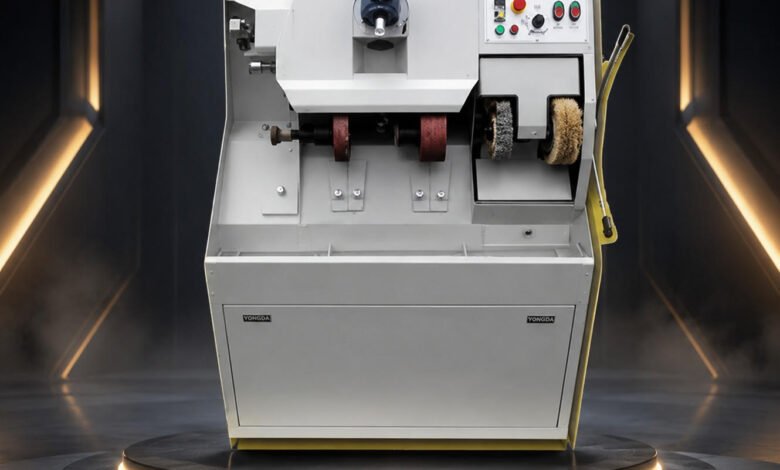
To achieve this level of efficiency without filling the room with toxic debris, a professional restoration studio relies almost entirely on a heavy-duty shoe finisher machine. This massive, integrated workstation serves as the mechanical heart of the shop. By housing the coarse sanding belts, the fine scouring wheels, the friction brushes, and the high-powered dust extraction blowers all within a single footprint, the equipment allows the artisan to execute every stage of the restoration seamlessly. It provides the immense torque required to reshape hardened rubber, combined with the precision needed to polish delicate calfskin.
The Renaissance of Preservation
We are currently witnessing a massive cultural shift away from disposable, fast-fashion footwear and toward sustainable, heritage investments. Consumers are increasingly willing to spend premium prices on footwear that can be rebuilt time and time again.
Fulfilling that promise of longevity, however, requires far more than a needle and thread. It requires an environment where raw power meets refined craftsmanship. The paradox of modern footwear restoration is that to achieve an elegant, pristine final product, the artisan must subject the materials to an extraordinary amount of abrasive force. Every beautifully polished leather sole and perfectly smooth heel is a quiet testament to the mastery of industrial friction.