Business
Why Logistics Companies Are Building Custom AI Agents for Last-Mile Delivery Tracking

Last-mile delivery is where logistics promises meet reality, and the gap between the two is where customer satisfaction is won or lost. A package that travels flawlessly from origin to regional hub and then sits undelivered because of a driver shortage, an address error, or a missed delivery attempt is not a supply chain success story regardless of how efficiently the first ninety percent of the journey went. Managing this final stage at scale, with the communication transparency that customers now expect as a baseline, requires a level of real-time monitoring and automated response capability that manual operations simply cannot provide. For smaller logistics operations and regional carriers competing with the tracking and communication infrastructure of the largest national carriers, the gap in customer experience can be significant.
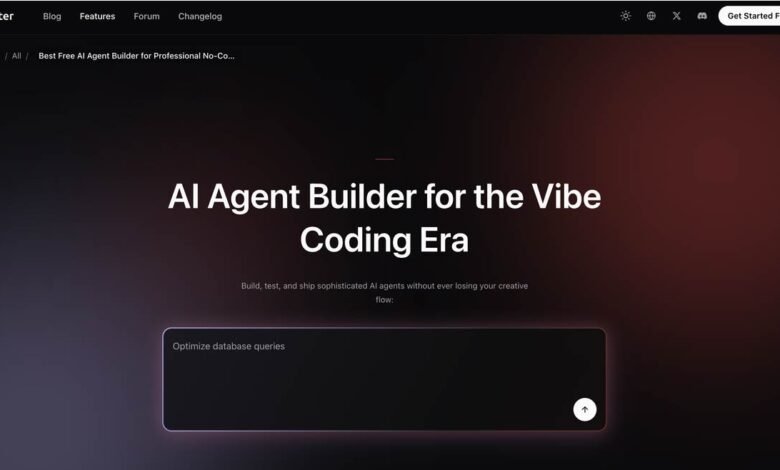
What Enter Pro provides through its AI agent builder is the ability to close that gap without building a technology department. Enter Pro is a full development environment that makes building custom monitoring and communication agents accessible to operations managers and business owners who are not software developers. The platform manages the technical complexity of connecting to data sources, applying workflow logic, and deploying reliable agents, leaving the logistics team to define what should be monitored and what should happen when conditions change. For a logistics operation where customer trust is built on delivery accuracy and communication reliability, that capability changes what is possible without adding to the technology budget in ways that only large carriers can absorb.
Customer expectations around delivery tracking have risen dramatically in recent years, driven by the standards set by large e-commerce and logistics platforms. Real-time tracking updates. Proactive communication when a delivery is delayed. Immediate notification of a failed delivery attempt with clear options for what happens next. These are now baseline expectations, not premium features, and smaller logistics operations that cannot meet them are losing business to competitors who can.
Real-Time Exception Monitoring
The deliveries that need attention are a small percentage of the total volume on any given day. The challenge is identifying which ones need attention quickly enough to act before the customer notices a problem. A package that has not been scanned at an expected checkpoint. A driver who is running significantly behind the route schedule. A delivery that was attempted and failed without a follow-up action being triggered. Each of these is an exception that, caught early, can be resolved before it becomes a customer complaint.
An automated exception-monitoring agent can continuously monitor the delivery data stream, apply defined rules to identify conditions that fall outside expected parameters, and surface alerts to the operations team requiring immediate attention. The operations manager is not monitoring every delivery. They are responding to the exceptions that the agent has already identified.
Using AI code generation through Enter Pro, the logistics team can build the specific detection logic that matches their operation: the checkpoint sequence for their delivery network, the time thresholds that define an exception versus an acceptable variance, and the escalation rules that determine who gets notified about which kinds of exceptions. Enter Pro handles the technical construction, so the operations team defines their own monitoring logic rather than configuring a generic platform that does not understand their specific network.
Proactive Customer Communication
The customer who is expecting a delivery and receives a proactive update when something has changed has a fundamentally different experience than the one who tracks their package and discovers a delay themselves. The same information, delivered proactively versus reactively, creates a different impression of the logistics company’s reliability and transparency.
An automated customer communication agent can generate proactive updates at the specific events that matter: when a delivery is out for delivery, when a delivery has been attempted, and the next steps are available, when a delay has been identified, and a revised timeline is available. The communication reflects current, accurate information because it is generated from the live delivery data rather than from a scheduled template.
Failed Delivery Resolution
Failed deliveries that are not resolved quickly compound. A missed delivery that is not followed up on the same day often results in a second missed delivery, a customer complaint, and a return to sender that costs the shipper and damages the customer relationship. An automated failed delivery resolution workflow that contacts the customer immediately after a failed attempt, presents the available resolution options, and initiates the chosen option without requiring manual intervention from the operations team resolves the situation faster and at a lower cost in staff time.
Conclusion
Logistics companies that build automated monitoring and communication systems around their last-mile operations are competing on a dimension that their size would otherwise make difficult to match. The customer experience that comes from real-time tracking, proactive communication, and fast exception resolution is no longer the exclusive domain of the largest carriers. It is available to any logistics operation willing to build the systems that deliver it. In 2026, those systems are accessible without a software development team, and the logistics operations that build them are creating customer experiences that justify continued loyalty in a market where alternatives are always available.