How Used Shell and Tube Heat Exchangers Support Industrial Fluid Systems and Equipment Longevity

Industrial fluid management is a discipline that spans dozens of sectors — from marine engineering and offshore operations to chemical processing and power generation. At the heart of many of these systems lies thermal transfer technology, and few components are as foundational to that process as the shell and tube heat exchanger. When combined with proper pump monitoring and fluid circulation strategies, these units form the backbone of reliable, cost-effective industrial operations. Understanding how they integrate into broader fluid system design is essential for engineers, procurement managers, and plant operators alike.
The Role of Heat Exchangers in Industrial Fluid Systems
Heat exchangers serve one primary purpose: to transfer thermal energy between two fluid streams without allowing them to mix. In industrial settings, this function is critical. Whether cooling hydraulic oil in a manufacturing line, condensing steam in a power plant, or managing heat loads in a refinery, the shell and tube design remains the most widely deployed configuration in the world. Its durability, scalability, and adaptability to high-pressure and high-temperature environments make it a preferred choice across industries.
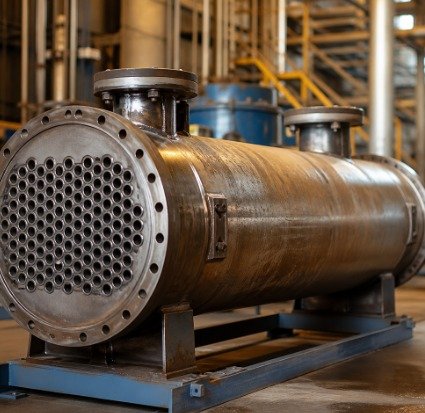
The shell and tube design consists of a cylindrical shell housing a bundle of tubes. One fluid flows through the tubes while another flows around them within the shell. This counter-flow or parallel-flow arrangement maximizes heat transfer efficiency. The design can be engineered for a wide range of fluid types, viscosities, and operating pressures, making it one of the most versatile thermal management tools available.
Why Procurement Teams Are Turning to Used Equipment
Capital expenditure pressures have pushed many industrial operators to reconsider their equipment sourcing strategies. New heat exchangers, especially large-scale units designed for demanding applications, can represent a significant financial commitment. Refurbished and pre-owned units, when properly inspected and certified, offer a compelling alternative. A quality used shell and tube heat exchanger sourced from a reputable supplier can deliver equivalent performance at a fraction of the cost, with lead times that are often dramatically shorter than ordering new custom-fabricated equipment. This is particularly valuable in industries where downtime translates directly into lost revenue.
Integrating Heat Exchangers with Pump Systems
No heat exchanger operates in isolation. It is always part of a larger fluid circuit, and the pump driving fluid through that circuit is just as important as the exchanger itself. Pump performance directly affects flow rates, pressure differentials, and ultimately the thermal efficiency of the entire system. When a pump begins to degrade — whether through cavitation, seal wear, or impeller damage — the heat exchanger downstream will inevitably suffer reduced performance, even if the exchanger itself is in perfect condition.
This interdependency is why condition monitoring of pumps has become a standard practice in well-managed industrial facilities. Vibration analysis, thermographic inspection, and flow measurement are among the tools used to detect early signs of pump deterioration. According to best practices in pump condition monitoring, proactive maintenance programs can extend pump service life significantly while reducing unplanned downtime — a benefit that cascades through every connected component, including heat exchangers.
Marine Applications: Bilge Pumps and Thermal Management
The intersection of fluid management and thermal control is not limited to land-based industrial plants. Marine environments present their own unique challenges, where both pumping reliability and heat management are critical to vessel safety and operational efficiency. Bilge pumps, for example, are essential safety components on boats and yachts, responsible for removing unwanted water accumulation from the hull. Modern durable solutions designed for marine use must withstand saltwater corrosion, vibration, and continuous duty cycles. For vessel operators looking to upgrade their onboard fluid management systems, exploring solar-powered bilge pump options for boats and yachts represents a forward-thinking approach that reduces reliance on battery reserves while maintaining reliable bilge clearance.
In larger marine vessels and offshore platforms, shell and tube heat exchangers are used extensively for engine cooling, fuel conditioning, and HVAC systems. The same principles that govern land-based thermal management apply at sea, with the added complexity of space constraints, motion, and exposure to corrosive environments. Selecting the right materials — titanium, duplex stainless steel, or naval brass — is critical when specifying heat exchangers for marine duty.
Evaluating Used Heat Exchangers: What to Look For
Purchasing pre-owned process equipment requires a structured evaluation process. Not all used heat exchangers are equal, and the condition of a unit depends heavily on its previous service environment, maintenance history, and how it was decommissioned. Key inspection criteria include tube wall thickness measurements, shell integrity assessments, baffle condition, and the state of nozzle connections and flanges. Hydrostatic pressure testing is a standard requirement before any used heat exchanger is returned to service.
Fouling history is another important consideration. Units that handled heavily contaminated fluids or operated at extreme temperatures may have experienced scaling, corrosion pitting, or tube erosion that is not immediately visible. A thorough inspection by qualified process engineers, combined with documentation of the unit’s service history, provides the confidence needed to make an informed purchasing decision.
Matching Equipment to Process Requirements
One of the most common mistakes in heat exchanger procurement — whether buying new or used — is selecting a unit based on size alone rather than on process-specific thermal and hydraulic requirements. Proper selection requires knowledge of the fluid properties on both the shell side and tube side, including flow rates, inlet and outlet temperatures, allowable pressure drops, and fouling factors. An oversized exchanger may seem like a safe choice, but it can lead to flow distribution problems and reduced efficiency. An undersized unit will simply fail to meet process demands.
Working with suppliers who have deep technical knowledge of process equipment is therefore essential. The ability to cross-reference available inventory against specific process requirements — and to provide engineering support during the selection process — separates professional process equipment suppliers from simple resellers.
International Process Plants: A Trusted Source for Process Equipment
International Process Plants has established itself as a leading global supplier of used and refurbished process equipment, with an extensive inventory that includes heat exchangers, pressure vessels, reactors, and complete plant systems. Their team of experienced engineers and equipment specialists brings decades of knowledge to every transaction, ensuring that clients receive equipment that meets their technical specifications and operational requirements. With a rigorous inspection and reconditioning process, they provide buyers with the assurance that pre-owned equipment will perform reliably in demanding industrial environments. Their global reach and deep inventory make them a go-to resource for plant operators and engineering firms seeking cost-effective procurement solutions.
Conclusion: Building Reliable Systems Through Smart Equipment Choices
Effective industrial fluid management is built on the foundation of well-matched, properly maintained equipment. Shell and tube heat exchangers remain central to that foundation, offering proven thermal performance across a vast range of applications. Whether sourcing new or used equipment, the key lies in rigorous evaluation, proper system integration, and a commitment to ongoing maintenance. By combining smart procurement strategies with proactive pump monitoring and thoughtful system design, industrial operators can achieve the reliability and efficiency their processes demand — without unnecessary capital expenditure.