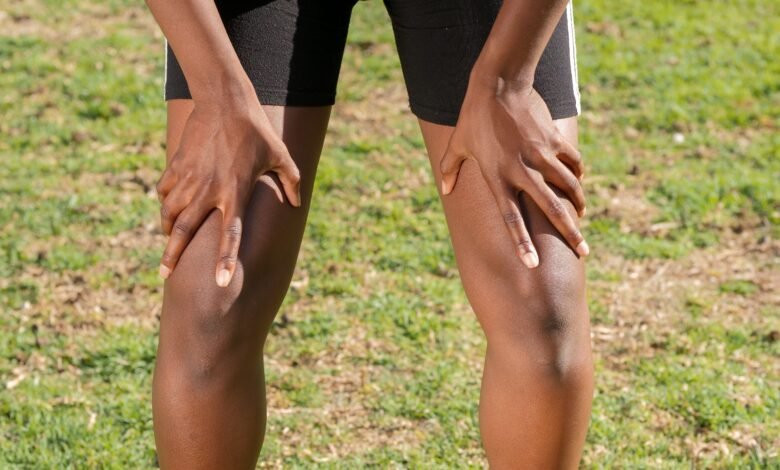
You have been told you have a meniscus tear, but your knee feels fine when walking. There is no obvious swelling, and even a short jog may feel comfortable. Does that mean running is safe?
Not necessarily. Pain is only one part of the picture. In cases involving a meniscus injury in Singapore, factors such as knee stability, swelling, locking, range of motion and the response to repeated activity can all influence whether returning to running is appropriate.
A meniscus tear can behave differently depending on its location, size, cause and whether it affects normal knee movement. Some people remain active with few symptoms, while others develop swelling, catching or discomfort only after repeated loading.
The safer question is not simply, “Does running hurt?” but rather, “How does the knee respond during and after running?”
Why Can a Meniscus Tear Be Pain-Free?
Not every meniscus tear causes constant pain.
Some tears are small or located in areas that do not significantly interfere with normal movement. Degenerative meniscus changes can also be present in people who have few or no symptoms.
Symptoms may depend on:
- where the tear is located
- the shape and size of the tear
- whether part of the torn tissue moves within the joint
- how much load is placed on the knee
- whether other knee problems are present
- age and activity level
This means a pain-free knee does not necessarily mean the meniscus has completely recovered.
Running Tests the Knee Differently From Walking
Walking comfortably is encouraging, but running places more repeated load through the knee.
With every stride, the knee has to:
- absorb impact
- bend and straighten repeatedly
- stabilise the body
- respond to changes in surface
- control forward movement
- manage repeated loading over time
A knee that feels comfortable during normal daily activity may behave differently after 20 or 30 minutes of running.
That response can be more informative than whether the first few minutes feel pain-free.
What Should You Watch for After a Run?
Symptoms do not always appear while you are exercising.
A knee may feel fine during the run but become swollen or stiff several hours later.
Watch for:
- swelling
- stiffness after sitting
- pain along the joint line
- difficulty fully bending or straightening the knee
- clicking with pain
- catching
- a feeling that the knee is not moving smoothly
- reduced confidence in the knee the next day
If these symptoms repeatedly appear after running, the current training load may be more than the knee is ready to tolerate.
Does Clicking Mean Running Is Unsafe?
Not every click or pop means the meniscus is being damaged.
Knees can make harmless noises during normal movement.
More attention is needed when clicking occurs together with:
- pain
- swelling
- catching
- locking
- reduced movement
A knee that becomes mechanically stuck or cannot fully straighten should be assessed rather than repeatedly tested through running.
What About a Knee That Feels Stable?
Stability matters just as much as pain.
Running requires good control from the muscles around the hip, knee and ankle.
A pain-free knee should ideally also feel:
- stable
- strong
- unrestricted
- predictable during movement
If the knee feels like it is giving way, shifting or cannot be trusted during faster movement, continuing to run may increase the chance of another injury.
The Type of Meniscus Tear Matters
Meniscus tears are not all the same.
A small, stable tear may behave very differently from a larger tear that moves within the knee.
Certain tear patterns are more likely to cause mechanical symptoms such as locking or catching.
This means the decision about running depends partly on whether the tear is stable and whether it affects normal joint function.
An MRI result should also not be interpreted on its own. Imaging findings need to be considered together with symptoms, physical examination and activity demands.
Sports-Related and Degenerative Tears May Behave Differently
A meniscus tear caused by a sudden twisting injury may have a different pattern from one associated with age-related changes.
An acute tear may be followed by:
- swelling
- joint-line pain
- difficulty twisting
- reduced movement
- catching or locking
A degenerative tear may develop without a clear injury and may cause intermittent symptoms.
The appropriate activity level can therefore vary widely between individuals.
How Can You Judge Whether the Knee Is Ready for Running?
Before returning to regular running, it can be useful to see how the knee handles simpler movements.
Can you comfortably:
- walk briskly
- climb and descend stairs
- perform a controlled squat
- balance on the affected leg
- perform a small hop without pain
- bend and straighten the knee fully
These are not formal clearance tests, but difficulty with basic movements may suggest that returning directly to running is premature.
One Pain-Free Run Does Not Mean the Knee Is Fully Ready
A common mistake is treating one comfortable run as proof that the problem has resolved.
Running tolerance should be built gradually.
A more cautious progression may involve:
- walking first
- adding short jogging intervals
- using a flat, predictable surface
- keeping the first few sessions shorter
- allowing recovery between runs
- increasing only one training variable at a time
For example, it may be more sensible to increase distance before increasing speed rather than changing both at once.
When Should You Stop the Run?
Stop or reduce activity if the knee develops:
- sharp joint-line pain
- increasing swelling
- catching
- locking
- instability
- difficulty straightening
- progressively worsening discomfort
Trying to “run through” mechanical symptoms is different from tolerating normal exercise fatigue.
Can Running Make a Meniscus Tear Worse?
It depends on the type of tear and how the knee responds to loading.
Running does not automatically worsen every meniscus tear. Some people with stable or degenerative tears can remain active without major symptoms.
However, repeatedly loading a knee that develops swelling, locking or pain may aggravate symptoms and interfere with recovery.
The amount of running that is appropriate should therefore be based on function and symptom response rather than a single rule.
Why Strength Still Matters When There Is No Pain
A period of reduced activity can lead to weakness around the thigh and hip.
These muscles help control how forces pass through the knee during running.
Weakness may not be obvious during walking but can become more noticeable when:
- running downhill
- increasing pace
- changing direction
- running longer distances
- training on uneven surfaces
Strength and movement control are therefore important even when the knee feels pain-free.
How Should Running Be Reintroduced?
A gradual return is usually more sensible than immediately going back to previous mileage.
One possible progression is to:
- Start with comfortable walking.
- Add short jogging intervals.
- Monitor the knee later that day and the next morning.
- Increase duration gradually if symptoms remain settled.
- Add speed or hills only after easier running is well tolerated.
If swelling or discomfort appears after progressing, reducing the previous increase may be appropriate.
When Is Further Assessment Worth Considering?
A knee that remains pain-free and functions normally may not require urgent assessment simply because a meniscus tear was seen on a scan.
However, further review may be useful when higher-level activity brings back swelling, locking or a sense of instability.
If running repeatedly triggers swelling, locking or instability, further assessment may help determine how the knee is responding to load. Orthopaedic specialist in Singapore may assess factors such as tear pattern, knee stability, range of motion and activity demands. Dr Yung Shing Wai is among the specialists in Singapore who assess knee and sports-related conditions.
Further assessment may be helpful if there is:
- recurrent swelling after exercise
- locking or catching
- persistent joint-line pain
- difficulty fully straightening the knee
- instability
- declining running tolerance
- a new twisting injury
What If You Are Training for a Race?
Race preparation can make it tempting to keep training because the knee is not currently painful.
However, mileage, pace and recovery still matter.
If running volume is increasing, avoid large jumps in weekly distance and pay attention to how the knee feels later in the day and the morning after harder sessions.
Modifying a few runs may be preferable to continuing until symptoms significantly interfere with training.
It may be possible to run with some meniscus tears when the knee is pain-free, stable and functioning normally, but the absence of pain does not automatically mean unrestricted running is appropriate.
The tear pattern, knee strength, range of motion and response after exercise all matter. A gradual return to running allows the knee to be monitored for swelling, mechanical symptoms or reduced function.
If locking, catching, repeated swelling or loss of movement develops, further assessment can help determine whether running should be modified.
Disclaimer: This article is for informational purposes only and does not substitute for professional medical advice, diagnosis, or treatment.