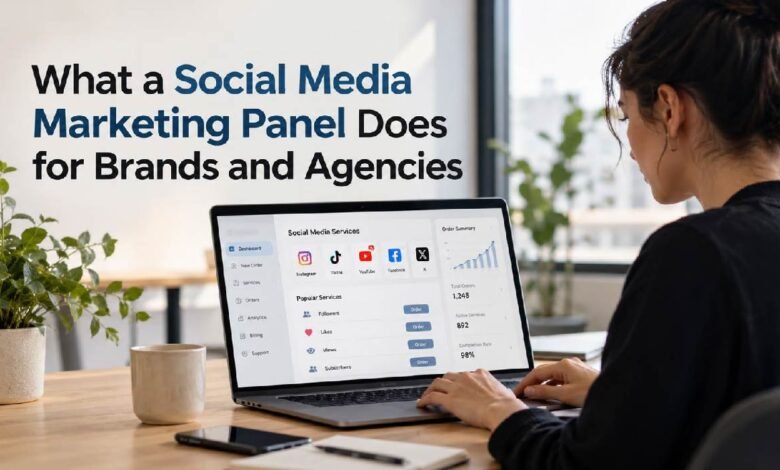
A social media marketing panel is an online platform where users can browse, order and manage services associated with social media accounts and content. These services may include followers, likes, views, subscribers and other measurable interactions. Rather than handling each request through a separate supplier, brands and agencies can use a centralized dashboard to review available services, submit orders and monitor their status.
OZSM is an example of a social media marketing panel serving resellers, marketing agencies and individual users since 2021. Its service catalog covers multiple social networks, while its dashboard and API provide different ways to manage orders. Understanding how this type of platform operates helps businesses distinguish between purchasing a defined service and developing a complete social media marketing strategy.
What Services Does a Social Media Panel Provide?
Most panels organize their catalogs by social platform and service type. The available options depend on the network involved because an Instagram post, a YouTube video and a Telegram channel have different engagement formats.
OZSM offers social media services across Instagram, TikTok, YouTube, Telegram, Twitter (X), Facebook, Spotify, Twitch, Kick, Discord, LinkedIn, Threads and SoundCloud. Its catalog includes categories such as:
- Followers and subscribers: Services associated with the follower or subscriber counts of social profiles and channels.
- Likes and views: Order categories connected to measurable interactions on posts, videos and other published content.
- Members: Services designed around membership counts for supported communities and channels.
- Watch time: Services related to viewing duration on supported video platforms.
These categories describe what an order is intended to deliver, not necessarily the business value of the resulting activity. A higher displayed count does not establish that more potential customers have discovered a product or developed an interest in purchasing it.
For this reason, agencies should distinguish between platform metrics, audience quality and commercial outcomes when considering SMM services.
How Does the Ordering Dashboard Work?
A dashboard provides a common interface for selecting services and managing orders. The basic process is straightforward, although the information required can vary between service categories.
- Create an account: Register with the provider and access the dashboard.
- Add funds: Select an available payment method and fund the account balance.
- Browse services: Choose the social platform and review the relevant service descriptions.
- Enter the destination: Supply the required public profile username, post URL, video link or channel address.
- Submit the order: Confirm the selected service and quantity after reviewing the applicable conditions.
- Monitor progress: Use the order management interface to check status and available follow-up actions.
OZSM does not require the social media account password to place an order. A link or username is sufficient for its standard ordering process. This distinction matters because external providers should not need unrestricted account access simply to process a public-facing service request.
Supported payment methods include PayPal, cryptocurrency, Binance-related payment options and cards. OZSM also offers balance top-up bonuses. Payment availability and service conditions should be reviewed directly before a transaction.
Why Agencies Use Centralized Order Management
For an individual creator, submitting one service order may be a relatively simple task. An agency managing several clients faces a different operational problem: keeping campaign requests, destinations, order references and spending records organized.
Centralized management can reduce the administrative effort involved in navigating separate ordering processes. However, it does not automatically improve the performance of the client’s social media content.
OZSM includes several functions relevant to agency and reseller operations:
- Mass orders: A function for submitting multiple service requests through an organized ordering workflow.
- Drip-feed: An option for distributing supported order quantities across scheduled intervals rather than requesting the entire quantity at once.
- Refill: An available follow-up function on many services, subject to the conditions of the individual service.
- API access: A technical interface that allows compatible systems to exchange order information with the panel.
These features address different operational needs. Mass ordering helps organize multiple requests, while drip-feed changes how a supported order is distributed. Neither feature establishes that the resulting engagement is organic or compliant with platform rules.
What Can an API Add to an Agency Workflow?
An application programming interface, or API, allows software systems to exchange structured information without requiring every action to be completed manually through a browser.
OZSM documents API actions for retrieving the service catalog, adding orders, checking order status, requesting eligible refills, submitting cancellation requests and checking account balances.
An agency with its own client management application could use these functions to connect its internal ordering workflow to the panel. For example, an authorized staff member could select a service within an internal system, submit the request through the API and retrieve the resulting order reference.
This arrangement can simplify recordkeeping when an agency handles numerous requests. It still requires technical implementation, appropriate access controls and safeguards against accidental duplicate orders. API support should therefore be evaluated as an operational feature rather than a marketing performance advantage.
Where Does a Panel Fit Alongside Content and Advertising?
A social media panel is not a replacement for content development, community management or advertising. Each activity performs a different function within a brand’s marketing program.
Content marketing gives potential customers a reason to follow a business, explore its products or interact with its posts. Paid advertising provides campaign tools for reaching selected audiences and measuring responses against defined objectives. Community management focuses on conversations, customer questions and ongoing relationships.
A panel, by comparison, provides access to specific service orders and related administrative functions. Its outputs should not be confused with qualified audience acquisition, customer trust or sales performance.
Consider a company introducing a new product. Its marketing team might produce demonstration videos, publish customer-focused explanations and run targeted advertising campaigns. The team could separately evaluate available social media services, but any proposed order would need to meet the relevant platform rules and the company’s own standards for authentic reporting.
This distinction is particularly important for agencies reporting results to clients. A purchased metric should never be presented as organic audience interest or evidence of advertising effectiveness.
What Risks Should Brands Consider?
Not every service offered through a social media panel is necessarily appropriate for every account or campaign. Platform policies may restrict artificial engagement, manipulated metrics and certain forms of coordinated activity.
YouTube, for example, prohibits practices that artificially inflate views, likes, subscribers and other engagement measurements. Such activity can result in metrics being disregarded or enforcement actions against affected content and accounts. Other social platforms maintain their own rules.
Before considering a service, a brand or agency should examine several practical questions:
- Does the intended activity comply with the relevant social network’s policies?
- What exactly does the service description include and exclude?
- Are refill or cancellation actions available for the selected service?
- How will the agency distinguish purchased activity from organic engagement in client reporting?
- Could the order create misleading impressions about the popularity of a brand or its content?
Refill availability should not be interpreted as a promise that an account’s metrics will remain unchanged. Similarly, an order marked complete indicates an ordering status, not proof of customer acquisition or a successful marketing campaign.
How Should Agencies Measure the Value of a Panel?
The useful starting point is to separate operational measurements from marketing outcomes. Panel-related measurements can include order status, service expenditure, support requests and the accuracy of internal records. Marketing outcomes require different evidence.
For brands, meaningful performance indicators may include qualified website visits, customer inquiries, purchases, repeat engagement and audience retention. Those indicators should be measured using appropriate analytics rather than inferred from purchased social media counts.
An agency can apply a simple evaluation process: establish the client’s objective, identify the metric that represents progress, assess whether a proposed service is appropriate and policy-compliant, then document the distinction between the order output and the campaign result.
OZSM illustrates how a single dashboard can organize social media service categories, payment functions and order management for different types of users. For businesses considering this model, the central question is not simply which services are available. It is whether those services fit a legitimate operational need without compromising platform compliance, transparent reporting or the broader marketing strategy.