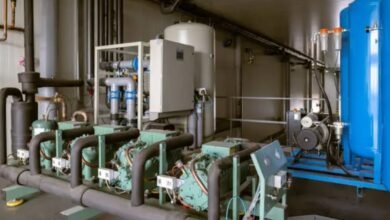
A seventy-two inch vibratory roller on a loader closes a backfilled trench in a single pass


Late summer underground work leaves miles of trench to close
August is the tail of the underground season across much of the United States, and every service line laid this summer leaves a trench that has to be closed properly before the ground cools. A skid steer vibratory roller is how many contractors finish that work.
A trench that settles later becomes a customer complaint, a pavement failure, or a return trip with another load of gravel. Closing it well is not glamorous work. It does decide whether the crew comes back to the same address in two years.
Width is the variable that quietly decides the schedule
A drum spanning seventy-two inches covers a normal utility trench and both shoulders together in one pass. That single fact reorganizes the work. The operator drives the length of the trench once rather than walking a narrow machine up and back in lanes.
Overlap is where narrow equipment loses its hours. Every lane has to share several inches with the last one to avoid a soft seam, so effective coverage always trails the stated width. A wide vibratory roller removes most of that arithmetic from the day.
The carrier supplies weight the attachment never has to haul
A self propelled machine has to be heavy on its own, and that weight must then be transported, fueled, and parked somewhere. An attachment borrows weight instead. Down pressure on a vibratory roller comes from the loader arms and the mass standing behind them.
That changes what a small contractor can realistically own. Compaction force exists while the drum is on the ground and disappears when the attachment comes off. One loader handles digging, backfilling, and finishing without a second machine riding on the trailer.
Hydraulic flow is the specification that actually gates performance
The eccentric weight inside the drum is turned by a hydraulic motor. That motor wants a supply in the range of sixteen to eighteen gallons per minute to reach its designed frequency. A carrier that cannot deliver it produces a drum that compacts poorly.
Matching flow before purchase avoids a frustrating season. Standard flow loaders suit some attachments and starve others. The specification sheet for the carrier matters every bit as much as the sheet for the vibratory roller bolted onto the front of it.
Confined ground is where the format separates from a ride-on
Trenches run beside curbs, through side yards, and along fence lines where a ride-on machine simply cannot turn around. A loader reverses out of a dead end and pivots within its own length. The last twenty feet get the same treatment as the first.
Backfilled subgrade under a slab behaves the same way. A contractor near Boise finishing house pads places fill and rolls it with the same carrier. The attachment never leaves the site between those two operations or waits on a second delivery.
Protecting the drum motor is not an optional courtesy
The most vulnerable part of the assembly is the hydraulic motor sitting inside the rotating steel drum of a vibratory roller. Guarding and built in lubrication exist for a reason. That motor lives in a punishing environment of vibration and dust, where failure stops everything.
Operating discipline protects it as well. Avoid vibrating on rock or frozen ground, and lift the drum before traveling any real distance. Stop vibration whenever the machine is stationary, since a drum shaking in one spot damages the surface and the mounting.
Compaction tools grouped by how they load the ground
- Smooth drum: continuous contact suited to granular backfill
- Plate compactor: flat footprint driven straight downward
- Padfoot drum: concentrated pressure that kneads cohesive soil
- Trench roller: narrow body for deep tight excavations
What the attachment format gives and what it quietly costs
- Strength: full trench width finished in one pass
- Strength: no second machine to haul or store
- Limit: requires a carrier with high hydraulic flow
- Limit: operator visibility over a wide front drum
Set beside a dedicated ride-on machine, this format gives up operator comfort and sustained output over open ground. What it returns is compaction on equipment already present. For trench work measured in hundreds of feet rather than thousands, that exchange wins.
Utility contractors keep consolidating around a single carrier
Fleet costs have pushed smaller contractors toward owning fewer machines and more attachments. Compaction was among the last jobs to move in that direction. Wide drums built for loaders have made the vibratory roller attachment practical for work that once justified a separate machine.
That consolidation is why the compaction equipment offered by TMG Industrial is built around the loader a crew already brings to the trench.