A pack is a battery with a plug, and a phone is a battery with a socket, so in principle the two only have to agree on a few things. In practice three details decide whether the pairing feels effortless or fiddly, and all three sit on the phone’s side rather than the pack’s. An iPhone asks its own short list: which connector it expects, how much power it will actually accept, and which accessories are meant to sit against its back. Answer those three and the choice becomes obvious; ignore them and a perfectly good pack can feel like the wrong one for reasons that are hard to name. The first question is settled by looking at the bottom of the phone rather than at any specification.
The Connector Question
Lightning, USB-C and the Cable You Already Own
The connector is the first question and the easiest to answer. Apple used Lightning for a decade and moved to USB-C on recent models, so the same family of phones can need two different cables depending on the year it was made. A pack with both a USB-C port and a USB-A port covers the whole range, since a Lightning cable can be plugged into either one. Buy the cable to match the phone in your hand rather than the one in the advertisement, and check the drawer before ordering anything: most households already own the right lead and simply do not know it. A short USB-C to USB-C lead covers a recent phone and a laptop from the same port, which is one fewer thing to pack for a weekend.
What a USB-A Port Still Does Well
USB-A is the oldest port on any pack and the one people apologise for. It cannot negotiate the high rates that USB-C manages, and it will not charge a laptop, but it will charge a phone overnight at a steady five watts without any conversation at all. The humble rectangular socket is also the reason an older apple power bank stays useful long after its headline figure has been overtaken, because the cable that fits it is the one already coiled beside the bed. Speed is not the only measure of a port; reliability at two in the morning counts for something too.
The Power Question
How Much an iPhone Draws, and When
An iPhone draws in a curve rather than at a constant rate. It accepts a high current when the battery is low, holds it for a while, then steps down as the cell fills, and the last portion of any charge is deliberately slow. A peak figure quoted on a charger is therefore a brief event rather than a description of the whole session. What matters is the average across the hour you actually have, which is why a modest charger often finishes at almost the same time as a large one when both start from twenty percent on the same phone. Reading the percentage after half an hour tells you more about a charger than any figure printed on its side.
Why a Bigger Number Changes Little
A bigger number on the charger changes less than the box suggests. The phone sets its own ceiling and will not accept more simply because more is offered, so a hundred-watt brick charging a phone that tops out at twenty-seven behaves exactly like a thirty-watt one. The extra headroom is useful for a laptop or a tablet plugged into the same port, and it is wasted on a phone that has already reached its limit. Paying for capacity the device cannot use is the most common mistake in this category, and an easy one to avoid once the ceiling is known. That ceiling is published for every model, and it is worth thirty seconds of searching before paying for headroom.
The Ecosystem Question
MagSafe and the 15 W Ceiling
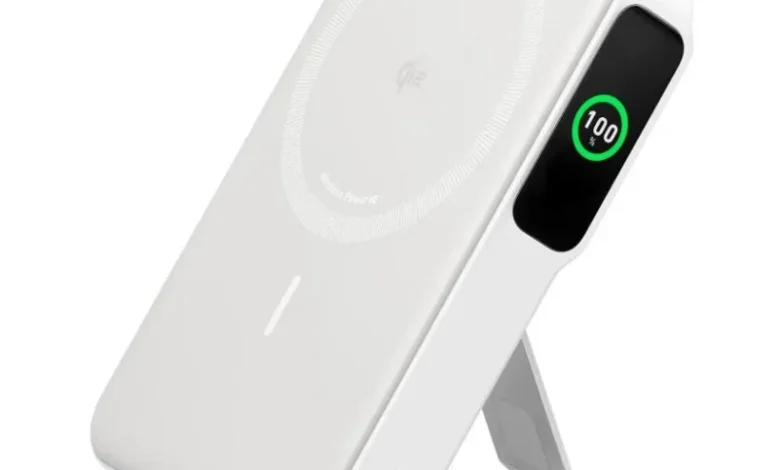
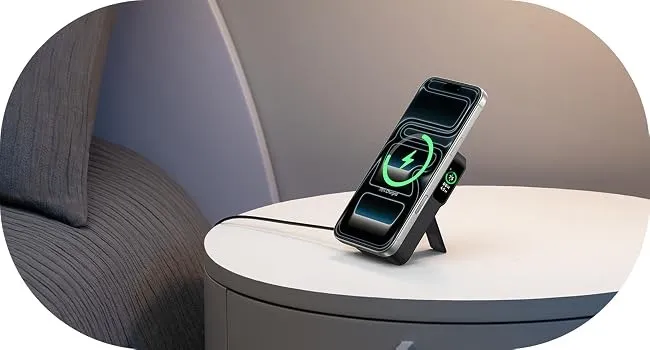
Magnets are where the ecosystem becomes visible. MagSafe fixes the phone to a ring of magnets and sets a ceiling of fifteen watts for wireless charging, which is convenient rather than fast. Qi2 uses the same physical arrangement and the same limit, so a pack built to that standard will hold an iPhone in place and charge it without a cable at a predictable rate. Anker’s MagGo Power Bank (10K) follows that design, with the magnet doing the alignment and the coil doing the work, which is the part of the experience people notice before anything else.
Certification and Accessories That Fit
The accessories have to agree as well. A case thick enough to block the magnets will stop a magnetic pack from holding, and a case with a metal plate inside will interfere with the coil. Cables are simpler: a certified lead is worth the small premium because the uncertified ones tend to fail at the plug rather than along the wire. A pack carrying a recognised certification mark has been tested with the phone rather than around it, and that is the line on the label worth reading before the capacity figure. Everything else is largely fashion. Fit is a matter of millimetres, and the list of cases the maker has tested is the quickest way to check before buying one.
Conclusion
An iPhone does not need a different kind of pack; it rewards one that speaks its protocol, fits its port and holds its magnets, and ignores the rest of the label. That is a short list, and it is almost the same list for every model Apple has sold in the last five years. Choose on those three points and the pack will feel as though it was made for the phone in your pocket. None of them costs much to verify, and all of them are visible before the parcel is opened.