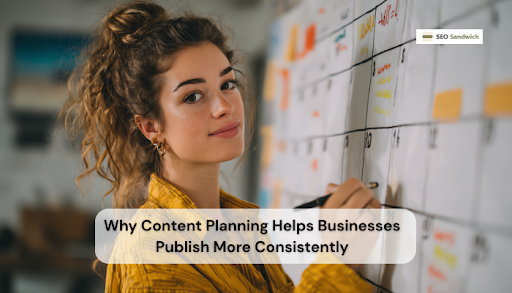
Publishing consistently is one of the hardest things for a business to pull off. You start strong, ideas flow, and then suddenly six weeks pass without a single post going live. Sound familiar?
Most businesses have been there at some point. A good chunk of them have plenty of ideas, but no real system to act on them. And that lack of structure leaves content marketing feeling like busy work with no clear direction.
We’ve worked with hundreds of businesses facing this exact problem at https://www.sandwichseo.com. SEO content planning is what closes that gap and keeps your publishing on track for the long term.
What Is SEO Content Planning, and Why Do You Need It?
SEO content planning is the process of mapping out what to create, who it’s for, and how each piece connects to your broader content strategy. Every blog post your team puts out should serve a focused purpose: reaching the right audience and ranking for relevant keywords on search engines.

Without clear objectives, you’re basically creating content and crossing your fingers (much like throwing darts in the dark and expecting one to land). A proper plan ties every piece directly to what the business actually needs to achieve.
And that’s exactly why a content calendar becomes your next best move.
Content Calendar: Your Roadmap to Consistent Publishing
A content calendar gives your team a specific publishing schedule and keeps everyone aligned on what goes out and when. Plus, it stops those painful missed opportunities where a trending topic passes, and nobody has anything ready to go.

Two things make this work well in practice:
-
Mapping Out Your Blog Posts in Advance
Most teams don’t realise how much time they lose to unplanned publishing. Because when there’s no schedule in place, every piece of content becomes a scramble.
A simple calendar, like a shared Google Sheets doc, gives every blog post a publication date. So your team always knows what’s coming next and can prepare properly. That structure alone is what keeps your content creation efforts running on a steady, predictable schedule.
-
Aligning Content Types With Marketing Goals
Not every piece serves the same audience need. Videos, articles, and blogs each work differently across the buyer journey (the viewer who finds you through a short video won’t always be ready to read a 1,500-word guide just yet).
A how-to blog post, for example, pulls in search traffic when your business launches a new service. At the same time, a short video builds trust with people who already know your brand.
Regardless of format, your content efforts should always tie back to what the business is genuinely trying to achieve, because publishing for the sake of it never moves the needle.
So now that your publishing schedule is in place, how does all of this actually feed into your SEO performance?
How a Strong Content Strategy Powers Your SEO Results
Believe it or not, documented content strategies deliver 33% higher ROI and up to 3x more leads than outbound marketing efforts. But those numbers don’t come from publishing more. You have to publish with a clear focus to get your content reaching the people who actually need it.
From our experience working with small and mid-sized businesses, one habit consistently separates those that grow their organic search traffic from those that don’t. They treat their SEO strategy like a living document. That means checking performance data regularly, using tools like Google Analytics to measure success, and identifying gaps before they cost you rankings.
Here’s what a focused strategy does for your SEO:
- Boost Your Visibility: Publishing with a plan helps your site surface for the searches that bring qualified traffic in.
- Track Your Engagement: Tools like Google Analytics and Search Console show you which posts are gaining traction and which ones need a different angle to get there.
- Measure Your Results: Sometimes a single underperforming post can drag down your overall rankings, but you won’t catch it without checking your data regularly. To stay ahead, build performance reviews into your content schedule from day one.
A documented approach also gives your team a reliable way to stay ahead of industry shifts as they happen. When every piece has a defined role, each one builds on the last in a way that a single one-off post simply cannot replicate.
The Right Tools for Smarter Content Creation
When you have proper tools in place, content planning becomes a lot more repeatable and far less stressful. After all, switching between scattered spreadsheets, email threads, and sticky notes eats up time your team could spend actually creating.
Some of the most widely used options across content teams include:
| Tool | Purpose |
| Google Sheets | Tracking publication dates and editorial calendars |
| Google Trends | Spotting trending topics and industry news early |
| Trello / Notion | Managing clear roles, deadlines, and collaboration |
| Surfer SEO | Guiding content creation around the right keywords |
Businesses that come to SEO Sandwich often have great ideas but no publishing plan. And honestly, the right tools are usually the missing piece that holds everything together.
A safe starting point is pairing a simple planning tool with a solid keyword research platform. For example, you can use Google Trends to find what your audience is actively searching for, then map those topics directly into your editorial calendar.
Worth Noting: Generative AI genuinely helps with brainstorming and drafting, though experienced human oversight should always guide the output.
Getting Found on Search Engines Begins With a Plan
Search engines reward consistency more than volume. Publishing high-quality content on a regular schedule signals to Google that your website is reliable and worth ranking higher.
Planned content also brings a few other benefits:
- Internal Links: You can weave them naturally across related posts to strengthen how your pages connect and support each other.
- Deeper Navigation: When there’s an easy path to follow, readers spend more time exploring your site rather than bouncing after one page.
- Link Health: Broken or outdated links are a red flag for search engines. A regular content review catches them before they do any real damage.
Each of those details compounds across your whole website, which builds domain authority far more steadily than sporadic publishing ever will.
Ultimately, generating leads through organic search comes down to targeting the right search terms, serving real audience needs, and publishing content that converts. A solid plan is what ties all three together.
Ready to Plan Smarter and Publish More?
Frankly, publishing consistently is hard. But a real structure behind your content makes everything more manageable. As a result, your search visibility grows, and leads come in far more reliably.
That’s what SEO Sandwich, backed by Matter Solutions, helps businesses build. We put together a full publishing system that covers keyword research, content calendars, and ongoing performance tracking. Every part of it lines up with your specific goals and audience from the start.
Visit SEO Sandwich and let’s get your content working harder.