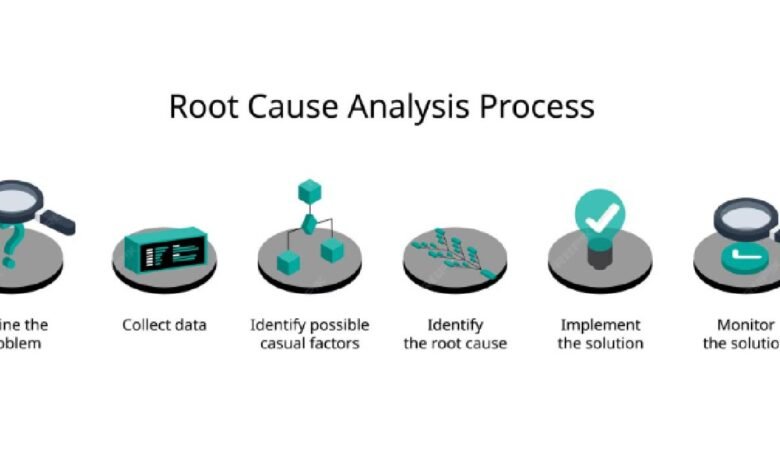
Every organization, whether large or small, has problems. Machines break, and products do not perform up to standards. Customer complaints accumulate. Deadlines are missed. The natural human response in most organizations is to address the easily visible problem by replacing the part, saying ‘sorry’ to the customer, working longer hours to get back on schedule, and moving on. However, this cycle of reacting to problems is a trap. If the causes of problems are not understood, problems will always come back. And this is where Root Cause Analysis is not only useful, it is essential for organizations that desire to achieve excellence in the way they run their business.
The Limitations of Surface-Level Fixes
Consider an example where the process is such that the batch repeatedly fails quality inspection. The immediate action is to rework the batch or reject the material. The supervisor re-trains the operator. However, the situation remains unchanged if no one is concerned about identifying the root cause of the recurring defect. The reason for the recurring defect could be the worn-out tool. The work instruction is not clear. The raw material is not consistent. The design is flawed.
This is what quality professionals call ‘Fire Fighting.’ Organizations that operate in this state are always reactive. They never move to the higher state where prevention is the mantra. The process of root cause analysis is the bridge between reactive behaviour and the higher state.
What Root Cause Analysis Really Is?
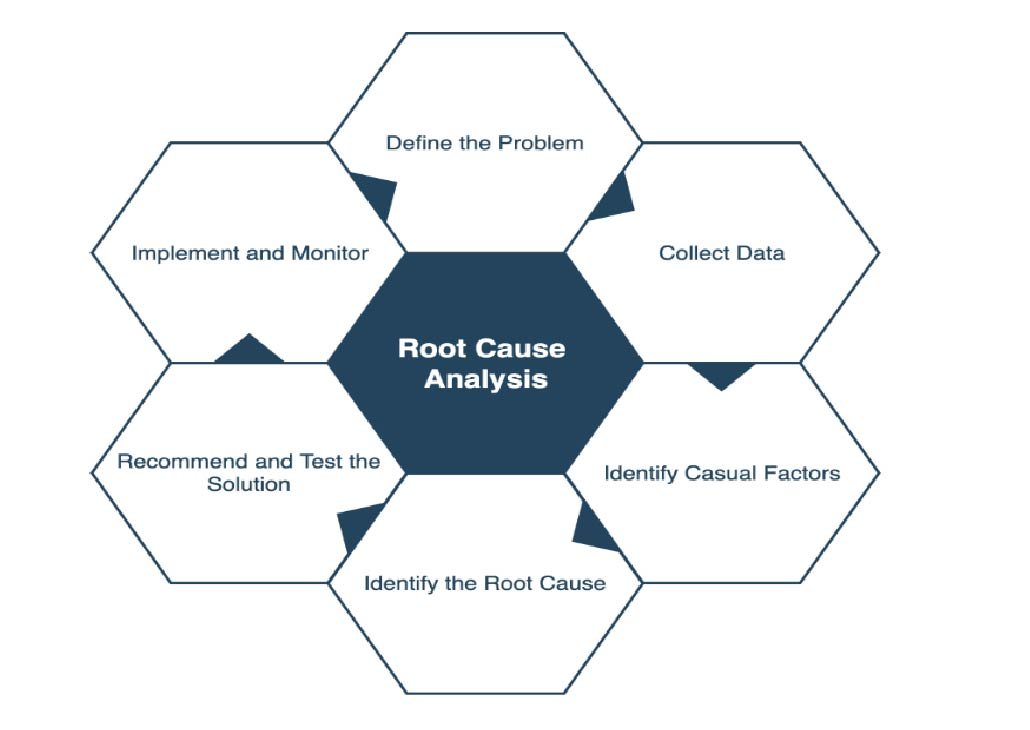
Root Cause Analysis is a methodology used to determine the root cause of a problem. This is not the symptoms of the problem. The purpose is not to place blame. It is to determine the system conditions that contributed to the failure, then eliminate those conditions. Several tools exist to help with root cause analysis-
The 5 Whys is the easiest to use- This involves asking the question “why?” repeatedly, generally 5 times, to drill down through the symptoms to the underlying system causes. A machine fails. Why? The fuse blew. Why? The fuse blew because the machine was overloaded. Why? The machine was overloaded because the bearing failed. Why? The bearing failed because it was not lubricated. Why? The bearing was not lubricated because there was no lubrication schedule. The root cause is not the machine failure. The root cause is the lack of a preventive maintenance process.
Fishbone Diagrams- It is also known as Ishikawa or cause and effect diagrams. This tool is utilized to map potential causes of a problem, categorized by people, processes, materials, and machines. Measurement, environment, etc.
The Shift from Problem Solving to Process Excellence- There are many organizations that have a problem, perform a root cause analysis, take corrective action, close the non-conformance report, and consider the problem solved. This is not enough to achieve process excellence. This leap, from problem solving to process excellence, is where an integrated management system becomes critical.
The Role of the Integrated Management System
An integrated management system is a system of management as a whole. It is a system of management in which several management standards are integrated into a single system of operations. These standards include ISO 9001 for quality management, ISO 14001 for environmental management, and ISO 45001 for occupational health and safety management. The linkage between root cause analysis and integrated management systems is significant in several ways. When root cause analysis is incorporated into an integrated management system, several things happen.
Learning is Leveraged Across Departments- Perhaps one of the best things about root cause analysis is organizational learning. An integrated management system is a structural framework in which organizational learning can occur across departments. Management reviews, internal audits, and documented information systems can all facilitate this process.
Risks are re-evaluated- An integrated management system incorporates corrective action into the risk management process. The resolution of one issue enhances the organization’s risk posture. Audit findings serve as improvement catalysts. Internal and external audits within the IMS surface non-conformances and improvement opportunities. When applied rigorously to the findings, the results of the root cause analysis in each audit cycle are used to drive improvement. It is no longer seen as merely a compliance activity.
Building a Culture That Makes It Work
An organizational culture in which problems are viewed as opportunities, not as signs of failure. Managers are key in this regard. When managers demonstrate a problem with a curious, not a condemning, attitude, their teams will investigate without fear of reprisal. Psychological safety is the underlying foundation on which formal tools are implemented.
Training is another aspect in which RCA methodology needs to be fluent, not merely known, in a team. When a team of operators, supervisors, and quality experts are fluent in a common language of problem solving, they will get through their investigation faster, and their conclusions will be more certain. The integrated management system supports this culture in which problems are viewed as opportunities, not failure signs. When employees see their RCA results translated into action in processes, training, or equipment, they will participate more fully in the next investigation.
Are You Solving The Real Problem?
The journey from firefighting to process excellence is a never-ending cycle. Root cause analysis determines what went wrong and why. The integrated management system ensures that the lessons learned are not only institutionalized but also taken to the next level. In a nutshell, this turns firefighting organizations into process excellence entities.
Organizations that master this combination do not merely solve problems. They have taken a step further. Their processes have become more robust. Their risks have been better managed. Their customers have become more confident. The employees, who were previously wasting their energies firefighting, have redirected their energies to growth.
Process excellence is not an end in itself. It is the discipline of never accepting good enough. The duo of root cause analysis and an integrated management system is the driving engine behind this discipline.
Conclusion
Problems will always be a reality. The difference between good organizations and great ones is how they react to these problems. Root cause analysis is a tool that helps organizations go beyond the simple fix. It is a tool that helps organizations develop a culture of asking why and finding the answer. But knowledge needs a home. Without a framework for managing knowledge and actions, organizational improvement will quickly fade into memory.
This is where the integrated management system truly shines. It is a tool for managing knowledge and ensuring accountability throughout an entire organization. The combination of root cause analysis and the integrated management system is not just a solution for problems. It is a solution for preventing problems. Together, these tools create organizations that are stronger and better every time around. Process excellence is a choice. And it is a choice that is made by taking the discipline to investigate, learn, and improve every single time.