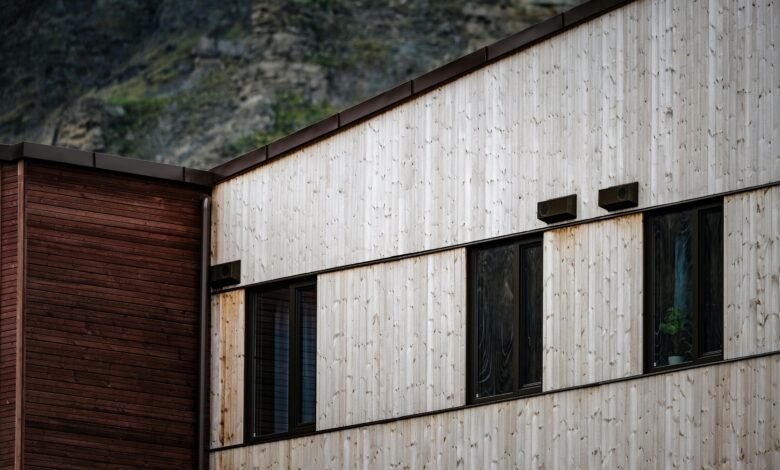
If appearance was the only factor, many architects would still choose natural timber.
The real discussion usually starts when a project moves beyond the design stage.
A facade has to survive weather, stay consistent, fit the budget, meet maintenance expectations, and be practical to install. That is where wood grain aluminum panels started gaining attention.
Architects are not necessarily looking for a replacement for wood.
They are looking for a way to achieve the same visual warmth without taking on every challenge that comes with using timber on the exterior of a building.
Facades are expected to look the same years after completion
A building is photographed when it is finished.
People judge it years later.
That difference matters.
Timber changes as it ages. Some owners appreciate the character that develops over time. Others see fading, uneven coloring, movement, or weathering that pulls the building away from the original design intent.
Wood grain aluminum panels are often selected because they tend to maintain a more consistent appearance. The architect’s original vision has a better chance of looking similar years later rather than becoming dependent on regular restoration work.
For many commercial projects, consistency becomes part of the design requirement.
Maintenance is becoming part of the design conversation
Ten years ago, architects focused heavily on materials, aesthetics, and performance.
Today, many clients ask a different question.
“What will this cost us to maintain?”
A material can look great on a rendering. The challenge starts after handover.
Property owners often want fewer maintenance cycles, fewer repairs, and fewer disruptions to building operations.
That does not mean timber cannot work.
It simply explains why alternatives that require less ongoing attention are appearing on more project specifications.
Installation has become a bigger factor than many people realize
Labor is not the same as it was twenty years ago.
Contractors are dealing with labor shortages, tighter schedules, and rising installation costs.
That has pushed architects to pay closer attention to how facade systems are installed.
Many modern aluminum cladding systems are designed around faster installation methods. Some use click-and-lock style systems, concealed fixing methods, or modular approaches that reduce site work.
The discussion is no longer only about material performance.
It is also about how quickly and efficiently that material becomes part of the building.
When installation time affects project schedules, architects naturally start considering systems that simplify the process.
Weight matters on larger projects
This is something homeowners rarely think about, but architects do.
Every material added to a building contributes to structural load.
Timber is not the heaviest facade option available, but lightweight aluminum systems can create advantages during transportation, handling, installation, and structural planning.
On some projects, those advantages may not be significant.
On larger commercial developments, they can influence material selection much earlier in the design process.
The goal is not to imitate wood perfectly
Many people assume architects choose wood grain aluminum because they want fake wood.
That is usually not the reason.
The objective is often much simpler.
They want the warmth, texture, and architectural character associated with timber while reducing some of the concerns that come with using real wood on an exterior facade.
When viewed that way, the decision becomes less about replacing timber and more about balancing aesthetics with long-term practicality.
That balance is why wood grain aluminum panels are appearing on more residential and commercial projects than they did a decade ago.
FAQs
Why are architects choosing wood grain aluminum instead of timber?
In many cases, they are looking for a material that delivers a wood appearance while reducing maintenance demands, installation challenges, and long-term weather exposure concerns.
Do wood grain aluminum panels look like real wood?
Modern finishes have improved considerably. They are not identical to natural timber, but they can create a similar visual effect in many architectural applications.
Are wood grain aluminum panels easier to install?
Some systems are designed around click-and-lock or modular installation methods, which can simplify parts of the installation process compared to traditional facade approaches.
Is timber still used in modern architecture?
Absolutely. Timber remains a popular architectural material. The choice often depends on project goals, maintenance expectations, climate conditions, and long-term ownership considerations.