Modern product development is becoming faster and more digital every year. Engineers, designers, manufacturers, and technicians need accurate ways to capture real-world objects and turn them into usable digital designs. Traditional measuring methods can still be useful, but they often take more time and may not capture complex shapes easily.
This is where a 3D scanner can make a major difference. Instead of measuring every surface manually, a scanner can capture the shape and geometry of a physical object and create detailed digital data. When this data is converted into a CAD-ready model through a scan to CAD workflow, it can become useful for design, engineering, inspection, manufacturing, and reverse engineering.
What Is a 3D Scanner?
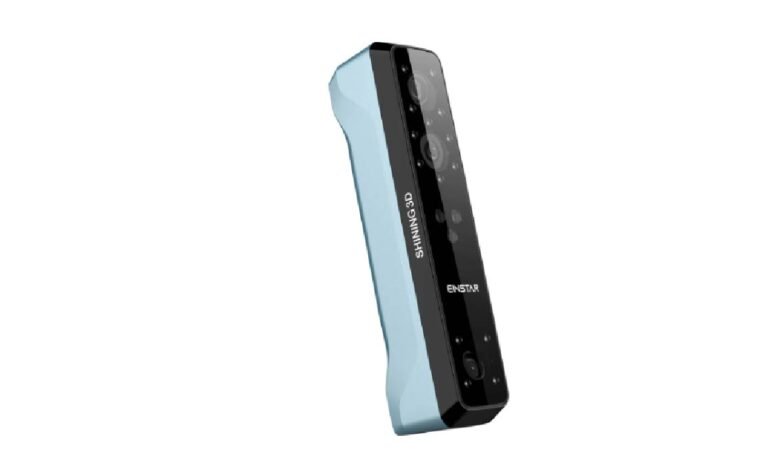
A 3D scanner is a device that captures the physical shape and dimensions of an object. Depending on the technology, it can use structured light, laser projection, cameras, or other sensing methods to collect information from different surfaces.
The scanner creates digital information that represents the object’s geometry. This can include curves, edges, surfaces, and other important details.
One major advantage is speed. A complex object that could take considerable time to measure manually can often be captured much more efficiently with modern scanning equipment.
The resulting data can then be cleaned, aligned, and processed using specialized software before being used in later stages of a project.
How Does 3D Scanning Work?
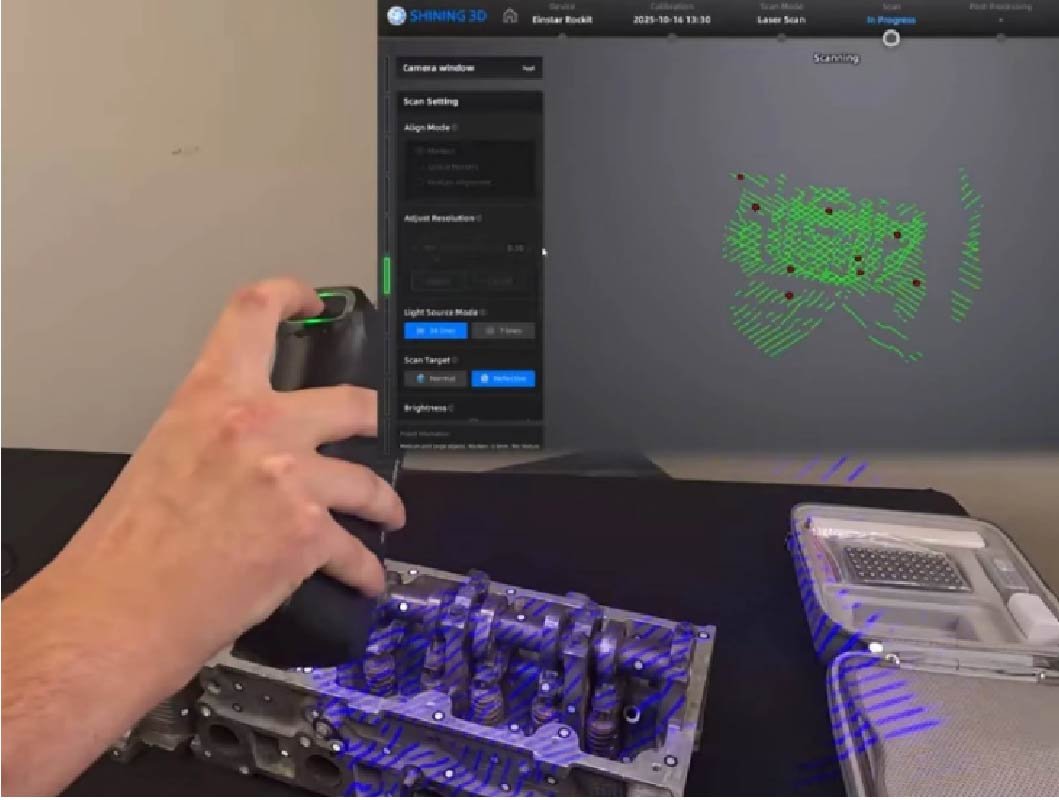
The basic process is easier to understand than it may first appear. The scanner captures multiple views of an object while collecting information about its surface.
These individual scans are then combined into a complete digital representation. Software helps align the different views and remove unwanted information, such as background objects or unnecessary points.
The final result may be a point cloud or polygon mesh. Depending on the project, this data can then be converted into a more structured CAD model.
The quality of the final result depends on several factors. Scanner accuracy, object size, surface characteristics, scanning technique, lighting, and software processing can all affect the outcome.
Why Businesses Use 3D Scanning
Businesses use 3D scanning for many different reasons. One common application is reverse engineering. If an original CAD drawing is unavailable, engineers can scan an existing component and use the resulting data as a starting point for creating a digital model.
Scanning can also support quality control. Manufacturers can compare a scanned component against its original design to identify dimensional differences.
Another benefit is documentation. Older parts, prototypes, tools, and mechanical components can be digitally captured and stored for future reference.
For designers, scanning can also reduce the need for manual measurements. This can be particularly helpful when working with objects that have irregular surfaces or complicated geometry.
What Does Scan to CAD Mean?
Scan to CAD refers to the process of transforming 3D scanning data into a computer-aided design model.
A scanner does not always produce a traditional CAD model directly. In many cases, it creates a point cloud or mesh that represents the object’s surface. That information must then be processed and converted into usable CAD geometry.
The conversion process may involve creating planes, cylinders, curves, surfaces, and solid features based on the scanned information.
The final CAD model can then be opened in compatible engineering or design software and used for further development.
The Scan to CAD Workflow
A typical scan to CAD workflow involves several stages.
First, the physical object is prepared for scanning. Depending on its size, material, and surface, markers or other preparation techniques may be required.
Next, the object is scanned from multiple angles. These scans are combined to create a complete digital representation.
After scanning, unwanted data is removed and the model is cleaned. The scan may then be aligned according to the project’s required coordinate system.
The next stage is CAD reconstruction. Engineers or designers use the scanned geometry to create accurate digital features.
Finally, the CAD model can be inspected and exported into the required format for design, manufacturing, or engineering applications.
Benefits of Using a 3D Scanner for Reverse Engineering
Reverse engineering is one of the most practical applications of scanning technology. It allows professionals to work with existing physical components even when original design files are unavailable.
For example, a manufacturer may have an older machine component that needs to be reproduced. Instead of manually measuring every feature, the component can be scanned to capture its geometry.
The resulting information provides a useful foundation for rebuilding the component digitally.
This approach can also help when a part has organic or freeform surfaces that are difficult to describe using traditional measurements.
Improving Product Development
Product designers can use scanning to move between physical and digital development more easily.
A prototype can be scanned and compared with its intended CAD design. If changes are needed, the digital model can provide valuable information about where the prototype differs from the original concept.
This creates a more connected workflow between physical prototypes and digital designs.
For companies developing products repeatedly, this can help reduce unnecessary measurement work and make design revisions easier to manage.
3D Scanner Applications Across Industries
A 3D scanner can be useful in many industries. Automotive companies can use scanning for vehicle components, prototypes, and replacement parts. Aerospace organizations can use it for inspection and complex component documentation.
Manufacturing businesses can use scanning for quality control and reverse engineering. Architecture and construction professionals can capture existing spaces and structures.
The technology is also used in healthcare, consumer product development, research, art, heritage preservation, and many other fields.
The specific scanner and software workflow depends on th