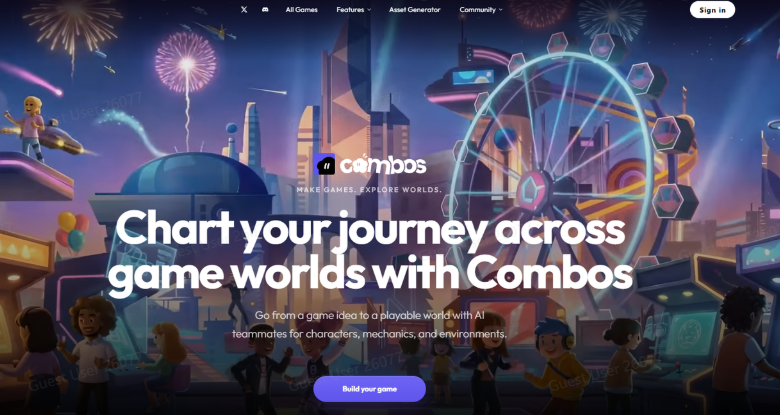
Game development takes a long time. That’s not a stereotype — it’s structural. Even simple games require a lot of pieces to exist simultaneously: assets that match a visual style, logic that responds correctly to player inputs, levels that have been designed and tested, and a UI that’s readable and functional. Building all of those things takes time, even when you know exactly what you’re doing.
The claim that an AI game agent cuts development time from months to hours sounds like marketing language until you’ve watched it happen. The reduction is real, and it’s not because the agent is cutting corners — it’s because a huge portion of traditional development time was never about creative work. It was about setup, scaffolding, asset sourcing, and getting a playable build to a state where you could make real design decisions. The agent handles all of that automatically. Related tools for vibe coding game projects operate on the same principle: by removing technical overhead, creative time expands dramatically.
Where the Months Actually Go in a Traditional Development Cycle
For a solo developer building a simple game without an agent, the first month typically involves setup and learning: getting comfortable with the engine, setting up the project structure, sourcing or creating placeholder assets, and building the first rough version of the core mechanic. By the end of the first month, if things have gone well, there’s a basic prototype — usually ugly, often unstable, and not yet representative of what the finished game will feel like.
Month two is iteration. Fixing what broke, replacing placeholders with real assets, adding secondary mechanics, and starting to think about level design. Month three — for a small game — might be the polish pass: audio, UI, balancing, and the preparation for release. Three months is optimistic for a solo project. Many take longer.
The Bottlenecks an Agent Eliminates Immediately
The agent removes the setup phase entirely. There’s no engine to configure, no project structure to build, no asset pipeline to establish. You describe the game, approve the plan, and receive a playable build. That first prototype — which traditionally took weeks — appears in the same session where you first described the concept.
Asset sourcing, which can consume significant time even for developers who aren’t creating art from scratch, is also gone. The agent generates assets that match the game’s visual style and integrates them automatically. You’re not hunting for sprites that approximately match your character design or adjusting import settings in an asset store.
Running a Timed Build on Combos to See How Fast It Really Is
Step 1: Set a timer and go to combos.fun with a complete game concept ready
Choose something with real scope — not just a one-mechanic demo, but a game with at least three levels, distinct enemies, and a clear win condition. The point is to see how the agent handles a game that would take a traditional developer weeks to prototype.
Step 2: Let Boo run through pre-communication and GDD generation without interrupting
Don’t jump ahead or try to speed up the process. The pre-communication and planning stages are short but important — skipping them produces a less accurate build. Let the agent complete its planning before you look at the clock.
Step 3: Approve the GDD and let Combos auto-generate the complete prototype
This is the phase where the time saving is most visible. Watch the clock from GDD approval to playable build. For a game of moderate complexity, you’re looking at minutes, not hours.
Step 4: Make targeted refinements via natural language and check the clock again
Note the total elapsed time from the first prompt to a polished-enough-to-share build. Compare that mentally to the traditional timeline. That gap — weeks of setup and scaffolding compressed into a single session — is where the months went.
Prototyping in Hours Instead of Planning for Weeks
One of the most undervalued aspects of the agent’s speed is what it does for the ideation stage. When prototyping takes weeks, you commit to ideas before you know if they work. The cost of abandoning a direction after a month of investment is high, so most developers push through even when the core idea isn’t delivering what they hoped.
When prototyping takes hours, you can test ideas before committing to them. You can build two different versions of the same concept and compare them. You can try the weird direction, which probably won’t work, just to find out. The creative risk profile of game development changes completely when the cost of a failed experiment is measured in hours rather than months.
Iteration Speed: Testing and Changing Without Starting Over
The traditional development cycle treats major changes as expensive. Changing the core mechanic after three weeks of work means losing or rebuilding a lot of what was built around it. So developers often live with decisions that aren’t quite right because the cost of fixing them feels prohibitive.
With an agent, iteration is cheap in both directions. The agent updates the relevant system when you describe what needs to change, leaving everything else intact. You can change the core mechanic in the third week without rebuilding the levels. You can swap the visual style without regenerating the game logic. Each change is targeted and fast.
The Tasks That Still Take Time — and Should
The honesty check: not everything gets faster. The creative decisions — what the game should feel like, what makes it distinct, whether the design is genuinely interesting — still require human time and judgment. The playtesting required to know whether the difficulty curve is right still takes real hours. The writing in a narrative game still takes as long as it takes.
These are the parts that should take time. They’re where quality comes from. The agent’s value is in removing the non-creative time — the scaffolding, the asset pipeline, the technical setup — so that the time you spend on judgment and craft goes further.
What You Do With All the Time You Get Back
That’s the real question, and it’s a creative one. Some developers use the time to ship more games. Some use it to make the one game they’re working on significantly better — more levels, more polish, more testing. Some use it to prototype ideas they would never have had the bandwidth to explore in a traditional workflow.
There’s no wrong answer. But the developers who adapt fastest to this shift are the ones who treat the reclaimed time as an opportunity to raise the quality ceiling on their work, rather than simply shipping faster versions of what they were already making.
Conclusion
The months that traditional game development takes aren’t mostly spent on creative work — they’re spent on the technical infrastructure that creative work requires. The AI game agent removes that infrastructure cost. What remains is the creative work, which is faster to finish, more enjoyable to do, and more responsive to what you actually learn as you build.