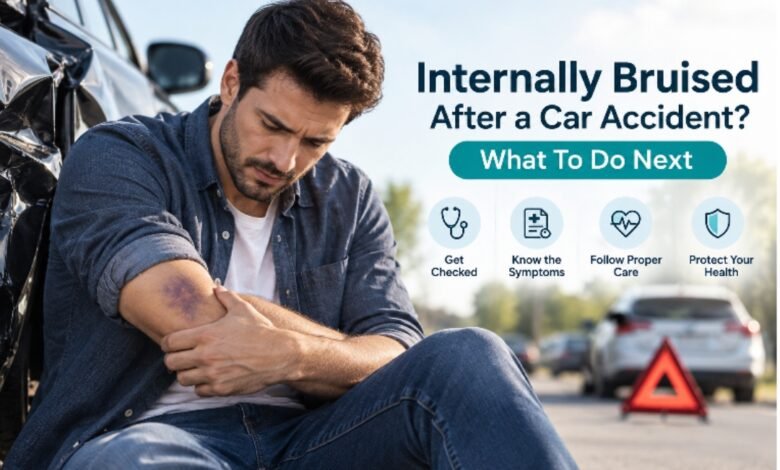
Car crashes are one of the most common causes of hidden trauma injuries and internal bruises among accident victims. When you get into a car accident, the damage can go beyond just causing a dent on your bumper.
And what’s worse, a minor contusion can occur under your skin, and the scary part is you may not even feel it right away. It happens because of an adrenaline rush that can last even hours after the accident. This chemical rush may mask pain that otherwise would have led you to the hospital emergency room.
However, the trickiest part about internal bruising is that internal injuries may not match the accident severity. They can throw your organs inside your ribcage or damage tissues without leaving any visible mark on your body.
This guide walks you through the signs of internal bruising and how to protect both your health and your legal rights.
What Are The Signs of Internal Bruising After a Car Accident?
When people hear about internal injuries, they mostly imagine major and dramatic car accidents like a car flipping over or a windshield shattering. But in reality, you can get internally bruised from even a sudden stop, especially with a tight seat belt. Yes, you read that right!
Because your body moves at the same speed as your car when you apply sudden brakes, your organs may take a second longer to stop. Consequently, they may get slammed against your rib cage and muscles around them, causing internal bruising.
The most common signs of internal bruising after a car accident may include:
- Deep worsening pain
- Swelling and tightness in muscles
- Delayed discoloration of skin
- Dizziness or fainting
- Rapid breathing and heartbeat
- Nausea or vomiting
- Blood in urine or stool
- Sweaty skin
- Confusion or unusual drowsiness
Can Internal Bruising Appear Hours or Days After a Crash?
Internal injuries and related symptoms may take some hours to several days to appear after a car accident. The main reasons behind this delay are discussed below:
-
Adrenaline Rush & Shock
A sudden crash may push your body to enter a stress response (fight or flight) and flood it with adrenaline and cortisol. It is a normal response your body experiences in case of emergencies and shock from the accident. But it can lead to less sensitivity to the depth of pain.
-
Gradual Pooling
Sometimes the accident involves deep tissue bleeding or a slow leak from injured blood vessels or organs. These symptoms also take time for blood to accumulate and then show symptoms by discoloring (deep purple or blue) the abdomen or the injured area.
-
Developing Inflammation
It may also take time for injured tissue to swell, show visual signs, and cause pain when adrenaline settles after the accident. Consequently, your muscle tenses up and goes into spasm to protect the injured joint.
What Should You Do If You Are Internally Bruised After an Accident?
Internal bleeding after car accidents is considered a critical medical emergency because the bleeding going on inside your body might not stop on its own, unlike bleeding that stops when it’s on the surface of the skin.
Here are a few important steps you should take if you are internally bruised post-accident:
- Seek Medical Evaluation: If the bruising is on your abdomen, neck, or chest, you should immediately seek medical attention by going to the emergency room, especially when symptoms are severe or worsening.
- Follow Your Doctor’s Instructions: Attend your follow-up appointments and adhere to your recommended treatment. Take your prescribed medication and do not return to work unless your doctor allows you to.
- Keep Medical Records: If you want to claim compensation after a car accident, it’s imperative to save your diagnostic test results, bills, prescriptions, and treatment notes from doctors. Understanding how your car insurance will pay your medical bills after a crash can also help you know what expenses may be covered and what records you should keep.
- Document the Accident: Keep photographs, police reports, witness contact information, and other evidence related to the accident if you intend to request a claim. It is necessary because car accident injury claims are mostly built on documentation.
- Discuss Injury with Insurers: Be careful while discussing your injuries with insurers and don’t use phrases like “I’m doing okay” or “it’s just a little bruise.” Additionally, don’t speculate about your condition or minimize symptoms.
How To Claim Compensation For Internal Bruising After a Car Accident?
Once your health is stable, you should shift your attention to the practical side of recovering from the accident. So the steps discussed above aren’t just good medical advice; they are important to lay the foundation of your car accident injuries claim.
You can follow these easy steps to file a compensation claim after a car accident.
- Collect your medical documents and file an official report to establish a record of the accident, date, and involved parties.
- Inform your insurers about the accident and claim against the at-fault driver’s liability insurance.
- Consult with an experienced car accident lawyer because internal injury claims can become complex if the other driver may claim that fault was mutual. A lawyer can help you negotiate a fair settlement in such situations.
Conclusion
Internal bruising after accidents happens when the impact damages your blood vessels beneath the skin or tissues. Blood may start accumulating around a muscle or organ without even leaving a mark.
However, not all car accident claims need a personal injury lawyer. But personal injuries mostly change the math, and victims face trouble proving their claim. So hiring a qualified attorney can turn the tables in your favor.
If you have also been involved in a car accident in Utah recently and now you are seeing the signs of internal bruising, consulting with a local legal firm like Cockayne Law can be your best move to secure a fair settlement.
FAQs
Can you be internally bruised without any visible mark on your skin?
Yes, if any of your deep tissue or organs have been damaged in a car accident, it is very common to be internally bruised without any visible sign on the skin.
How long after a crash can internal injury symptoms appear?
Normally, it takes 24 to 72 hours for adrenaline to settle after an accident. However, it might even take several days for some symptoms to show in some cases.
Is a CT scan always necessary after a car accident?
Not always, but it is recommended to have one, especially if you have abdominal pain, a seat belt mark, or any signs of internal trauma.
Does filing an injury claim require a lawyer?
Not legally, but it is always better to hire a personal injury lawyer when you are internally bruised because these cases depend heavily on your medical documentation and timing to file a claim.