Mini Skid Steer Skeleton Grapples: A Guide for Canadian Land Clearing and Site Cleanup

Introduction
Across rural Canada, the slow work of taming land never ends. Acreage owners outside Calgary clear brush for new building sites, Prairie farmers pick rock from fields each spring after frost heaves a fresh crop to the surface, and woodlot owners rake deadfall after every windstorm. Done with a bucket, this work buries good soil along with the debris and wears out an operator. A mini skid steer skeleton grapple solves the problem by letting material fall through its open tines while it grips and lifts rock, roots, and brush, separating debris from dirt in a single pass.
How a Skeleton Grapple Works
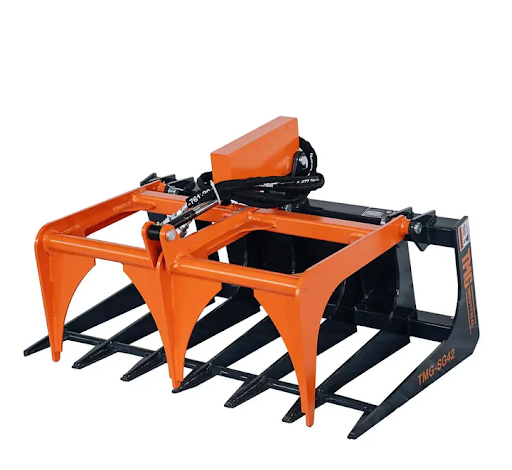
A skeleton grapple is an open-bottom attachment of spaced steel tines topped by one or two hydraulic clamping lids. The gaps between the tines let soil, gravel, and small material sift back to the ground, while the lid presses down to hold rock, roots, and branches. Mounted on a mini skid steer quick-attach plate, the forty-two inch frame matches the reach and hydraulic flow of compact machines used on tight residential and farm sites.
Efficiency and Cleanup Quality
A bucket scoops everything, so an operator hauls away as much topsoil as debris and makes repeated trips to sort it. A brush grapple keeps the dirt on site and carries only the unwanted material, cutting trips and protecting the soil a landscaper has paid to keep. On a storm-cleanup job near Thunder Bay, a single compact loader with a grapple cleared tangled deadfall that a crew with rakes could not have finished in the same daylight. Keeping topsoil on site also saves the cost of trucking in replacement fill, a real expense on any landscaping or building project.
Build and Capacity
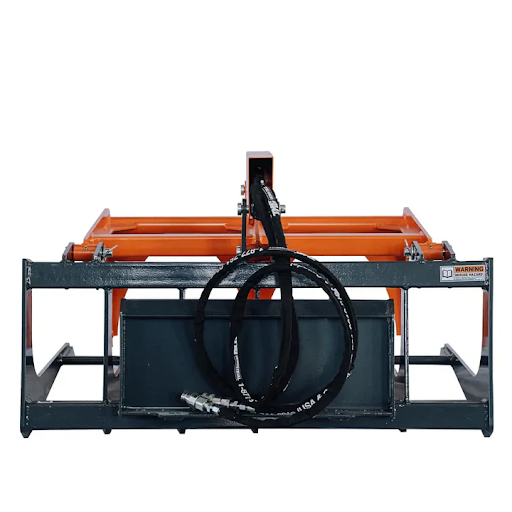
The durability of a rock grapple rests on tine thickness, lid cylinder strength, and frame welds. Tines must resist bending when prying a buried stone, and the clamping lid needs enough closing force to pin an awkward root. A reinforced rear plate spreads the load into the loader arms rather than concentrating it at the mounts. Abrasion plates along the tine tips slow the wear that stony Canadian ground inflicts on every picking pass.
Performance Factors
Several conditions decide how a land clearing grapple performs on a job:
- Tine spacing matched to the material handled
- Hydraulic flow available from the mini loader
- Closing force for stubborn roots and rock
- Frame weight within the machine lift rating
- Tine wear protection on abrasive ground
On the stony fields of eastern Ontario, operators widen tine spacing so fine soil drops away and only the picking rock rides in the grapple.
Safe Operating Practices
Keep heavy loads low and centred while travelling, and avoid prying with the machine at full reach. Confirm the attachment is locked to the quick-attach plate, inspect tines and welds for cracks, and release hydraulic pressure before changing attachments.
Types and Attachments
Single-lid grapples suit lighter brush and cleanup, while dual-lid models hold bulky or uneven loads more securely. Common companions on a mini skid steer include a bucket for loose material, pallet forks, and an auger for post holes on the same site.
What Buyers Should Weigh
Choosing a skeleton grapple is a question of matching the tool to the machine. Before buying, weigh these factors:
- Width and weight within your loader rating
- Tine spacing for your typical material
- Lid count and closing force needed
- Steel quality of tines and frame
- Warranty and parts availability in Canada
- Quick-attach compatibility and shipping weight
Advantages and Limitations
Advantages:
- Separates debris from valuable topsoil
- Clears brush and rock in fewer trips
- Fits compact machines for tight sites
Limitations:
- Needs a loader with auxiliary hydraulics
- Open tines are not suited to loose soil
- Lift capacity limited by the mini machine
Industry Outlook
As compact equipment spreads from contractors to acreage owners, attachment-driven versatility is becoming the reason people buy a mini loader at all. Designs are trending toward tougher tine alloys, higher closing force, and quick-swap mounts. The growing selection of mini skid steer grapples and attachments shows how a single small machine now does the clearing, picking, and grading that once needed a tractor, a crew, and a long weekend.