Identifying Downtime in Legacy Systems
In industrial packaging, Overall Equipment Effectiveness (OEE) serves as the primary metric for evaluating manufacturing productivity. Legacy production lines often suffer from low OEE scores due to their heavy reliance on mechanical linkages and manual operator adjustments. These outdated architectures require physical tooling changes, gear swaps, and manual tension calibrations that consume hours of potential production time.
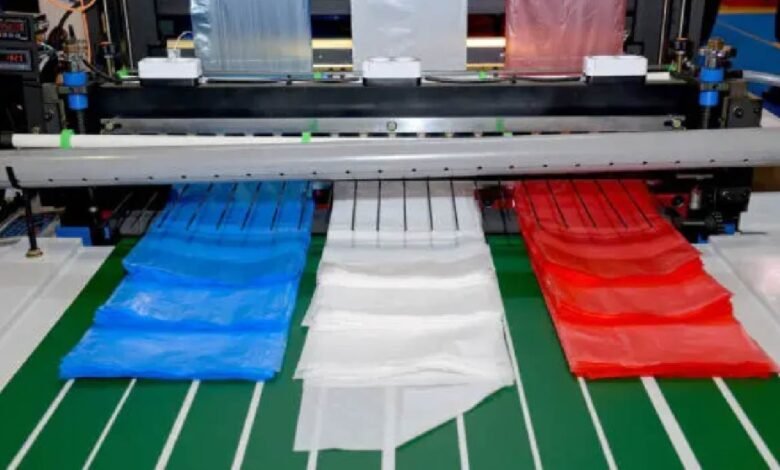
Furthermore, mechanical wear and tear on traditional chain-and-sprocket drives introduce micro-vibrations that degrade cutting and folding precision over time. Legacy production lines are heavily reliant on manual intervention, leading to extended downtime during job changeovers and inconsistent product output. To combat these inefficiencies and dramatically improve Overall Equipment Effectiveness (OEE), forward-thinking facilities are upgrading to advanced Kete Group.
These automated systems utilize synchronized servo technology and computer-controlled setups to maintain continuous high-speed production while virtually eliminating human error. By removing the dependency on operator skill for machine calibration, plant managers can accurately forecast production scheduling. Upgrading legacy systems directly targets the most significant drains on OEE: unscheduled maintenance and prolonged setup times.
Key Automation Features That Eliminate Bottlenecks
Achieving an OEE score above 85% requires machinery capable of self-regulation and rapid adaptation to varying substrate specifications. Modern packaging equipment achieves this through a decentralized control architecture, where independent drive systems communicate continuously via industrial ethernet protocols.
HMI and Recipe Management Systems
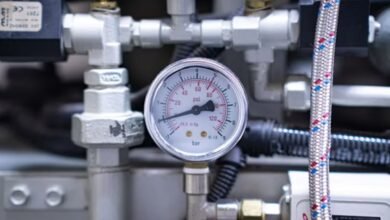
The transition from analog dials to digital interfaces fundamentally alters the job changeover process. HMI integration allows operators to input exact material dimensions, fold parameters, and cut lengths into a centralized control panel. This eliminates the trial-and-error approach associated with manual press adjustments.
With Recipe management algorithms, facilities can save hundreds of specific product profiles directly into the machine’s programmable logic controller (PLC). When a new job is required, the operator simply loads the recipe, and the machine’s axes adjust automatically within millimeters of tolerance. This digitalization reduces typical changeover times from several hours to under fifteen minutes, directly increasing the Availability metric of the OEE calculation.
Gearless and Servo-Motor Precision
Traditional mechanical shafts have been entirely replaced by decentralized electronic drives. A Gearless drive architecture connects servo motors directly to the impression cylinders, rollers, and cutting knives. By eliminating gears, belts, and pulleys, the machinery eliminates mechanical backlash and the associated registration errors.
Servo-driven precision ensures that each moving component operates in perfect synchronicity, regardless of the machine’s operating speed. This technology allows the equipment to process delicate substrates without stretching or tearing, maintaining continuous web tension throughout the entire production cycle. The reduction in moving parts also significantly lowers scheduled maintenance requirements, further enhancing machinery uptime and operational throughput.
Leveraging Machine Vision for Quality Assurance
Producing defective output at high speeds creates a double penalty for OEE, negatively impacting both the Performance and Quality metrics. Quality assurance can no longer rely on manual spot checks, especially at high production speeds. Modern automated lines integrate high-speed optical sensors to detect misalignments or adhesive failures in real-time, rejecting defective units without halting the line.
These Vision inspection systems utilize high-resolution cameras and edge-detection algorithms to verify dimensional accuracy down to the micrometer. According to detailed research on industrial automation, implementing such real-time quality control systems can drastically reduce material waste and significantly boost the facility’s bottom line.
By instantly ejecting non-conforming products from the conveyor, the system prevents jammed downstream packing equipment. The PLC continuously logs this defect data, providing engineers with real-time feedback to isolate variables such as material inconsistencies or improper adhesive viscosity.
Key Takeaways
| Area | Key Takeaway | Impact/Data |
| Setup | Implement HMI recipe management via PLC | Cuts changeovers from hours to <15 mins |
| Hardware | Upgrade to gearless, decentralized servo motors | Eliminates mechanical backlash; lowers maintenance |
| Quality | Integrate high-speed optical vision sensors | Rejects defects real-time without halting production |
Conclusion
Maximizing OEE requires a systematic eradication of manual processes, unpredictable downtime, and reactive quality control. For engineering directors evaluating capital expenditures, the focus must remain on equipment that offers digital recipe management, servo-driven precision, and integrated optical inspection.
Investing in automated machinery is a prerequisite for executing lean manufacturing principles effectively. By prioritizing these specific technological features, packaging facilities can secure predictable yields, minimize scrap rates, and maintain a highly competitive cost-per-unit ratio in an increasingly demanding market.