Introduction
Why is kouskousi becoming popular in kitchens far from North Africa, and why do so many people mistake it for rice or other grains? The answer lies in its appearance, simplicity, and incredible versatility. At first glance, kouskousi looks like tiny grains, but it is actually a semolina-based pasta with a long history and a deep cultural meaning. It has been enjoyed for centuries in North African homes, yet today it also fits perfectly into modern cooking because it is quick to prepare, easy to flavor, and suitable for many kinds of meals. People who want simple food with tradition behind it often become interested in kouskousi once they learn what it really is.
Kouskousi is a small, semolina-based pasta made from durum wheat, traditionally prepared in North Africa. It is known for its light, fluffy texture and ability to absorb flavors, making it a versatile base for many dishes.
Kouskousi is important globally because it brings together history, nutrition, convenience, and taste in one simple food. It can be served with meat, vegetables, legumes, herbs, or even sweet ingredients, which makes it useful in many cuisines. This guide explains everything in simple and clear words, so even a beginner can fully understand the topic. By the end, you will know the meaning of kouskousi, its history, types, nutritional value, cooking methods, and the many ways it can be used in everyday meals.
What Is Kouskousi?
Kouskousi is a type of pasta made from semolina, which comes from durum wheat. Although many people think it is a grain because of its tiny size and round shape, it belongs to the pasta family rather than the grain family. The small granules are formed by moistening semolina with water and rolling it until tiny pellets appear. These pellets are then dried, and in traditional cooking, they are steamed until they become soft and fluffy. This simple process creates a food that is light in texture but very useful in many different dishes.
One reason people confuse kouskousi with rice or quinoa is its appearance. It is small and bead-like, so it looks similar to grains when dry. However, rice is a grain and quinoa is a seed, while kouskousi is made from wheat and shaped like pasta. This difference matters because it affects the texture, cooking process, and nutritional profile. Kouskousi becomes airy and delicate when cooked, while rice tends to stay firmer, and quinoa has a more distinct bite.
Kouskousi has a mild taste, which is one of its biggest strengths. On its own, it does not have a heavy or overpowering flavor, so it easily absorbs spices, broths, sauces, and juices from the food around it. That is why it works so well with rich stews, roasted vegetables, and herb dressings. Its soft texture and neutral flavor make it a flexible base for meals, whether you want something warm and comforting or light and fresh.
Origin and History of Kouskousi
The history of kouskousi goes back many centuries and begins in North Africa, especially among Berber communities. These early communities are widely associated with the origins of the dish, and they prepared it by hand using semolina and water. The process required time, patience, and skill. Women in households would roll the semolina into tiny grains, dry them, and steam them carefully over simmering pots. This method was not only about cooking food but also about preserving tradition and passing down practical knowledge from one generation to the next.
Over time, kouskousi spread beyond its earliest cultural roots. As trade routes developed across North Africa and the Mediterranean, the dish traveled with merchants, families, and communities. Arab influence helped shape its seasoning and methods of serving, while the wider Mediterranean world contributed new ingredients and styles. As a result, kouskousi gradually became a shared food across countries such as Morocco, Algeria, Tunisia, and Libya, each region adding its own identity to the dish.
Its journey did not stop there. Through migration, colonial contact, trade, and global food exchange, couscous and kouskousi reached Europe, the Middle East, and many other parts of the world. Modern supermarkets now sell quick-cook versions that make it accessible to almost anyone. Yet even with this worldwide popularity, the historical heart of kouskousi remains tied to North African homes. It is still a food linked to memory, family, and old methods of preparation. That mix of ancient tradition and modern convenience is one reason it has survived and remained relevant for so long.
Cultural Importance and Traditions of Kouskousi
In North African culture, kouskousi is much more than an everyday food. It carries strong emotional and social meaning, and in many homes, it represents care, hospitality, and togetherness. A large shared dish of kouskousi often appears at important family moments, and its presence can turn a regular meal into something more meaningful. The act of gathering around one platter creates a feeling of closeness, and that communal style of eating helps strengthen family bonds and social connections.
Kouskousi is closely linked with weddings, religious occasions, and family gatherings. In these settings, it is often prepared in large quantities so that everyone can share. The dish is not only meant to feed people but also to welcome them. In many homes, offering kouskousi to guests is a sign of respect and generosity. This is one reason the dish is strongly connected with hospitality across the region.
In Morocco, kouskousi is especially associated with the Friday meal, when families gather after prayers and share food together. In other North African countries, it is also common during holidays and celebrations, often served with meat, vegetables, and rich broth. The preparation itself can also be a family activity, with older relatives teaching younger ones how to roll, steam, and season it properly. Because of this, kouskousi becomes a symbol of continuity. It carries not only flavor but also memory, culture, and tradition. Its value is found in both the meal and the moment created around it.
Kouskousi vs Couscous – Are They the Same?
Many people ask whether kouskousi and couscous are the same thing, and in most cases, the answer is yes. The two terms usually refer to the same semolina-based food made from durum wheat. “Couscous” is the term most people know internationally, especially in English-speaking countries and global food markets. “Kouskousi” is often used as a regional, traditional, or cultural form of the name. So while the words may differ, they generally point to the same basic food.
The difference is mostly about language, pronunciation, and local usage rather than a major change in ingredients. In some places, the word kouskousi may suggest a certain size, style, or traditional context, while couscous is used more broadly in shops and recipes. However, both names are connected to the same food heritage. This is why people may hear one term at home or in a cultural setting and another term in restaurants or supermarkets.
There can also be small differences in size and variation, depending on the type being discussed. For example, Moroccan couscous is very fine and fluffy, while larger pearl versions are often marketed differently. Even so, the central idea remains the same: tiny wheat-based granules that are cooked and served with many kinds of ingredients. For ranking and clarity, it is useful to explain that couscous is the global term, while kouskousi can be seen as a traditional or regional name tied more closely to cultural identity.
Types of Kouskousi Around the World
Kouskousi comes in several forms, and each type has its own texture, size, and best use in cooking. The most widely known kind is Moroccan couscous, which is very small and cooks quickly. It becomes soft and fluffy and is excellent for soaking up flavorful broths and stews. This type is often used in traditional North African meals and is probably the version most people imagine when they hear the word couscous.
Another popular type is Israeli or pearl couscous. This version is much larger and rounder, with a slightly chewy texture. It feels more like small pasta balls than tiny grains. Because it holds its shape well, it is often used in salads, roasted vegetable dishes, and modern fusion meals. It gives a heartier bite than Moroccan couscous and works especially well in dishes where texture is important.
Lebanese couscous, sometimes larger than pearl couscous, is used in richer and slower-cooked meals. Its size allows it to absorb broth deeply while still staying firm. Greek-style versions also exist and are commonly added to soups, where they help create body and texture. These forms may not always be called kouskousi in the same way, but they belong to the wider couscous family.
Understanding these types helps readers choose the right one for each recipe. Smaller versions are better for soft, fluffy dishes and traditional stews, while larger versions are useful in salads, soups, and hearty meals. This makes kouskousi even more appealing because one food category can offer different results depending on the type you use.
Taste, Texture, and Why Kouskousi Is So Versatile
One of the main reasons kouskousi is loved in many cuisines is its balanced taste and texture. It has a mild, almost neutral flavor, which means it does not compete with other ingredients. Instead, it supports them. This makes it ideal for cooks who want a food that can carry spices, sauces, and broths without becoming too heavy or overpowering. Its simplicity is actually one of its biggest strengths.
When cooked properly, kouskousi is soft and fluffy, with a light structure that feels pleasant and satisfying. Depending on the type, it can also have a slight chewiness, especially in larger pearl-style forms. That combination of softness and bite gives it a texture that works in both traditional and modern meals. It can feel comforting in a hot stew and refreshing in a cold salad.
Its versatility comes from how easily it absorbs flavors. Rich meat sauces, vegetable broths, lemon dressings, herbs, butter, olive oil, cinnamon, and dried fruits can all work with it. Because of this, kouskousi suits savory dishes and sweet recipes alike. It also fits many global cuisines, from North African and Mediterranean cooking to modern meal-prep dishes. A single ingredient that can move from a festive family meal to a simple weekday lunch is always valuable, and kouskousi does that naturally.
Nutritional Value and Health Benefits of Kouskousi
Kouskousi offers several nutritional benefits, especially when it is part of a balanced meal. Since it is made from durum wheat, it is rich in carbohydrates, which provide the body with energy. This makes it a useful food for people who need a filling base for lunch or dinner. It is also low in fat in its plain form, which can make it a lighter option than some other starchy foods, depending on how it is served.
Kouskousi also contains moderate amounts of protein, though it is not considered a high-protein food on its own. Whole wheat versions offer more fiber, which is helpful for digestion and can support fullness after eating. It also contains vitamins and minerals such as B vitamins, iron, magnesium, and selenium in smaller but valuable amounts. These nutrients support normal body functions, including energy use and general health.
Because kouskousi is made from wheat, it does contain gluten, so it is not suitable for people with celiac disease or gluten sensitivity. For everyone else, it can be a healthy part of the diet when combined with nutritious ingredients. A meal with kouskousi, vegetables, legumes, and lean meat or fish can become well balanced and satisfying.
In simple table-style terms, kouskousi gives energy from carbohydrates, some protein for body support, fiber in whole grain versions for digestion, and useful minerals for daily nutrition. Its health value improves even more when paired with chickpeas, lentils, carrots, zucchini, chicken, or olive oil. This is why it works well in healthy home cooking without feeling boring or restrictive.
How to Cook Kouskousi (Traditional vs Modern Method)
Cooking kouskousi can be done in two main ways, and each method has its own value. The traditional method involves steaming the semolina granules, often more than once, until they become fluffy and separate. This process takes more time and care, but many people believe it gives the best texture and flavor. In traditional households, the kouskousi is steamed over a pot containing stew or broth, which allows the grains to take in subtle flavor as they cook. The result is soft, airy, and deeply satisfying.
The traditional method is often chosen for family meals, celebrations, or when people want an authentic cooking experience. It is especially useful when the dish is the center of the meal rather than a quick side. Because it requires repeated steaming and fluffing, it also reflects the older style of preparing food with patience and attention.
The modern method is much faster and more convenient. Most packaged couscous sold in stores is pre-steamed, so it only needs hot water or broth to rehydrate. You simply place it in a bowl, pour over the liquid, cover it, and wait a few minutes. After that, a fork is used to fluff it so the grains separate. This method is ideal for busy households, quick lunches, and simple dinners.
Both methods are useful, and the choice depends on time and purpose. Traditional kouskousi is better when you want richer texture and a stronger sense of authenticity. Modern kouskousi is better when speed and ease matter most. Either way, proper fluffing and good seasoning make a big difference in the final dish.
Popular Ways to Serve Kouskousi
Kouskousi is one of the easiest foods to serve in different ways because it works with so many flavors and ingredients. One of the most common uses is as a base for meat and stew dishes. In North African cooking, kouskousi is often placed under lamb, chicken, or beef cooked with vegetables and spices. The broth sinks into the grains, giving them rich flavor and making the whole dish feel complete and comforting.
It is also excellent with vegetables and legumes. A simple mix of chickpeas, carrots, zucchini, onions, and spices can turn kouskousi into a filling vegetarian meal. Because the grains are light, they balance well with soft vegetables and rich sauces. This makes it a useful option for people who want plant-based meals without losing flavor or satisfaction.
Kouskousi is also popular in salads. Once cooled, it mixes well with parsley, mint, tomatoes, cucumbers, lemon juice, and olive oil. This creates a fresh and easy dish that works as a lunch, side, or picnic food. In soups, especially with larger couscous types, it adds body and texture without becoming too heavy.
Sweet serving styles also exist. In some traditions, kouskousi is served with nuts, raisins, dates, cinnamon, sugar, or honey. This gives it a warm and gentle sweetness that works for dessert or breakfast. Whether used in lemon herb couscous salad, lamb stew with couscous, or sweet couscous with nuts, it proves again that one ingredient can support many kinds of meals.
Famous Kouskousi Dishes You Should Try
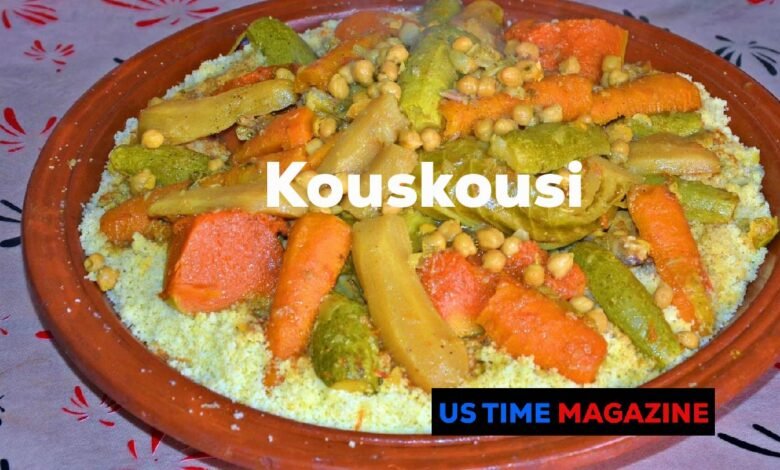
Many well-known dishes show just how flexible and delicious kouskousi can be. A classic example is Moroccan couscous with lamb and vegetables. In this dish, soft couscous is topped with tender lamb, carrots, zucchini, chickpeas, and flavorful broth. The taste is rich but balanced, with spices such as cumin, cinnamon, and turmeric adding warmth without being too strong. It is a dish that feels traditional, generous, and deeply comforting.
Another favorite is chicken couscous with raisins. This version combines savory and slightly sweet flavors in a very pleasing way. The chicken provides richness, while raisins add small bursts of sweetness. Almonds or onions are sometimes included as well, which gives the meal extra texture and depth. This style is especially popular for festive meals because it feels special without being difficult to enjoy.
Vegetarian couscous is another important dish and a great option for lighter eating. Roasted vegetables, chickpeas, herbs, and olive oil come together beautifully with fluffy couscous. It is colorful, healthy, and full of natural flavor. Couscous salad is also widely loved because it is fresh, quick, and easy to customize. With tomatoes, cucumber, lemon, herbs, and a simple dressing, it becomes a refreshing dish for warm weather or light meals.
These famous dishes each offer a different experience. Some are rich and warming, some are bright and fresh, and some are softly sweet. Together, they show why kouskousi remains so important in both traditional kitchens and modern cooking.
Why Kouskousi Is Becoming Popular Worldwide
Kouskousi is growing in popularity around the world because it fits modern lifestyles while still offering traditional value. One major reason is speed. Many people want food that cooks quickly, and pre-steamed couscous can be ready in just a few minutes. This makes it attractive for busy families, office lunches, and simple evening meals. It is also affordable, which adds to its appeal in everyday cooking.
Health is another reason for its popularity. People looking for lighter meal options often like kouskousi because it is low in fat in plain form and can be combined with vegetables, legumes, and lean protein for a balanced dish. It also works well in meal prep, which is important for people planning weekly meals in advance. Because it stores and reheats easily, it suits modern kitchen habits.
Its ability to work with many cuisines also helps it grow in popularity. It can be seasoned in Mediterranean, Middle Eastern, North African, or even simple Western home-cooking styles. In many Western diets, kouskousi is now seen as a practical alternative to rice or pasta. Fitness-focused eaters and home cooks alike use it because it is simple, flexible, and satisfying. That mix of convenience, adaptability, and cultural depth explains why kouskousi continues to win attention worldwide.
Common Mistakes to Avoid When Cooking Kous kousi
Cooking kouskousi is simple, but a few common mistakes can ruin the texture and taste. One of the biggest problems is using too much water. When that happens, the grains become soggy and clump together instead of staying light and fluffy. Measuring the liquid properly and giving the grains time to absorb it slowly can help prevent this issue.
Another mistake is not fluffing the kouskousi after cooking. If it is left packed down, it can turn dense and sticky. A fork should always be used to gently separate the grains. Overcooking is another problem, especially when using quick-cook versions. These only need a short resting time, not long boiling. Too much heat or time can make them soft in a bad way.
Skipping seasoning also reduces the quality of the dish. Because kouskousi has a mild flavor, it benefits from salt, broth, olive oil, herbs, lemon, or spices. Even a simple dish tastes much better when the grains are properly seasoned. With correct liquid, gentle fluffing, careful timing, and balanced flavor, kouskousi becomes much more enjoyable.
Conclusion
Kouskousi is a simple food with a rich identity. Although it looks like a grain, it is actually a semolina-based pasta with deep roots in North African history and culture. It has been prepared and shared for centuries in homes where food is closely tied to family, tradition, and hospitality. From its Berber origins to its place in global kitchens today, kouskousi has remained relevant because it is practical, flavorful, and easy to adapt.
Its value goes far beyond appearance. Kouskousi can be served with meat, vegetables, legumes, herbs, soups, and even sweet ingredients, which makes it one of the most versatile foods a cook can keep in the kitchen. It also offers useful nutrition, quick preparation, and many texture options depending on the type used. Whether cooked the traditional way by steaming or made quickly with hot water, it remains satisfying and approachable.
What makes kouskousi special is the balance it offers. It is traditional but modern, humble but meaningful, light but filling. It suits festive family meals and simple weekday dinners with equal ease. That is why it continues to be loved across generations. Kouskousi is not just a food from the past. It is a simple, healthy, and timeless dish that still belongs perfectly in modern kitchens today.